
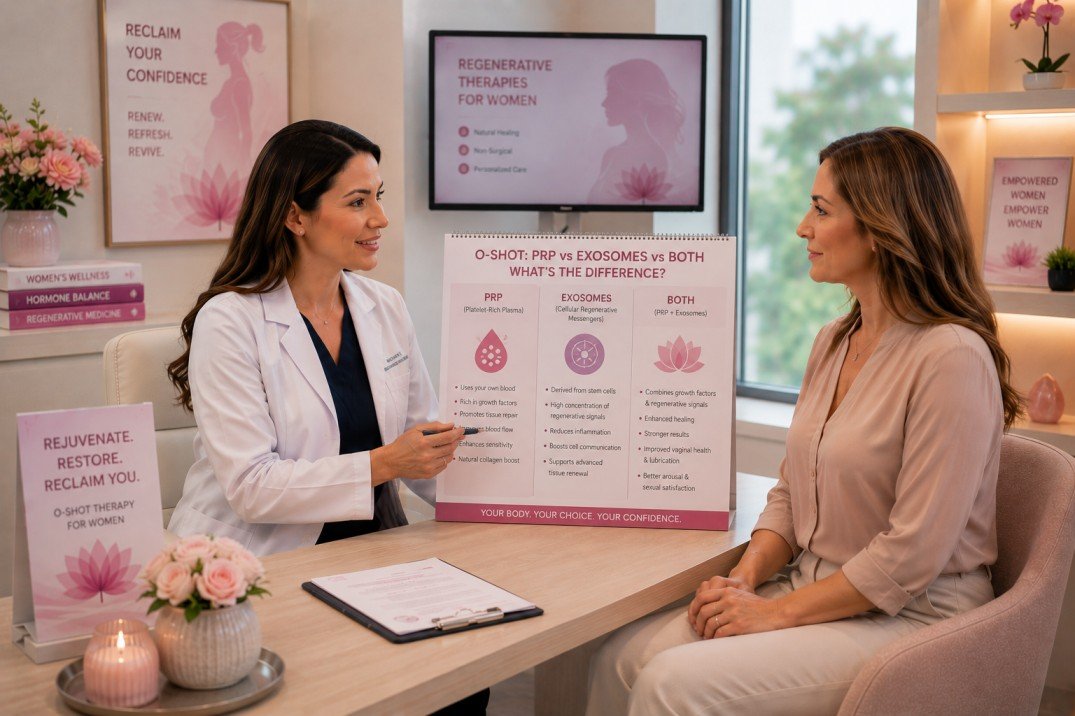
Women's intimate wellness has evolved dramatically over the past decade. Rather than accepting concerns such as vaginal dryness, reduced sensitivity, mild urinary leakage, or changes in sexual function as an inevitable part of aging or childbirth, many women are exploring regenerative medicine. Among the most talked-about treatments are the O-Shot, Platelet-Rich Plasma (PRP) therapy, and the newer addition—exosome therapy. As clinics begin offering the O-Shot with PRP, O-Shot with exosomes, or even combined PRP and exosome treatments, patients naturally wonder which option delivers the best results.
The answer isn't as simple as choosing the newest technology. Each approach works differently, offers unique advantages, and may be better suited for certain patients depending on their health history, treatment goals, and expectations. Understanding these differences can help you have a more informed discussion with a qualified healthcare provider.
This comprehensive guide explores O-Shot with PRP vs exosomes vs combination therapy, comparing how each treatment works, what science currently says, their benefits, limitations, safety considerations, and who may benefit most from each approach.
Understanding the Growing Demand for Regenerative Intimate Wellness Treatments
Regenerative medicine has shifted the conversation around female sexual health from symptom management to tissue restoration. Instead of relying solely on lubricants, hormone replacement therapy, or surgical procedures, regenerative therapies seek to stimulate the body's own healing mechanisms. This approach has attracted growing interest because it aims to improve tissue quality, blood circulation, collagen production, and nerve responsiveness using biological materials rather than synthetic drugs.
Many women experience changes in intimate health after childbirth, menopause, cancer treatments, pelvic surgery, or simply through the natural aging process. These changes may include decreased lubrication, discomfort during intercourse, diminished orgasm intensity, reduced sensitivity, or mild stress urinary incontinence. Although these symptoms are common, they are not always openly discussed, leading many women to delay seeking treatment. Increased awareness through women's health education and advances in regenerative medicine have encouraged more patients to explore minimally invasive alternatives.
According to the International Society for Sexual Medicine (ISSM), female sexual dysfunction affects a significant percentage of women worldwide, with prevalence estimates ranging between 30% and 45%, depending on age and underlying health conditions. This growing demand has fueled research into therapies that support tissue regeneration rather than simply masking symptoms. While PRP has been used in orthopedics, sports medicine, dermatology, and hair restoration for years, exosome therapy represents a newer frontier that is generating considerable scientific interest.
As regenerative medicine evolves, many clinics now offer multiple treatment options. Understanding how these therapies differ is essential because marketing claims often outpace clinical evidence. Patients should look beyond promotional language and instead focus on treatment mechanisms, available research, practitioner experience, and realistic expectations.
What Is the O-Shot?
The O-Shot, short for Orgasm Shot, is a minimally invasive regenerative procedure designed to improve aspects of female sexual wellness and vaginal health. The treatment involves carefully injecting regenerative materials into targeted areas of vaginal tissue to encourage healing, improve circulation, and stimulate cellular repair. The original O-Shot protocol was developed using Platelet-Rich Plasma (PRP) obtained from the patient's own blood. However, some providers now offer modified protocols incorporating exosomes or combining both PRP and exosomes.
Unlike cosmetic procedures that primarily alter appearance, the O-Shot focuses on improving tissue function. Patients commonly seek treatment for decreased sexual sensation, difficulty achieving orgasm, vaginal dryness, painful intercourse, mild urinary leakage, or age-related tissue changes. Because the therapy aims to activate the body's natural regenerative response, improvements often develop gradually over several weeks rather than immediately after the procedure.
The treatment itself is typically performed in a medical office. A topical anesthetic is usually applied to minimize discomfort before injections are administered into carefully selected anatomical areas. Most patients complete the appointment within an hour and resume normal daily activities shortly afterward. Downtime is generally minimal, although temporary swelling, mild tenderness, or spotting may occur.
It's important to understand that while many patients report positive experiences, the O-Shot remains an area of ongoing research. Organizations such as the American College of Obstetricians and Gynecologists (ACOG) emphasize that more high-quality clinical studies are needed to fully establish its effectiveness for various indications. Patients should therefore approach treatment with realistic expectations and choose providers who clearly explain both the potential benefits and current limitations of available evidence.
How the O-Shot Works
The effectiveness of the O-Shot depends largely on the biological materials being injected. When PRP is used, platelets release numerous growth factors that participate in tissue healing, collagen synthesis, angiogenesis (formation of new blood vessels), and cellular communication. Improved blood supply may enhance tissue health, while collagen remodeling can contribute to better elasticity and structural support. Increased vascularization and healthier tissue may also influence sensation for some patients.
Exosomes function differently. Rather than serving as a direct source of growth factors alone, exosomes act as tiny extracellular vesicles that carry signaling molecules—including proteins, lipids, messenger RNA, and microRNA—between cells. These biological messengers influence cellular behavior, potentially supporting tissue repair and reducing inflammation. Researchers believe this sophisticated communication system may play a significant role in regenerative medicine, although many clinical applications are still under investigation.
The regenerative process unfolds gradually. Initial healing begins shortly after treatment, but collagen remodeling and tissue regeneration typically continue for several weeks or months. Patients often notice progressive improvement rather than dramatic overnight changes. Individual outcomes vary considerably depending on age, hormonal status, overall health, lifestyle factors, and the severity of existing symptoms.
While the biological mechanisms behind regenerative therapies are scientifically plausible, experts consistently note that patient responses differ. Some women experience meaningful improvements in lubrication, comfort, and sensitivity, while others notice only modest changes. This variability underscores the importance of individualized treatment planning and evidence-based patient counseling.
Conditions the O-Shot May Help Address
Healthcare providers offering regenerative intimate wellness treatments commonly recommend the O-Shot for women experiencing a variety of functional concerns. These may include:
- Decreased sexual arousal
- Difficulty achieving orgasm
- Vaginal dryness
- Painful intercourse associated with tissue quality changes
- Mild stress urinary incontinence
- Postpartum tissue recovery
- Menopausal vaginal changes
Although patient testimonials often describe substantial improvements, current scientific literature presents a more nuanced picture. Several small clinical studies have suggested potential benefits in sexual function and urinary symptoms, but larger randomized controlled trials remain limited. Medical societies therefore encourage cautious interpretation of available evidence while acknowledging ongoing research in this rapidly developing field.
The ideal candidate is generally someone in good overall health who has realistic expectations and understands that regenerative medicine is not a guaranteed cure. Underlying conditions such as active infections, certain blood disorders, uncontrolled chronic diseases, or specific medications may influence eligibility for treatment. A thorough medical evaluation is essential before proceeding.
An experienced clinician should also investigate whether symptoms stem from hormonal imbalance, pelvic floor dysfunction, neurological conditions, medication side effects, or relationship factors, as these issues may require additional or alternative treatment strategies. Regenerative procedures work best when incorporated into a comprehensive approach to women's sexual health rather than viewed as a standalone solution.
What Is PRP (Platelet-Rich Plasma)?
Platelet-Rich Plasma (PRP) is one of the most established regenerative therapies used across multiple medical specialties, including orthopedics, sports medicine, dermatology, dentistry, wound healing, and aesthetic medicine. In female intimate wellness, PRP serves as the original biological component of the O-Shot. The concept is straightforward yet scientifically compelling: use the patient's own blood to concentrate healing components and reintroduce them into targeted tissues where regeneration is desired.
Blood contains several components—red blood cells, white blood cells, plasma, and platelets. While platelets are best known for helping blood clot after an injury, they also contain numerous biologically active proteins known as growth factors. These signaling molecules help regulate tissue repair, stimulate collagen production, encourage the formation of new blood vessels (angiogenesis), and recruit cells involved in healing. When PRP is injected into vaginal tissue during an O-Shot procedure, the goal is to activate these natural repair pathways and improve tissue quality over time.
One of PRP's greatest advantages is that it is autologous, meaning it comes from the patient's own body. Because no foreign biological material is introduced, the likelihood of allergic reactions or immune rejection is extremely low. This characteristic has made PRP an attractive option for patients seeking regenerative therapies with a strong safety profile.
Clinical evidence for PRP in gynecology continues to grow, although researchers emphasize that larger, well-designed studies are still needed. Early findings suggest that PRP may improve vaginal lubrication, enhance tissue elasticity, support sexual satisfaction in selected patients, and reduce symptoms of mild stress urinary incontinence. However, outcomes remain variable, and treatment success depends on factors such as age, hormonal health, lifestyle, underlying medical conditions, and the quality of PRP preparation.
How PRP Is Prepared
The preparation of PRP is relatively simple but requires precision. A healthcare professional begins by drawing a small sample of the patient's blood, usually between 10 and 30 milliliters depending on the treatment protocol. The sample is then placed into a specialized centrifuge that spins at high speed, separating blood components according to their density. This process isolates plasma containing a higher concentration of platelets than is found in normal circulating blood.
The resulting PRP is carefully extracted while minimizing contamination with red blood cells or unwanted inflammatory components. Some preparation systems produce higher platelet concentrations than others, and different commercial centrifuge systems may yield products with varying biological characteristics. This lack of standardization is one reason clinical outcomes reported in research studies sometimes differ.
Once prepared, the PRP is injected into carefully selected anatomical locations during the O-Shot procedure. The platelets become activated and release numerous growth factors, including platelet-derived growth factor (PDGF), vascular endothelial growth factor (VEGF), transforming growth factor-beta (TGF-β), and epidermal growth factor (EGF). These molecules participate in tissue remodeling, blood vessel formation, and cellular repair.
Patients often ask how quickly PRP begins working. While some biological activity starts almost immediately after injection, noticeable clinical improvements typically develop gradually over several weeks as collagen remodeling and tissue regeneration occur. Some practitioners recommend repeat treatments depending on the patient's goals and response, although treatment schedules vary considerably among providers.
Benefits of PRP in O-Shot Treatments
PRP remains the foundation of most O-Shot procedures because it offers several practical and biological advantages. Since the treatment uses the patient's own blood, many individuals feel more comfortable knowing no donor-derived material is involved. This autologous nature contributes to PRP's favorable safety profile and widespread acceptance among regenerative medicine practitioners.
Potential benefits reported in clinical practice include improved vaginal lubrication, increased tissue elasticity, enhanced sexual sensation, stronger orgasm intensity, and reduced discomfort during intercourse. Some women also report improvement in mild stress urinary incontinence, particularly when PRP is combined with pelvic floor rehabilitation or other supportive therapies. Although patient satisfaction is frequently high in published case series, healthcare providers should communicate that results vary and cannot be guaranteed.
Another advantage of PRP is its long history across multiple medical fields. Compared with newer regenerative products, PRP has accumulated a larger body of scientific literature evaluating safety and biological mechanisms. While many questions remain regarding optimal preparation methods, injection techniques, and treatment intervals, clinicians have substantially more real-world experience using PRP than exosome therapy.
The limitations of PRP should also be acknowledged. Because PRP relies on the patient's own platelets, treatment quality may be influenced by age, chronic illness, smoking, medications, nutritional status, and overall platelet health. Individuals with certain blood disorders or significantly impaired platelet function may not be ideal candidates. These considerations highlight why a comprehensive medical assessment is essential before treatment.
What Are Exosomes?
Exosomes have emerged as one of the most exciting areas of regenerative medicine. These microscopic extracellular vesicles are naturally released by many types of cells and function as biological messengers, carrying proteins, lipids, RNA, microRNA, and signaling molecules that influence the behavior of neighboring cells. Rather than becoming new tissue themselves, exosomes help coordinate communication between cells, encouraging healing processes already present within the body.
In regenerative medicine, exosomes are commonly derived from laboratory-expanded mesenchymal stem cell cultures. Importantly, exosome therapy does not involve injecting live stem cells. Instead, clinicians use purified extracellular vesicles that contain the signaling molecules secreted by those cells. Researchers believe these vesicles may stimulate tissue repair, reduce inflammation, and support regeneration without many of the complexities associated with cellular therapies.
Interest in exosomes has expanded rapidly across dermatology, orthopedics, wound healing, hair restoration, and aesthetic medicine. Their potential ability to influence multiple healing pathways simultaneously has generated enthusiasm among clinicians looking for next-generation regenerative treatments. However, enthusiasm should be balanced with scientific caution. Regulatory agencies in several countries, including the U.S. Food and Drug Administration (FDA), have stated that many marketed exosome products have not been approved for numerous therapeutic claims, and patients should carefully evaluate providers offering these treatments.
In the context of the O-Shot, exosomes are promoted as a way to amplify regenerative signaling beyond what PRP alone may provide. Whether they consistently deliver superior outcomes remains an active area of research, and high-quality clinical evidence specific to female sexual health is still relatively limited.
How Exosomes Support Tissue Regeneration
Unlike PRP, which primarily releases growth factors from activated platelets, exosomes work by delivering complex biological messages that influence cellular behavior. They interact with surrounding cells, transferring molecular instructions that may encourage tissue repair, reduce inflammation, stimulate collagen production, and support angiogenesis. Scientists often describe exosomes as the body's natural communication network, helping coordinate healing responses after injury.
One reason researchers are fascinated by exosomes is their ability to affect multiple biological pathways simultaneously. Instead of relying on a single signaling molecule, each exosome carries a diverse collection of proteins, messenger RNA, and microRNA capable of influencing gene expression within recipient cells. This sophisticated communication system may partly explain why exosomes are being investigated across so many areas of regenerative medicine.
Laboratory studies have demonstrated promising regenerative effects in various tissues. Animal research has also shown encouraging results, particularly regarding wound healing and inflammation reduction. Human clinical studies continue to expand, although many involve relatively small patient populations. As a result, experts emphasize that while exosomes hold considerable promise, more rigorous clinical trials are necessary before definitive conclusions can be drawn about long-term effectiveness and optimal treatment protocols.
Patients considering exosome therapy should ask providers important questions regarding product sourcing, manufacturing standards, sterility testing, regulatory compliance, and available clinical evidence supporting the specific product being used. Transparency is especially important because product quality can vary considerably between manufacturers.
Why Exosomes Are Becoming Popular in Aesthetic Medicine
The rapid rise of exosome therapy reflects the broader movement toward biologically driven regenerative treatments. Patients increasingly seek procedures that encourage natural healing rather than relying solely on synthetic fillers or surgical intervention. Exosomes fit well within this philosophy because they aim to enhance the body's own repair mechanisms through cellular communication.
In aesthetics, exosomes are being explored for skin rejuvenation, laser recovery, scar management, hair restoration, and tissue healing. Some clinicians believe their anti-inflammatory properties may shorten recovery time following cosmetic procedures, while others investigate whether they can improve collagen remodeling and skin quality. These potential benefits have naturally led to interest in intimate wellness applications as well.
Another factor driving popularity is the perception that exosomes represent a "next-generation" advancement beyond PRP. While newer technologies often attract attention, newer does not automatically mean better. PRP continues to have a larger evidence base in many clinical applications, whereas exosome research remains in earlier stages for several indications.
Patients should be cautious of clinics making guaranteed claims or presenting exosomes as universally superior. Regenerative medicine is highly individualized, and the best treatment depends on each patient's medical history, treatment goals, provider expertise, and the quality of available clinical evidence. Shared decision-making with a qualified healthcare professional remains the most reliable approach when choosing between PRP, exosomes, or combination therapy.
O-Shot with PRP vs Exosomes: Key Differences
Although PRP and exosomes both fall under the umbrella of regenerative medicine, they differ significantly in their origin, biological activity, level of clinical evidence, and regulatory landscape. Understanding these distinctions helps patients make informed decisions rather than choosing a treatment based solely on marketing claims or the latest trend.
Source of the Treatment
The most obvious difference is where the regenerative material comes from.
- PRP is derived from the patient's own blood. A small blood sample is collected, processed in a centrifuge, and concentrated before being injected back into targeted tissue.
- Exosomes are typically isolated from laboratory-grown mesenchymal stem cell cultures. They are not cells themselves but microscopic extracellular vesicles containing signaling molecules that facilitate cellular communication.
This distinction has important implications. Since PRP comes directly from the patient, there is minimal risk of immune reaction or disease transmission when proper medical protocols are followed. Exosomes, on the other hand, require stringent manufacturing standards, quality control, and regulatory oversight because they are biologically derived products.
Mechanism of Action
PRP works by releasing a concentrated supply of growth factors that naturally stimulate tissue repair, collagen production, angiogenesis, and healing. These growth factors initiate a cascade of regenerative processes already present within the body.
Exosomes function differently. Instead of acting primarily as a reservoir of growth factors, they deliver complex biological instructions—including proteins, messenger RNA, and microRNA—that influence how surrounding cells behave. Researchers believe this cellular communication may help regulate inflammation, tissue remodeling, and regeneration at a more sophisticated level.
Think of PRP as providing the "building materials" for repair, while exosomes act more like "project managers," coordinating communication between cells to optimize healing. While this analogy simplifies a highly complex biological process, it illustrates why many researchers are excited about exosome technology.
Healing Timeline
Both treatments require time because regeneration is a biological process rather than an instant cosmetic change.
- PRP patients often begin noticing subtle improvements within 4 to 8 weeks, with continued progress over several months as collagen remodeling and vascular changes develop.
- Exosome therapy may follow a similar timeline, although some providers suggest that patients experience earlier improvements due to enhanced cellular signaling. Current research has not conclusively demonstrated that exosomes consistently produce faster or superior outcomes in female intimate wellness.
The healing timeline also depends on individual factors such as age, hormone status, smoking, nutrition, chronic illnesses, and overall tissue health.
Expected Results
Both therapies aim to improve:
- Vaginal tissue quality
- Lubrication
- Blood circulation
- Sexual sensation
- Mild stress urinary incontinence
- Comfort during intercourse
PRP has more published clinical experience in these applications, while exosome therapy remains an emerging area with promising—but still developing—evidence.
It's important to recognize that no regenerative treatment can guarantee dramatic improvements. Individual responses vary considerably, and outcomes are influenced by multiple biological and lifestyle factors.
Should You Combine PRP and Exosomes?
As regenerative medicine evolves, some practitioners have begun offering combination therapy, using both PRP and exosomes during the same O-Shot procedure. The rationale is that PRP supplies growth factors while exosomes enhance cellular communication, potentially creating a more comprehensive regenerative environment.
The theory is biologically plausible. Platelets release numerous proteins involved in tissue repair, while exosomes may influence cellular behavior, inflammation, and gene expression. Together, they could potentially complement one another rather than compete.
However, it's essential to distinguish between theoretical benefits and proven clinical superiority. At present, there is limited high-quality research directly comparing combination therapy with PRP alone in female sexual wellness. Most evidence consists of early clinical observations, small studies, or extrapolation from other areas of regenerative medicine.
Potential Advantages of Combination Therapy
Potential benefits often cited by regenerative medicine practitioners include:
| PRP Alone | Exosomes Alone | PRP + Exosomes |
|---|---|---|
| Autologous treatment | Advanced cellular signaling | Combines growth factors with signaling molecules |
| Extensive clinical experience | Emerging regenerative technology | May provide synergistic biological effects |
| Lower risk of immune reaction | Product quality depends on manufacturer | May support multiple healing pathways |
| Established safety profile | Research still evolving | Higher treatment cost |
While combination therapy is intriguing, patients should avoid assuming that "more" automatically means "better." The ideal treatment should be based on scientific evidence, individual medical history, practitioner expertise, and informed discussion rather than marketing language.
Who Is the Ideal Candidate?
The ideal candidate for regenerative intimate wellness therapy is someone seeking non-surgical treatment for symptoms affecting quality of life and sexual well-being. Candidates may include women experiencing:
- Vaginal dryness
- Mild stress urinary incontinence
- Reduced sexual sensation
- Pain during intercourse related to tissue quality
- Decreased lubrication
- Postpartum tissue changes
- Menopausal vaginal changes
Women in good general health with realistic expectations tend to be the best candidates. A thorough consultation should include a complete medical history, physical examination when appropriate, and discussion of alternative treatment options.
Certain individuals may not be suitable candidates, including those with:
- Active pelvic infections
- Blood clotting disorders
- Certain autoimmune diseases
- Severe uncontrolled diabetes
- Active cancer (depending on treatment history)
- Platelet disorders affecting PRP quality
Every treatment plan should be individualized. In many cases, regenerative procedures work best when combined with pelvic floor physical therapy, hormone management (when appropriate), healthy lifestyle changes, and ongoing gynecological care.
Safety, Risks, and Considerations
Both PRP and exosome therapies are generally considered minimally invasive procedures, but they are not entirely without risk.
Potential temporary side effects include:
- Mild swelling
- Bruising
- Tenderness
- Spotting
- Temporary discomfort at injection sites
Because PRP uses the patient's own blood, allergic reactions are extremely uncommon. Infection risk is also low when procedures are performed under proper sterile conditions.
Exosome therapy introduces additional considerations. Since exosome products vary between manufacturers, quality control becomes particularly important. Patients should ensure that providers use products manufactured under appropriate standards and openly discuss available evidence supporting their use.
The FDA has issued public safety communications cautioning patients about unapproved regenerative products marketed for a variety of medical conditions. Patients should verify whether treatments are being offered responsibly and should be cautious of clinics making exaggerated claims or promising guaranteed outcomes.
Selecting an experienced healthcare provider remains one of the most important factors influencing both safety and treatment success.
Cost Comparison
Pricing varies widely depending on geographic location, provider expertise, clinic reputation, and the biological products used.
| Treatment | Typical Cost Range (USD) |
|---|---|
| O-Shot with PRP | $1,200–$2,000 |
| O-Shot with Exosomes | $2,000–$4,000+ |
| PRP + Exosome Combination | $3,000–$5,000+ |
Combination therapy generally carries the highest cost due to the additional regenerative products involved.
Patients should remember that insurance rarely covers elective regenerative procedures performed for sexual wellness or aesthetic purposes. When comparing costs, it's also worth asking about follow-up visits, potential maintenance treatments, and whether pricing includes consultation fees or additional therapies.
Conclusion
The comparison between O-Shot with PRP vs exosomes vs combination therapy is not about identifying a universal winner—it is about finding the most appropriate treatment for an individual's needs and medical circumstances.
PRP remains the most established option, supported by years of clinical experience and a favorable safety profile because it uses the patient's own blood. It continues to be the foundation of traditional O-Shot procedures and has demonstrated encouraging results for many women seeking improved vaginal health and sexual function.
Exosomes represent an exciting advancement in regenerative medicine. Their ability to influence cellular communication has generated significant interest, but research specific to female intimate wellness is still evolving. While early findings are promising, more high-quality clinical studies are needed before definitive conclusions can be made regarding long-term effectiveness and superiority over PRP.
Combination therapy offers an innovative approach that may leverage the strengths of both treatments. Although the biological rationale is compelling, current evidence does not yet establish it as the definitive standard of care. Patients considering this option should have a detailed discussion with an experienced healthcare provider about the available research, expected outcomes, potential risks, and costs.
Ultimately, the most effective treatment begins with a personalized evaluation. An experienced clinician can assess your symptoms, overall health, treatment goals, and medical history to recommend an evidence-informed approach tailored to your individual needs.
Frequently Asked Questions
1. Is PRP or exosomes better for the O-Shot?
There is no one-size-fits-all answer. PRP has a stronger clinical track record and uses the patient's own blood, while exosomes are a newer regenerative option with promising but still developing evidence.
2. Can PRP and exosomes be used together?
Yes. Some providers offer combination therapy that incorporates both PRP and exosomes. However, more research is needed to determine whether combining them consistently produces better outcomes than PRP alone.
3. How long do O-Shot results last?
Results vary by individual. Many patients report benefits lasting 12 to 18 months, although maintenance treatments may be recommended depending on symptoms and treatment response.
4. Is there downtime after the procedure?
Most patients resume normal daily activities within a day. Mild swelling, tenderness, or spotting may occur temporarily but usually resolves quickly.
5. Is the O-Shot FDA-approved?
The O-Shot procedure itself is not FDA-approved as a specific treatment. PRP is widely used in medicine, while many exosome products marketed for regenerative purposes are not FDA-approved for these indications. Patients should discuss treatment options with a qualified healthcare provider and understand the current evidence before proceeding.