
Many women expect hot flashes or mood changes during menopause, but they are often surprised when intimate health begins to change as well. Vaginal dryness, discomfort during sex, burning, or frequent trips to the bathroom may seem unrelated at first. However, these symptoms often share the same underlying cause and are part of a medical condition known as Genitourinary Syndrome of Menopause (GSM).
GSM develops when estrogen levels naturally decline during menopause. Estrogen plays an important role in keeping the tissues of the vagina, vulva, bladder, urethra, and pelvic floor healthy. As hormone levels decrease, these tissues gradually become thinner, less flexible, and less able to produce natural moisture. Blood circulation also decreases, making the tissue more delicate and sensitive.
Unlike occasional vaginal dryness, GSM is considered a long-term condition. Without treatment, symptoms may continue or slowly become worse over time. Even simple daily activities such as walking, exercising, sitting for long periods, or wearing tight clothing may become uncomfortable for some women.
Many women also notice changes in their intimate relationships. Pain during intercourse can reduce sexual confidence and cause couples to avoid intimacy, even when emotional closeness remains strong. The encouraging news is that effective GSM treatment options are available, and many women experience significant improvement after receiving the right care.
At O-Shot Miami, women from Sunny Isles Beach, Bal Harbour, Aventura, Miami Beach, and surrounding South Florida communities receive personalized evaluations to determine the best treatment plan based on their symptoms, overall health, and personal goals.
How Common Is Genitourinary Syndrome of Menopause?
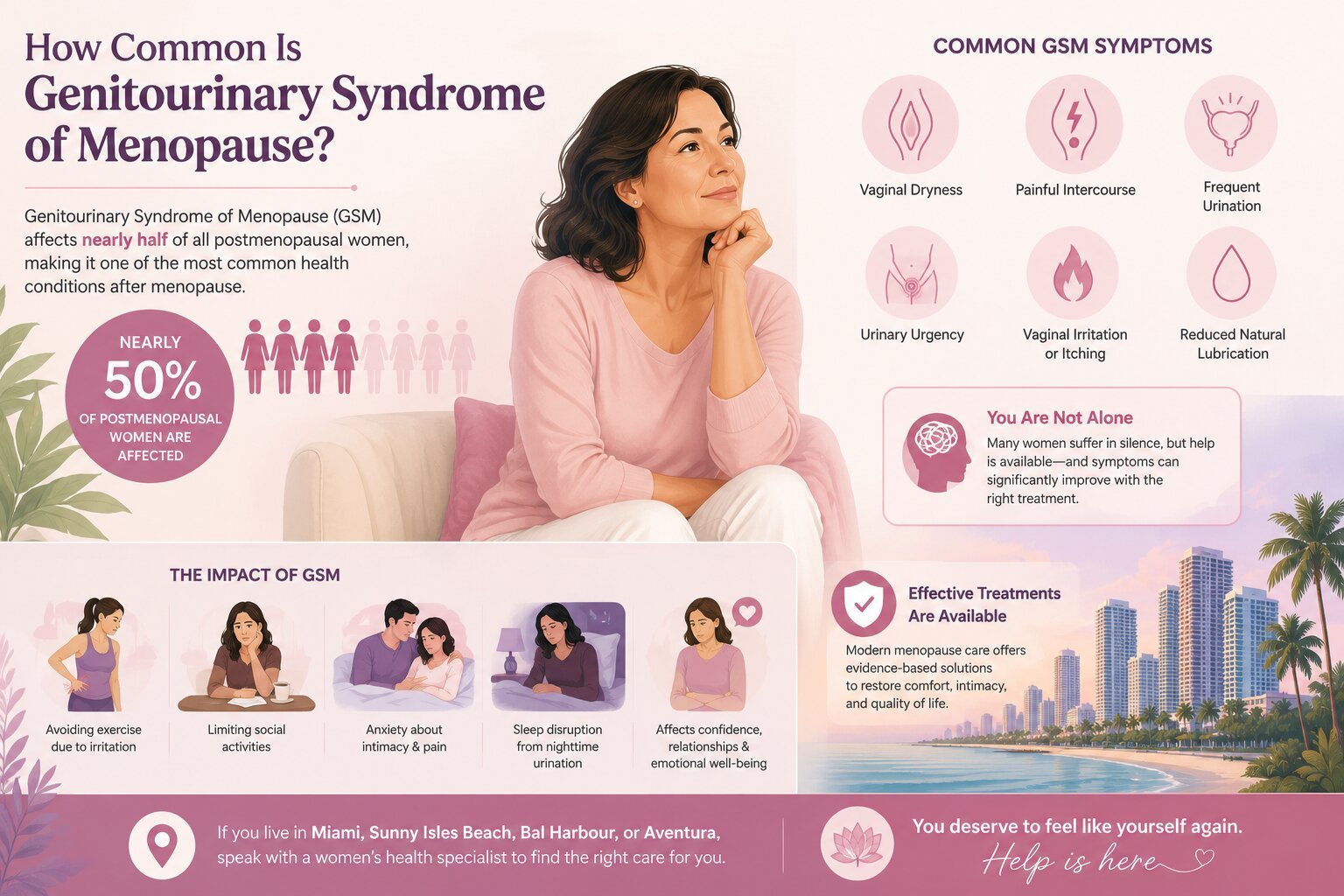
One of the biggest misconceptions about menopause is that women simply have to accept these changes as part of aging. In reality, Genitourinary Syndrome of Menopause affects nearly half of all postmenopausal women, making it one of the most common health conditions after menopause. Despite its frequency, many women never discuss their symptoms with a healthcare provider.
There are many reasons for this silence. Some women feel embarrassed to talk about vaginal dryness or painful intercourse. Others assume nothing can be done or believe these symptoms are simply part of growing older. Many are unaware that modern menopause care offers several evidence-based treatments that can improve comfort and quality of life.
The impact of GSM extends far beyond physical discomfort. Women may begin avoiding exercise because of irritation, limit social activities due to urinary urgency, or experience anxiety about intimacy because of pain. Sleep may also be disrupted by frequent nighttime urination. Over time, these issues can affect confidence, relationships, and emotional well-being.
Fortunately, awareness of GSM treatment has increased significantly over the past decade. Healthcare providers now recognize that menopause-related vaginal and urinary symptoms deserve proper medical attention, just like any other chronic health condition. Seeking help early often leads to better symptom management and a more personalized treatment plan.
If you live in Miami, Sunny Isles Beach, Bal Harbour, or Aventura, discussing these concerns with a women's health specialist can help identify the underlying cause and determine which treatment options are most appropriate for you.
What Causes Genitourinary Syndrome of Menopause?
The primary cause of GSM is the natural reduction in estrogen that occurs during menopause. During the reproductive years, estrogen helps maintain healthy vaginal tissues by supporting natural lubrication, collagen production, blood circulation, tissue elasticity, a balanced vaginal pH, and a healthy vaginal microbiome. These protective effects keep the vaginal and urinary tissues strong, comfortable, and resilient.
As estrogen levels decline, the body begins to change gradually. The vaginal lining becomes thinner, collagen production slows, and natural lubrication decreases. Blood flow to the area also reduces, making tissues less flexible and more easily irritated. These structural changes explain why many women develop vaginal dryness, burning, discomfort during intercourse, or urinary symptoms after menopause.
Although natural menopause is the most common cause, GSM can also occur in women who experience surgical menopause, receive breast cancer treatments, undergo chemotherapy or pelvic radiation, take certain hormone-blocking medications, or experience prolonged breastfeeding. Smoking may also contribute by reducing blood flow and affecting tissue health.
Every woman experiences these hormonal changes differently. Some may notice only mild dryness, while others experience multiple symptoms that interfere with everyday life. Genetics, overall health, medications, and lifestyle habits all influence how severe symptoms become.
Understanding the cause of GSM is important because treatment focuses on improving tissue health rather than simply masking symptoms. A personalized evaluation helps identify which therapies are most suitable based on medical history, symptom severity, and individual preferences.
Common Symptoms of Genitourinary Syndrome of Menopause
GSM affects every woman differently. Some experience only occasional dryness, while others develop symptoms that interfere with work, exercise, relationships, and daily comfort. The condition can involve both the reproductive and urinary systems because estrogen supports the health of multiple tissues in the pelvic area.
Vaginal Dryness
For many women, vaginal dryness after menopause is the first noticeable symptom. Natural lubrication decreases as estrogen levels fall, leaving the vaginal tissues feeling dry, tight, or irritated. Some women notice discomfort while walking, exercising, cycling, or even sitting for long periods. Dryness can also make routine gynecological exams less comfortable.
Painful Sex After Menopause
Pain during intercourse, also known as dyspareunia, is one of the most common reasons women seek treatment for GSM. Reduced lubrication and thinner tissues increase friction during intimacy, making sex uncomfortable or even painful. Over time, this discomfort may lead women to avoid intimacy altogether, which can affect emotional closeness and self-confidence.
Burning, Itching, and Irritation
Many women describe a constant feeling of burning, itching, or increased sensitivity. These symptoms often resemble a vaginal infection, even when no infection is present. Because the tissues become more fragile, everyday activities may trigger irritation that seems difficult to explain.
Urinary Symptoms
GSM can also affect the bladder and urethra. Women may experience urinary urgency, frequent urination, burning during urination, mild urinary leakage, or repeated urinary tract infections. Since these symptoms overlap with other conditions, a proper medical evaluation is important to determine the exact cause.
Reduced Sexual Satisfaction
Lower estrogen levels can reduce blood flow, nerve sensitivity, and tissue elasticity, making sexual activity less pleasurable. Some women report difficulty reaching orgasm or decreased sexual desire. These changes are common and should not be viewed as an unavoidable part of aging. A personalized treatment plan may help improve comfort and overall sexual wellness.
Why Is Estrogen So Important for Vaginal Health?
Estrogen is one of the key hormones that helps keep the vaginal and urinary tissues healthy throughout a woman's reproductive years. It supports natural lubrication, collagen production, blood circulation, tissue elasticity, healthy nerve function, and a balanced vaginal environment. When estrogen levels begin to decline during menopause, these protective effects gradually decrease, leading to the symptoms associated with Genitourinary Syndrome of Menopause (GSM).
Think of estrogen as the body's natural maintenance system. It helps keep the vaginal walls thick, flexible, and well-lubricated. As estrogen drops, the tissues become thinner, drier, and more delicate. Blood flow also decreases, reducing the amount of oxygen and nutrients reaching the area. Over time, the tissues lose elasticity, making them more likely to become irritated or painful during daily activities and intimacy.
Lower estrogen also changes the vaginal pH, which can affect the balance of healthy bacteria. This may increase the risk of irritation, infections, and recurrent urinary tract infections in some women. Many women are surprised to learn that menopause-related hormonal changes can also affect the bladder and urethra, contributing to urinary urgency, frequent urination, and mild urinary leakage.
Understanding the role of estrogen helps explain why many treatments for GSM focus on improving tissue health rather than simply relieving symptoms. Depending on a woman's medical history and personal preferences, healthcare providers may recommend vaginal moisturizers, local estrogen therapy, pelvic floor therapy, or other evidence-based treatments to improve comfort and quality of life.
Can Genitourinary Syndrome of Menopause Affect Your Relationship?
The answer is yes, and it is more common than many people realize.
Pain during intimacy can make women feel anxious, frustrated, or disconnected from their partners. Many quietly avoid sexual activity because they expect discomfort, even though they still want emotional closeness. Unfortunately, partners may misunderstand this change and assume it reflects a loss of attraction rather than physical pain.
This lack of communication can create unnecessary stress within a relationship. Women may feel embarrassed discussing vaginal dryness or painful intercourse, while partners often don't realize these symptoms are linked to menopause. The result can be emotional distance that affects both individuals.
The good news is that GSM is a medical condition—not a personal failure or an unavoidable part of aging. Open conversations with your partner and healthcare provider are often the first steps toward finding effective solutions. Many women notice significant improvements after receiving appropriate treatment, allowing them to regain confidence and enjoy intimacy again.
Every relationship is different, but addressing symptoms early often prevents them from becoming a long-term source of frustration. Seeking professional care can improve not only physical comfort but also emotional well-being and relationship satisfaction.
How Is Genitourinary Syndrome of Menopause Diagnosed?
Diagnosing Genitourinary Syndrome of Menopause is usually straightforward. Your healthcare provider will begin by discussing your symptoms, medical history, menopause status, current medications, and any previous treatments you have tried. Since many vaginal and urinary conditions can have similar symptoms, a thorough evaluation is important.
A pelvic examination is commonly performed to look for signs of thinning vaginal tissue, dryness, reduced elasticity, or other hormone-related changes. Your provider may also evaluate the vulva, bladder, urethra, and surrounding tissues to better understand the cause of your symptoms.
In some cases, additional testing may be recommended if another condition is suspected. For example, your provider may rule out infections, skin disorders, or other gynecological conditions before confirming a diagnosis of GSM. Most women do not require extensive testing unless symptoms suggest another underlying problem.
Early diagnosis allows treatment to begin before symptoms become more severe. If you experience persistent vaginal dryness, painful intercourse, urinary urgency, or recurrent urinary tract infections after menopause, scheduling an evaluation with a women's health specialist is an important step toward finding relief.
Conditions That Can Mimic GSM
Although Genitourinary Syndrome of Menopause is common, it is not the only condition that can cause vaginal discomfort or urinary symptoms. Several medical conditions may produce similar symptoms, making an accurate diagnosis essential.
Conditions that may resemble GSM include:
- Yeast infections
- Bacterial vaginosis
- Urinary tract infections (UTIs)
- Vulvar dermatitis
- Lichen sclerosus
- Lichen planus
- Pelvic floor muscle dysfunction
- Vulvodynia
Because these conditions require different treatments, self-diagnosis is not recommended. For example, burning or itching may be caused by hormonal changes rather than an infection, meaning antibiotics or antifungal medications may not solve the problem.
A healthcare provider can determine whether symptoms are caused by GSM, another medical condition, or a combination of both. This ensures you receive the most appropriate treatment based on your individual needs.
How Is Genitourinary Syndrome of Menopause Treated?
There is no single treatment that works for every woman. The best approach depends on your symptoms, medical history, overall health, and whether hormone therapy is appropriate. Many women benefit from combining more than one treatment to achieve the best results.
1. Vaginal Moisturizers and Lubricants
For women with mild symptoms, over-the-counter vaginal moisturizers and lubricants are often recommended as a first step. Moisturizers are used several times each week to help maintain moisture, while lubricants are used during sexual activity to reduce friction and discomfort.
Although these products improve comfort, they do not reverse the tissue changes caused by menopause.
2. Vaginal Estrogen Therapy
Low-dose vaginal estrogen is considered one of the most effective treatments for many women with GSM. It may help:
- Improve vaginal moisture
- Restore tissue thickness
- Increase elasticity
- Improve blood flow
- Reduce painful intercourse
- Lower the risk of recurrent urinary tract infections in appropriate patients
Because it is applied locally, vaginal estrogen generally results in much lower systemic absorption than oral hormone therapy. However, it is not suitable for everyone, particularly some women with hormone-sensitive cancers. Treatment decisions should always be made with a qualified healthcare provider.
3. Vaginal DHEA Therapy
Prescription vaginal DHEA (prasterone) is another treatment option for selected women. It may help improve vaginal dryness, painful intercourse, and overall vaginal tissue health. Your healthcare provider can determine whether this therapy is appropriate for your situation.
4. Systemic Hormone Replacement Therapy (HRT)
Women experiencing additional menopause symptoms such as hot flashes, night sweats, mood changes, or sleep disturbances may benefit from systemic hormone therapy if they are appropriate candidates. Although HRT can improve GSM symptoms, some women still require additional local treatment for vaginal discomfort.
5. Pelvic Floor Physical Therapy
Pain during intercourse is not always caused by vaginal dryness alone. Tight or overactive pelvic floor muscles may also contribute. Pelvic floor physical therapy may help improve pelvic pain, muscle tension, bladder symptoms, urinary leakage, and discomfort during intimacy.
Could the O-Shot Help Women with GSM?
The O-Shot is a regenerative procedure that uses platelet-rich plasma (PRP) prepared from a woman's own blood. After the blood is processed, the PRP is injected into specific areas of the vulvovaginal tissues following the use of a local anesthetic. For a detailed guide on what the experience feels like, read our article on whether the O-Shot is painful.
PRP contains platelets and naturally occurring growth factors involved in tissue repair. Researchers are studying whether PRP may help improve tissue health and certain symptoms in selected women.
Some women report improvements in:
- Vaginal dryness
- Sexual satisfaction
- Mild urinary leakage
- Comfort during intimacy
However, it's important to understand that research is still evolving. Larger, high-quality clinical studies are needed to determine how effective the O-Shot is specifically for Genitourinary Syndrome of Menopause. Based on the source content, it should not be considered a replacement for established treatments such as vaginal estrogen when those treatments are appropriate.
At O-Shot Miami, every patient receives an individualized evaluation to determine whether PRP may be a reasonable option as part of a comprehensive treatment plan tailored to their symptoms and health history.
Lifestyle Changes That May Help Manage GSM
While medical treatments are often the most effective way to manage Genitourinary Syndrome of Menopause (GSM), healthy daily habits can also make a meaningful difference. Lifestyle changes may not reverse the tissue changes caused by menopause, but they can support overall vaginal and urinary health and complement your treatment plan.
Staying physically active is one of the best ways to support circulation throughout the body, including the pelvic area. Regular exercise can improve blood flow, maintain a healthy weight, and support overall well-being during menopause. Drinking enough water each day also helps maintain healthy tissues and may reduce feelings of dryness.
If you smoke, quitting is strongly recommended. Smoking reduces blood flow and may contribute to tissue changes associated with menopause. Managing chronic conditions such as diabetes is equally important because uncontrolled blood sugar levels can increase the risk of infections and urinary problems.
Women may also benefit from using vaginal moisturizers regularly if recommended by their healthcare provider. Unlike lubricants, which are used during sexual activity, moisturizers are designed to help maintain vaginal moisture throughout the week. Pelvic floor exercises may also be helpful for some women, especially those experiencing mild urinary leakage or muscle weakness.
Another simple but important step is reviewing your medications with your healthcare provider. Certain medications can contribute to vaginal dryness, and your provider may be able to recommend alternatives when appropriate. The most effective approach is often a combination of healthy habits and personalized medical care. Every woman experiences menopause differently, so treatment should always be tailored to her symptoms, medical history, and personal goals.
Who May Be a Candidate for the O-Shot?
Not every woman experiencing menopause-related symptoms is automatically a candidate for the O-Shot. The procedure begins with a thorough medical evaluation to understand the underlying cause of your symptoms and determine whether platelet-rich plasma (PRP) may be an appropriate option.
According to the source material, women may be considered for evaluation if they experience:
- Vaginal dryness
- Pain during intercourse
- Mild urinary stress incontinence
- Reduced sexual satisfaction
- Difficulty achieving orgasm
- Menopause-related vaginal discomfort
It's important to remember that these symptoms can have different causes. Some women may benefit more from vaginal estrogen therapy, pelvic floor physical therapy, or other evidence-based treatments. Others may require a combination of therapies to achieve the best results.
At O-Shot Miami, each patient receives an individualized assessment rather than a one-size-fits-all recommendation. The goal is to understand your symptoms, review your medical history, and discuss all appropriate treatment options before making a decision.
When Should You See a Women's Health Specialist?
Many women wait months—or even years—before talking to a healthcare provider about menopause-related symptoms. Some believe discomfort is simply part of getting older, while others feel embarrassed discussing intimate concerns. However, seeking medical advice early can often improve comfort and quality of life.
You should consider scheduling an evaluation if you experience:
- Pain during intercourse
- Persistent vaginal dryness
- Vaginal burning or irritation
- Recurrent urinary tract infections
- Urinary leakage
- Bleeding after intercourse
- A sudden change in sexual function
These symptoms are common, but they should not be ignored. A healthcare provider can determine whether they are caused by Genitourinary Syndrome of Menopause, another medical condition, or a combination of factors.
Early diagnosis allows treatment to begin before symptoms become more severe, helping many women return to normal daily activities and improve their overall well-being.
Personalized Menopause Care Near Sunny Isles Beach, Bal Harbour, and Aventura
Women throughout Sunny Isles Beach, Bal Harbour, Aventura, North Miami Beach, Miami Beach, and Miami-Dade County visit O-Shot Miami for comprehensive menopause and sexual wellness evaluations.
During your visit, your healthcare provider may:
- Review your medical history
- Assess menopause-related symptoms
- Perform hormone evaluations when appropriate
- Discuss evidence-based treatment options
- Develop personalized recommendations based on your health history and treatment goals
The practice focuses on physician-led, individualized care in a respectful and supportive environment. Whether your symptoms are mild or significantly affecting your quality of life, a personalized treatment plan can help identify the most appropriate options for your needs.
Frequently Asked Questions
1. What is Genitourinary Syndrome of Menopause (GSM)?
GSM is a chronic condition primarily caused by lower estrogen levels after menopause. It can lead to vaginal dryness, painful intercourse, urinary symptoms, and reduced sexual comfort.
2. Is GSM the same as vaginal atrophy?
Not exactly. Vaginal atrophy refers specifically to thinning of the vaginal tissues. Genitourinary Syndrome of Menopause is a broader term that also includes symptoms affecting the bladder, urethra, and surrounding tissues.
3. Can GSM improve without treatment?
According to the source material, symptoms may remain stable for some women, but they often persist or gradually worsen over time without treatment.
4. Can the O-Shot cure GSM?
No. The source states that there is currently no established cure for GSM. The O-Shot is one treatment option under study that may help improve certain symptoms in selected women, but more high-quality research is needed.
5. Is vaginal estrogen safe?
Many women can safely use low-dose vaginal estrogen, but it is not appropriate for everyone. Your healthcare provider should review your medical history and discuss the potential benefits and risks.
6. Is the O-Shot painful?
The procedure is typically performed using a local anesthetic to minimize discomfort. Most patients tolerate it well, although individual experiences may vary. Read more in our article about O-Shot pain.
7. How long does an O-Shot appointment take?
Most appointments last approximately 45 to 60 minutes, including consultation, blood collection, PRP preparation, treatment, and post-procedure instructions.
8. How soon might I notice results?
Results vary from person to person. Some women report improvements within several weeks, while others notice gradual changes over several months. Individual outcomes cannot be guaranteed.
Conclusion
Genitourinary Syndrome of Menopause (GSM) is a common condition that affects millions of women after menopause. Symptoms such as vaginal dryness, painful sex after menopause, urinary urgency, burning, and reduced sexual satisfaction can significantly impact daily comfort, confidence, and relationships. Fortunately, these symptoms do not have to be accepted as an inevitable part of aging.
A variety of evidence-based treatments are available, including vaginal moisturizers, local estrogen therapy, DHEA therapy, pelvic floor physical therapy, and, for selected patients, regenerative approaches such as the O-Shot. Because every woman's symptoms and medical history are different, treatment should always begin with a comprehensive evaluation and personalized care plan.
If you live in Sunny Isles Beach, Bal Harbour, Aventura, Miami Beach, or the greater Miami area, speaking with a qualified women's health specialist can help you better understand your symptoms and explore the treatment options that are most appropriate for you.
Medical References
- The North American Menopause Society (NAMS). The 2022 Hormone Therapy Position Statement of The North American Menopause Society.
- American College of Obstetricians and Gynecologists (ACOG). Management of Genitourinary Syndrome of Menopause.
- Portman DJ, Gass MLS. Genitourinary Syndrome of Menopause: New Terminology for Vulvovaginal Atrophy.
- Faubion SS, et al. Genitourinary Syndrome of Menopause: Management Strategies for the Clinician.
- International Society for the Study of Women's Sexual Health (ISSWSH). Clinical practice resources on GSM and female sexual health.