
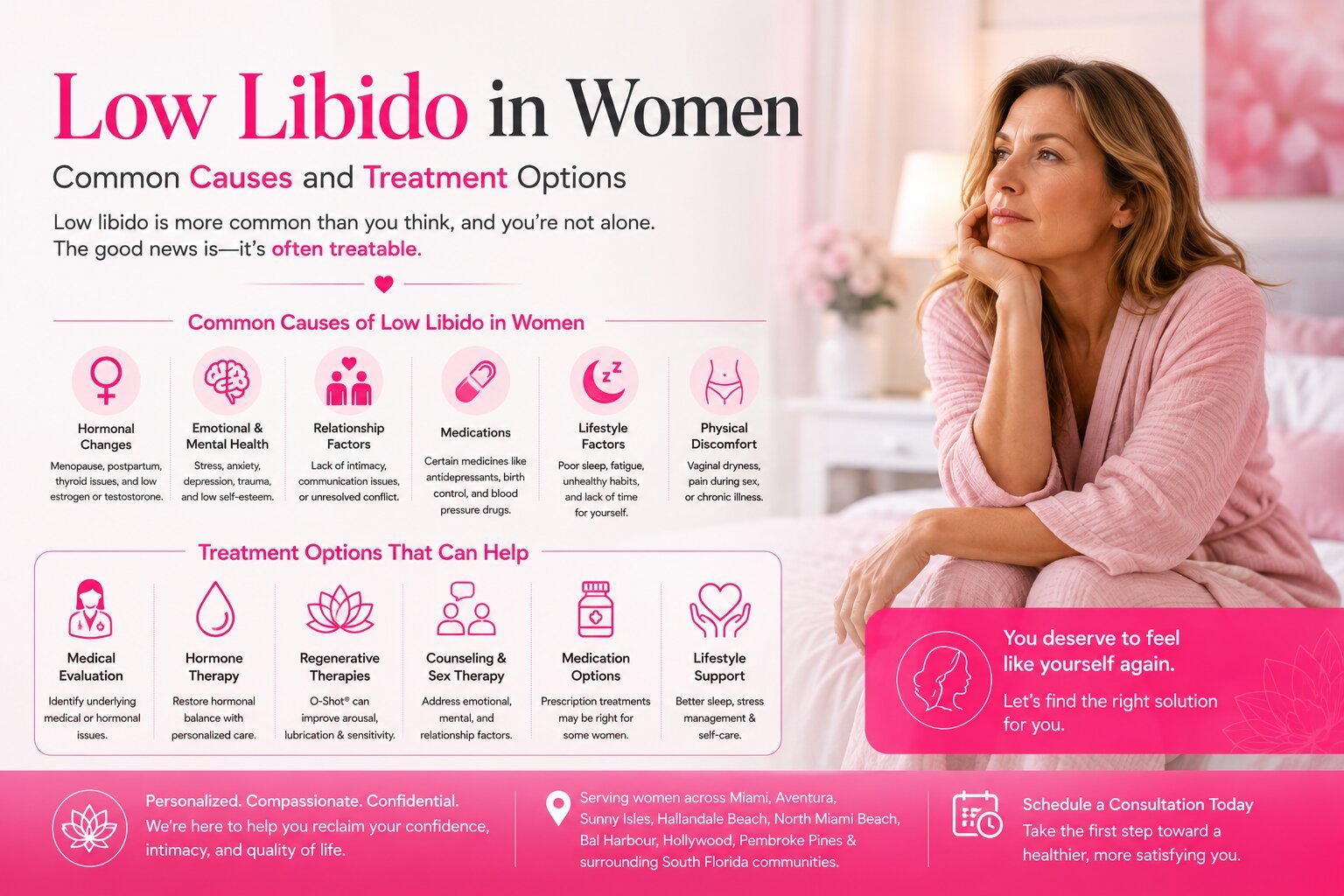
Low libido in women can be confusing, frustrating, and surprisingly difficult to talk about. A woman may notice that sex simply does not cross her mind as often as it once did, that initiating intimacy feels like another task on an already crowded calendar, or that she wants closeness with her partner but does not feel the same physical desire. Sometimes the change seems to arrive out of nowhere. Other times, it develops gradually alongside menopause, a new medication, chronic stress, poor sleep, pain, pregnancy, breastfeeding, or changes in a relationship. Whatever the circumstances, reduced sexual desire deserves to be taken seriously when it is persistent and personally distressing.
At the same time, having a lower sex drive does not automatically mean something is medically wrong. There is no universal libido setting that every woman is supposed to have. Sexual desire can rise and fall throughout life, and what feels satisfying to one person may feel completely different to another. Some women experience spontaneous desire, where sexual interest appears before any intimate interaction. Others experience responsive desire, where desire develops after affection, touch, stimulation, or emotional connection has already begun. Both patterns can be normal.
The more useful question is often not, “Is my libido low compared with someone else’s?” but rather, “Has something changed for me, and is that change causing distress?” That distinction matters because the causes of low libido are rarely limited to one hormone or one body system. Sexual desire is influenced by the brain, nervous system, hormones, physical comfort, medications, mental health, relationships, sleep, stress, and general wellbeing. Several of these factors can overlap at the same time.
The encouraging part is that low libido in women is often treatable when the contributing factors are identified. Treatment might involve something as straightforward as addressing vaginal dryness or reviewing a medication. For another woman, improving sleep, treating depression, working through relationship difficulties, or using sex therapy may make a much bigger difference. In selected patients with hypoactive sexual desire disorder, prescription treatments may also be appropriate.
The goal is not to force a woman toward an arbitrary level of sexual activity. It is to understand what changed, determine whether there is an underlying problem, and help her make informed choices about her sexual health and quality of life.
What Is Low Libido in Women?
Libido is commonly used to describe sexual desire or interest in sexual activity. Although the word sounds straightforward, sexual desire itself is anything but simple. It is shaped by biological signals, emotions, experiences, relationships, environment, physical comfort, and personal expectations. That is why two women of the same age and with similar hormone levels can have completely different levels of sexual interest and still both be healthy.
There is also no medically required number of times a woman should want sex each week or month. Some women have frequent sexual thoughts and strong spontaneous desire. Others rarely think about sex unless they are already feeling emotionally connected or physically stimulated. A change becomes more clinically meaningful when it represents a persistent departure from a person's usual experience and creates significant personal distress.
Low libido can show up in several different ways. A woman might have fewer sexual thoughts or fantasies, feel less motivated to initiate intimacy, become less interested in sexual activity with a partner, or notice that sexual stimulation no longer produces the same level of interest. She may still enjoy affection, cuddling, kissing, or emotional intimacy while experiencing little desire for sexual activity. In other cases, reduced desire occurs alongside problems with arousal, lubrication, orgasm, or pain.
That distinction is important because desire and arousal are not identical. A person may want sexual intimacy but struggle with physical arousal, while another may have adequate physical arousal once stimulation begins but rarely feel motivated to initiate sex. Understanding exactly what is happening gives a healthcare professional much better information than simply saying, “My sex drive is gone.”
How Sexual Desire Can Naturally Vary
Sexual desire is not a fixed personality trait or a permanent biological score. It can change with life circumstances. A woman who feels highly sexual during one period of her life may experience much less spontaneous desire during another, particularly when she is exhausted, dealing with major stress, caring for a newborn, recovering from illness, or adjusting to menopause.
This is one reason comparisons can be misleading. Movies, social media, friends, and even partners can create the impression that healthy sexual desire should always be frequent and effortless. Real life is considerably messier. Desire can be affected by whether someone feels safe, rested, emotionally connected, physically comfortable, and mentally available for intimacy. When those conditions change, sexual interest can change too.
When Low Desire Becomes a Health Concern
Low sexual desire becomes more important to evaluate when it persists, represents a meaningful change, or causes distress. A woman does not need to prove that her libido is objectively below average. If the change bothers her, affects her wellbeing, creates difficulties in an intimate relationship, or occurs alongside other symptoms, discussing it with a healthcare professional can be worthwhile.
Clinicians may evaluate some patients for female sexual interest/arousal disorder or hypoactive sexual desire disorder (HSDD). HSDD generally involves persistently or recurrently reduced sexual interest or desire that causes clinically significant distress and is not better explained by another condition, medication, substance, or relationship circumstance.
A diagnosis should never be based on a single symptom or a laboratory result alone. The same complaint—“I don't feel interested in sex anymore”—can have very different causes in different women. The key is to understand the individual story behind the symptom.
What Causes Low Libido in Women?
There is no single cause of low libido that applies to every woman. Sexual desire works more like a network than a light switch. If one part of that network changes, the overall experience can change with it. Hormones may matter, but so can sleep, stress, pain, medications, mental health, physical illness, and relationship dynamics.
That is why treating every case with hormones or supplements can miss the real issue. Imagine a woman whose libido changed shortly after starting an antidepressant while she was also sleeping poorly and experiencing vaginal discomfort. Measuring testosterone alone would not explain the whole picture. Likewise, a woman experiencing painful intercourse during menopause may appear to have a desire problem when the underlying issue is actually physical discomfort.
Several contributors can also reinforce each other. Pain can lead to avoidance, avoidance can create anxiety about intimacy, anxiety can make arousal more difficult, and repeated difficult experiences can eventually reduce desire. Stress can interfere with sleep, poor sleep can increase fatigue, and fatigue can make intimacy feel like one more demand. In other words, the original trigger is not always the factor maintaining the problem.
A thoughtful evaluation therefore looks at the whole person rather than searching for one magic explanation.
Hormonal Changes and Life Stages
Hormonal shifts can influence sexual function at several points in a woman's life. Changes may occur during puberty, pregnancy, the postpartum period, breastfeeding, perimenopause, and menopause. Certain surgeries, cancer treatments, and other medical interventions can also alter hormone levels or sexual function.
Menopause receives particular attention because declining ovarian hormone production can affect several aspects of sexual health. Lower estrogen can contribute to changes in vaginal tissue, lubrication, genital comfort, and the experience of sexual activity. Hot flashes and night sweats may disturb sleep, while sleep disruption can then affect energy and desire during the day.
The relationship between hormones and libido, however, is more complicated than simply saying “low estrogen equals low sex drive.” Some women experience major hormonal changes without significant distress about their sexual desire. Others may experience a substantial decline in interest, particularly when hormonal changes occur alongside pain, fatigue, sleep problems, mood changes, or medication effects.
Estrogen, Testosterone, and Sexual Function
Estrogen plays an important role in vaginal and genitourinary health, while androgens such as testosterone also participate in female sexual function. Testosterone can influence sexual motivation and other aspects of sexual response, but interpreting testosterone levels in women is not as simple as checking whether a number falls below a particular threshold.
A single testosterone blood test cannot diagnose HSDD by itself. Women can have similar laboratory results but very different sexual experiences, and laboratory measurements do not capture every factor affecting desire.
For carefully selected postmenopausal women with HSDD, clinical guidelines and international expert consensus support considering systemic testosterone after other potentially modifiable contributors have been assessed. In the United States, testosterone use for female HSDD remains an off-label treatment, so it requires individualized medical supervision, appropriate dosing, and monitoring.
The larger lesson is important: hormones can be part of the puzzle, but they are not automatically the entire puzzle.
Vaginal Dryness and Painful Intercourse
One of the most overlooked explanations for reduced sexual desire is pain. When sexual activity becomes uncomfortable, it makes sense that the body and mind may become less enthusiastic about repeating the experience. What looks like low libido can sometimes be a protective response to anticipated discomfort.
Vaginal dryness can occur for several reasons, including declining estrogen during and after menopause, breastfeeding, certain medications, hormonal contraception in some individuals, and other medical factors. When vaginal tissues become drier or more fragile, friction can cause burning, irritation, or pain. Some women also notice urinary symptoms or recurrent discomfort as part of genitourinary syndrome of menopause (GSM).
Pain during sex has other possible causes as well. Pelvic floor muscle dysfunction, vulvar conditions, infections, endometriosis, dermatologic disorders, and other gynecologic problems can contribute. Because the appropriate treatment depends on the cause, persistent or unexplained pain should not simply be tolerated.
Treatment may begin with practical measures such as appropriate lubricants during sexual activity and vaginal moisturizers for ongoing dryness. Depending on the diagnosis and a woman's medical history, a clinician may also discuss prescription options. For GSM, local vaginal estrogen is one established treatment that can improve vaginal dryness and painful intercourse. Other therapies may be appropriate for selected patients.
Treating pain does not necessarily produce an instant increase in sexual desire. But it can remove an important barrier. If intimacy stops feeling like something the body needs to brace itself against, emotional and sexual interest may have more room to return.
Stress, Mental Health, and Sleep
The brain is deeply involved in sexual desire, which means psychological wellbeing can have a surprisingly powerful effect on libido. A person does not need to be experiencing a major psychiatric disorder for stress to affect sexual interest. Sometimes the explanation is much more ordinary: an overloaded schedule, constant notifications, financial pressure, caregiving, work deadlines, or the feeling that there is never enough time to breathe.
Chronic stress can keep the body in a state of heightened alertness. When someone spends the day solving problems and anticipating the next demand, switching into a relaxed, intimate state may become difficult. Sexual desire often needs mental space, and chronic stress can consume that space.
Sleep is another major piece of the equation. A woman who is consistently sleeping five or six broken hours because of a newborn, menopause-related night sweats, insomnia, shift work, caregiving, or another health condition may simply have very little energy left for sexual activity. Fatigue can reduce motivation even when attraction and emotional connection remain intact.
Mental health conditions can also play a role. Depression may reduce interest in activities that once felt pleasurable, including sex. Anxiety can create intrusive thoughts, self-consciousness, or difficulty relaxing. Body-image concerns may make a woman feel uncomfortable being physically vulnerable with a partner. Previous trauma or negative sexual experiences can also influence sexual function and should be approached with appropriate sensitivity.
None of this means low libido is “all in your head.” Sexual health is not divided neatly into physical problems on one side and psychological problems on the other. The brain and body constantly communicate. Treating depression, anxiety, trauma-related symptoms, or severe stress may therefore be an important part of improving sexual wellbeing.
Relationship and Emotional Factors
Sexual desire does not happen in a vacuum. For many women, the emotional environment surrounding intimacy can influence whether desire appears naturally, develops with stimulation, or disappears altogether. Relationship conflict, unresolved resentment, poor communication, lack of privacy, mismatched expectations, or emotional distance can all affect sexual interest.
That does not mean every woman with low libido has a relationship problem. A healthy relationship does not guarantee a consistently high sex drive, and a woman can experience low desire even when she feels deeply connected to her partner. The point is simply that interpersonal factors can be one piece of a much larger picture.
Sometimes the problem is less dramatic than major conflict. Couples may become stuck in routines where intimacy is always postponed until the end of an exhausting day. A partner may interpret reduced initiation as rejection, while the woman experiencing low desire may feel pressured or guilty. That cycle can make intimacy increasingly difficult. What started as fatigue or hormonal change can then become mixed with anxiety and relationship tension.
Open communication can help break that cycle. Partners may benefit from discussing affection, expectations, timing, physical comfort, and the difference between spontaneous and responsive desire. For some couples, couples counseling or sex therapy provides a structured setting to discuss these issues without turning every conversation into an argument.
A useful goal is not to assign blame. Sexual desire is rarely improved by asking, “Whose fault is this?” A better question is, “What is getting in the way of intimacy, and what can we change?”
That shift can be surprisingly powerful. It turns low libido from a personal failure into a health and relationship issue that can be explored with curiosity, patience, and appropriate professional support.
Medications and Their Sexual Side Effects
Medications can be an easy-to-miss contributor to low libido, particularly when the change begins after a new prescription is started or the dosage is increased. Sexual side effects can involve more than desire alone. Some medications may affect arousal, vaginal lubrication, genital sensation, orgasm, or the ability to become mentally engaged in sexual activity. When several medications are being taken at once, identifying the specific contributor can become even more complicated.
Selective serotonin reuptake inhibitors (SSRIs) are among the medications most commonly associated with sexual side effects. These antidepressants can be extremely valuable for people with depression and anxiety, so the answer is not simply to stop taking them. Depending on the individual medication and clinical situation, a healthcare professional may consider adjusting the dose, changing medications, changing the timing of treatment, or using another strategy to manage sexual side effects.
Other categories of medication may also influence sexual function. Some blood-pressure medicines, hormonal treatments, sedating medications, and drugs used for other chronic conditions can affect sexual wellbeing in certain people. The effect is not universal, and a medication that causes problems for one woman may have no noticeable sexual effects in another.
The timing of symptoms can provide an important clue. If libido was relatively stable for years and then changed noticeably within weeks or months of starting a medication, that connection is worth discussing with the prescribing clinician. However, timing alone does not prove causation because life circumstances, illness, stress, and other medications may have changed at the same time.
A medication review should therefore be part of a thoughtful assessment of persistent low libido. Bring a complete list of prescription medicines, over-the-counter products, vitamins, and supplements to an appointment. Do not stop an antidepressant, blood-pressure medication, hormone treatment, or another prescription abruptly without medical guidance. Some medications require gradual dose reduction, and suddenly discontinuing treatment can create significant health risks.
This is also one reason caution is warranted with online “female libido boosters.” Supplements marketed as natural aphrodisiacs may contain poorly studied ingredients, inconsistent amounts of active compounds, or substances that interact with prescription medicines. A product being labeled natural does not automatically make it safe or effective.
Medical Conditions, Fatigue, and Lifestyle
Sexual wellbeing is closely connected to overall health. When the body is dealing with chronic disease, persistent pain, fatigue, or metabolic problems, sexual desire may naturally move down the priority list. The change may be temporary, or it may persist until the underlying condition is addressed.
Health conditions that may be associated with sexual difficulties include diabetes, cardiovascular disease, thyroid disorders, neurologic conditions, chronic pain conditions, and some gynecologic disorders. These conditions can affect circulation, nerve function, energy, mood, hormones, or physical comfort. In some cases, the medications used to manage them may also contribute.
Fatigue deserves special attention because it is so common and so easily dismissed. Someone caring for young children, working long hours, managing an illness, or dealing with chronic sleep disruption may not have the physical resources for spontaneous sexual desire. The issue is not necessarily a lack of attraction. Sometimes the body is simply asking for rest.
Lifestyle factors can interact with these medical contributors. Regular physical activity supports cardiovascular health, mood, energy, and overall wellbeing. Adequate sleep can improve concentration and emotional resilience. Excessive alcohol consumption may interfere with sexual response and can worsen sleep and mood, while smoking can affect vascular health.
These habits are not a magic cure for HSDD. Telling someone with severe painful intercourse to “exercise more” completely misses the point. But when lifestyle factors are contributing to fatigue, stress, or general health problems, addressing them can complement more targeted treatment.
It can be useful to think about sexual health as part of the broader health picture rather than as a separate system. If a woman feels exhausted, uncomfortable, depressed, or physically unwell, it is reasonable for her sexual desire to change. Improving the underlying health problem may sometimes improve libido without requiring a specific libido medication.
How Is Low Libido Evaluated?
There is no single blood test, scan, or physical examination that can explain every case of low libido. A good evaluation begins with a conversation. A healthcare professional will usually want to understand what has changed, when it started, how persistent it is, and whether it causes distress.
Questions may cover sexual desire, arousal, orgasm, pain, lubrication, menstrual or menopausal history, pregnancy or breastfeeding, medications, sleep, mood, medical conditions, substance use, and relationship circumstances. A clinician may also ask whether desire is absent in every situation or only in particular circumstances.
That distinction can be revealing. A woman who has little spontaneous desire but becomes interested once intimacy begins may have a different experience from someone who feels no sexual interest or pleasure in any context. Similarly, a woman who wants intimacy but avoids intercourse because it hurts needs a different treatment approach from someone whose primary issue is medication-related loss of desire.
The evaluation should also consider whether symptoms appeared after a major life event. Pregnancy, childbirth, breastfeeding, menopause, surgery, serious illness, bereavement, a new relationship, relationship conflict, or a major change in work or caregiving responsibilities can all provide useful context.
What to Expect During a Medical Evaluation
Depending on the symptoms, a clinician may perform a physical or pelvic examination. This can be particularly relevant when vaginal dryness, painful intercourse, vulvar symptoms, pelvic pain, infection, or other gynecologic concerns are present.
Laboratory testing is not automatically necessary for every woman with low libido. Tests may be considered when the medical history or physical findings suggest a particular condition. For example, a clinician might investigate thyroid disease, diabetes, anemia, or another medical problem when the symptoms point in that direction.
Hormone testing also needs context. A laboratory result should not be treated as a diagnosis by itself. Testosterone levels, for example, can vary and are not sufficient on their own to establish HSDD.
The purpose of evaluation is to identify modifiable contributors and determine whether the woman meets criteria for a specific sexual health condition. It is not simply a hunt for an abnormal number.
A useful appointment can therefore be much broader than “check my hormones.” If possible, think about when the change began, medications that were started or changed around that time, pain or dryness symptoms, sleep quality, menstrual or menopausal changes, mood, and the situations in which desire is higher or lower. Those details can make the conversation far more productive.
Treatment Options for Low Libido in Women
There is no universal treatment for low libido because there is no universal cause. The best approach is usually to identify the factors contributing to reduced desire and address them individually. For one woman, treating vaginal pain may make the greatest difference. Another may need medication adjustment, treatment for depression, improved sleep, or relationship counseling. Some women with HSDD may be appropriate candidates for prescription medication.
This individualized approach matters because treating the wrong problem can create frustration. If low desire is caused largely by painful intercourse, adding a libido medication without treating the pain may leave the underlying issue untouched. If an antidepressant is contributing, simply recommending supplements may be ineffective. And if severe relationship conflict is the central barrier, a purely hormonal approach may not address what is actually happening.
Treating Vaginal Dryness and Pain
When vaginal dryness or pain contributes to reduced desire, restoring comfort is often an important first step. Water- or silicone-based lubricants can reduce friction during sexual activity, while vaginal moisturizers may provide ongoing relief for some women experiencing dryness.
For women with genitourinary syndrome of menopause, prescription treatments may be considered based on symptoms and medical history. Local vaginal estrogen is one established option for improving symptoms such as dryness and painful intercourse. Other prescription therapies can also be appropriate for selected patients.
Treating vaginal symptoms does not mean that every woman with low libido needs estrogen. Local estrogen primarily addresses genitourinary symptoms rather than functioning as a direct treatment for HSDD. However, when discomfort is the barrier preventing enjoyable intimacy, improving comfort can have an important secondary effect on sexual desire.
Persistent pain deserves an appropriate diagnosis rather than repeated attempts to “push through it.” Pain is a signal, not a personal failure. If intercourse repeatedly hurts, a clinician can evaluate whether the cause is hormonal, pelvic-floor related, infectious, inflammatory, dermatologic, or associated with another condition.
Hormone-Based Treatment Options
Menopause can produce a cluster of symptoms that affect sexual wellbeing, including hot flashes, night sweats, sleep disruption, vaginal symptoms, and changes in sexual function. Menopausal hormone therapy (MHT) can be appropriate for some women with bothersome menopausal symptoms, but it is not automatically appropriate for everyone.
Treatment decisions should consider age, medical history, time since menopause, symptoms, treatment goals, and the potential benefits and risks of hormone therapy. A clinician can help determine whether systemic hormone treatment makes sense for an individual patient.
It is important to separate treatment of menopausal symptoms from treatment of low desire itself. A woman may have both problems, but they are not interchangeable. Treating hot flashes and vaginal discomfort may improve wellbeing and indirectly help sexual function, while persistent HSDD may require additional assessment.
Testosterone is another option that receives considerable attention online. Evidence-based guidance supports consideration of systemic testosterone optimization for appropriately evaluated postmenopausal women with HSDD, particularly after other contributing factors have been considered. In the United States, testosterone therapy for women with HSDD is off label.
Appropriate treatment involves careful dosing and clinical monitoring. Excessive androgen exposure can cause adverse effects such as acne, increased facial or body hair, and other androgenic changes. Testosterone should not be prescribed simply because a blood test reports a “low” value.
Prescription Medications for HSDD
For some women with diagnosed acquired, generalized HSDD, prescription medications may be considered. Two FDA-approved medications commonly discussed in the United States are flibanserin (Addyi) and bremelanotide (Vyleesi), although their indications, dosing, and safety considerations differ.
Flibanserin
Flibanserin is a daily prescription medication for eligible women with acquired, generalized HSDD. The FDA labeling was revised in December 2025, and the current indication covers women younger than 65 with acquired, generalized HSDD when the condition is not attributable to another medical or psychiatric condition, relationship problems, or medication or substance effects.
It is taken once daily at bedtime. Flibanserin has important safety considerations, including the potential for hypotension and fainting in certain circumstances and clinically important interactions involving alcohol and some medications. A healthcare professional should review a patient's medication and alcohol use before prescribing it.
This medication is not intended to enhance sexual performance or treat every form of low desire. Appropriate diagnosis and patient selection matter.
Bremelanotide
Bremelanotide is marketed under the brand name Vyleesi and is approved for certain premenopausal women with acquired, generalized HSDD. Unlike flibanserin, it is administered by subcutaneous injection on an as-needed basis before anticipated sexual activity.
Bremelanotide is not appropriate for everyone. It can temporarily increase blood pressure and is contraindicated in women with uncontrolled hypertension or known cardiovascular disease. Nausea is also a commonly recognized adverse effect.
The difference between these medications illustrates why a clinician's evaluation matters. Age or menopausal status, medical history, cardiovascular health, other medications, symptom pattern, and treatment preferences can all affect which options are appropriate.
Counseling, Sex Therapy, and Lifestyle Changes
Medical treatment is only one part of sexual healthcare. For women whose low libido is influenced by stress, anxiety, depression, body-image concerns, trauma, relationship difficulties, or sexual communication problems, counseling or sex therapy can be highly relevant.
Sex therapy does not mean that a woman is being told her symptoms are imaginary. Sexual response involves the brain as well as the reproductive organs, hormones, blood vessels, muscles, and nerves. Addressing psychological or interpersonal factors is therefore a legitimate component of comprehensive medical care.
Cognitive behavioral approaches, mindfulness-based interventions, individual therapy, couples counseling, and specialized sex therapy may help selected women. The most appropriate approach depends on the reason for reduced desire and the woman's goals.
Lifestyle measures can also support sexual wellbeing. Regular physical activity, adequate sleep, stress management, limiting excessive alcohol, avoiding smoking, and creating intentional opportunities for intimacy may all contribute to better overall health and sexual function.
There is a practical point here that often gets overlooked: intimacy sometimes needs protected time. Modern life can turn relationships into a constant stream of logistics—work, children, household responsibilities, appointments, screens, and errands. Waiting for spontaneous desire to appear in the middle of that chaos may not work for everyone.
Creating time for affection does not mean scheduling obligation or forcing sexual activity. It can simply mean protecting space for closeness without the expectation that intercourse must follow. For some women, reducing pressure makes it easier for responsive desire to emerge naturally.
When Should You See a Healthcare Provider?
You do not have to wait until low libido becomes severe before asking for help. Consider speaking with a healthcare professional when a persistent change in sexual desire is bothering you, affecting your relationship, or reducing your quality of life.
An evaluation is particularly useful when reduced desire occurs alongside painful intercourse, vaginal dryness, menopausal symptoms, significant fatigue, mood changes, menstrual changes, or a recent medication change. It is also worth discussing if sexual desire changes suddenly without an obvious explanation.
The purpose of seeking care is not to convince yourself that you need medication. Sometimes the most useful outcome of an appointment is discovering a treatable underlying problem or simply receiving reassurance that your experience falls within normal variation.
Be cautious with products marketed as instant libido cures. Supplements, compounded hormones, online testosterone products, and unregulated sexual-health products may not have the same evidence, quality controls, or safety monitoring as approved therapies. “Natural” is not a synonym for safe, and a product that affects hormones or blood vessels can interact with other medicines.
A qualified healthcare professional can help distinguish between normal fluctuations, medication effects, medical conditions, menopause-related symptoms, relationship or psychological contributors, and clinically significant HSDD. That distinction can save time, money, and unnecessary treatment.
The Bottom Line
Low libido in women is a common and complex issue that can stem from various physical, hormonal, psychological, and relational factors. Understanding your body and having an open discussion with a healthcare provider can help demystify these changes. By identifying the root causes—whether they are related to medication, menopause, pelvic floor issues, or relationship dynamics—you can explore appropriate, evidence-based treatments that suit your unique needs and restore your quality of life.