
What Is the O Shot?
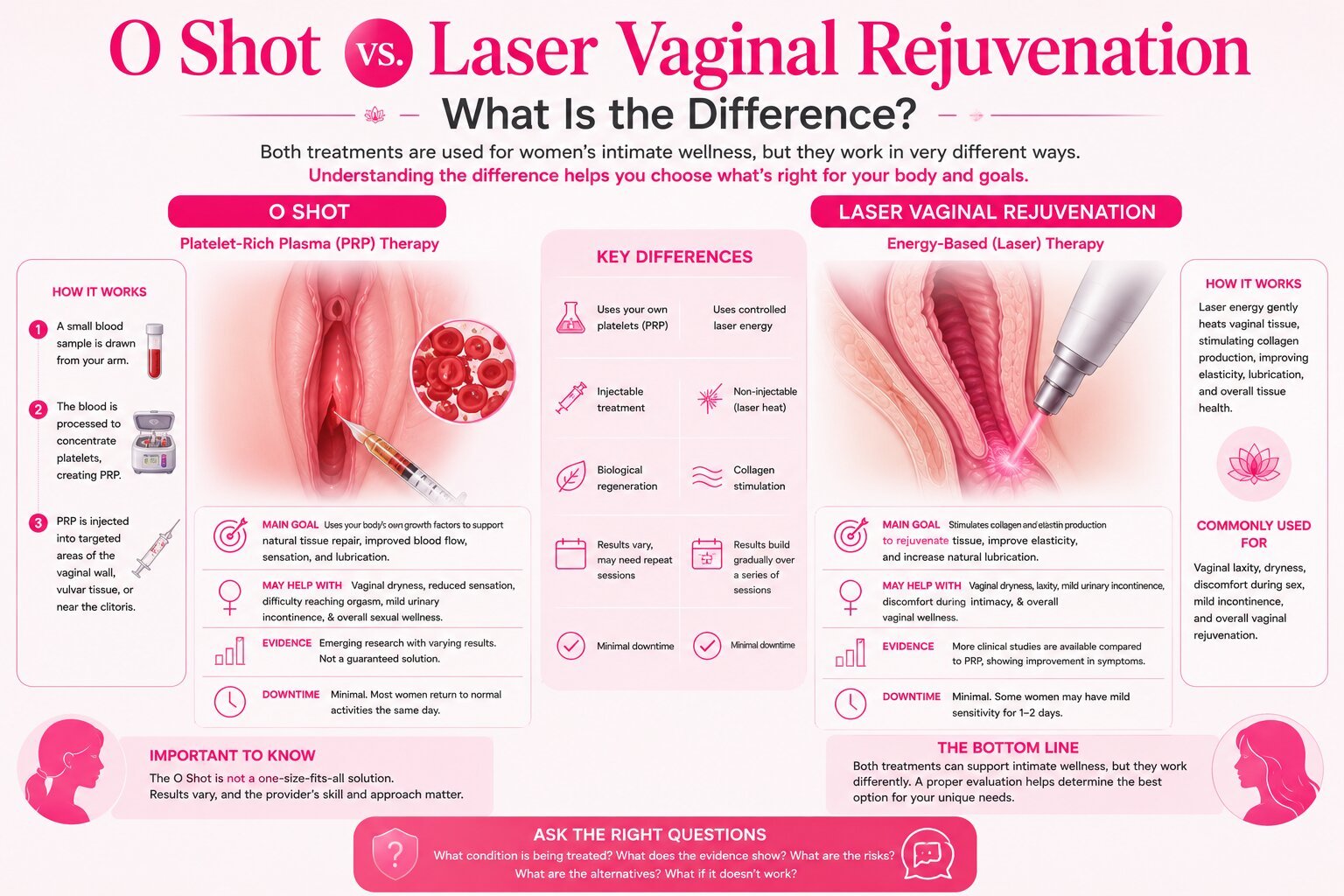
The O Shot is a commonly used name for a procedure involving platelet-rich plasma (PRP) injections into selected areas of female genital tissue. Unlike a laser procedure, it does not use heat, light, or an energy-based device. Instead, the treatment starts with the patient’s own blood. A small blood sample is collected and processed to concentrate platelets, and the resulting PRP is then injected into areas such as the vaginal wall, vulvar tissue, or tissues near the clitoris, depending on the clinician’s technique and the reason for treatment. The concept behind the procedure is relatively straightforward: platelets contain a range of proteins and signaling molecules that participate in the body’s natural processes of tissue repair and healing, so researchers have been investigating whether concentrated platelets could influence local tissue health, blood flow, sensation, or sexual function.
That biological theory is interesting, but it is important not to confuse a plausible mechanism with a proven clinical result. The O Shot has been promoted for concerns ranging from vaginal dryness and reduced sexual sensation to difficulty reaching orgasm and urinary symptoms, yet the quality of evidence varies substantially depending on the condition being treated. Research into vulvovaginal PRP is still developing, and studies have used different PRP preparation methods, injection sites, doses, treatment schedules, and outcome measures. That makes it difficult to compare one study directly with another or predict what an individual patient will experience. Some women may report meaningful improvement, while others may notice little or no change. In other words, the O Shot should be understood as an emerging treatment option, not as a guaranteed solution for female sexual dysfunction or vaginal health concerns.
Another point that often gets lost in online marketing is that the O Shot is not a single standardized medical protocol used identically everywhere. A clinic may describe its particular PRP preparation or injection technique as an O Shot, while another provider may use a somewhat different approach. The person performing the procedure therefore matters. A qualified clinician should first determine what is actually causing the patient’s symptoms rather than assuming that PRP is the appropriate answer. Vaginal dryness associated with menopause, for example, can have a very different underlying mechanism from pelvic floor dysfunction or vulvar pain. Treating the symptom without identifying its cause can leave the real problem untouched.
For that reason, anyone considering an O Shot should look beyond before-and-after claims and ask practical medical questions. What specific condition is being treated? What evidence supports PRP for that condition? What alternatives are available? How is the PRP prepared? Where will it be injected? What side effects are possible? And what happens if the treatment does not work? Those questions help turn a heavily marketed procedure into an informed healthcare decision.
How Does PRP Work in the O Shot?
PRP, or platelet-rich plasma, is produced from the patient’s own blood rather than from a synthetic filler or another person’s tissue. After blood is drawn, it is processed to separate components of the blood and concentrate platelets in a smaller volume of plasma. Platelets are familiar because of their role in blood clotting, but they also contain numerous growth factors and signaling substances involved in the body’s response to tissue injury. This is the basic reason PRP has attracted attention in many medical fields, including orthopedics, dermatology, wound care, and regenerative medicine. In the O Shot context, clinicians hope that placing concentrated platelets into targeted genital tissue may encourage biological processes that could influence tissue quality or function.
The important word here is may. Researchers are still determining whether these biological effects translate into consistent, meaningful improvements in women with specific vulvovaginal or sexual health conditions. A laboratory mechanism can sound compelling while the actual patient benefit remains uncertain. Think of it like giving a construction crew more materials: having more materials available does not necessarily mean the finished building will be stronger, especially if the underlying structural problem has not been identified. Similarly, PRP contains biologically active components, but that alone does not establish that an injection will restore orgasm, eliminate vaginal dryness, reverse tissue changes, or stop urinary leakage.
Studies also differ in how PRP is prepared. Platelet concentration, the presence or absence of other blood components, injection volume, injection depth, and treatment frequency can all vary. Those differences matter because a procedure cannot easily become a standardized treatment when researchers are not yet using identical methods. A 2025 systematic review of PRP for vulvovaginal disorders reported potentially positive findings in some studies but emphasized limitations such as small sample sizes, inconsistent protocols, and a shortage of high-quality randomized evidence. The authors concluded that larger and better-designed clinical trials are needed before firm conclusions can be reached.
That does not mean PRP research should be dismissed. Quite the opposite: the growing research base is useful because it helps determine where this approach might eventually have a legitimate role. Recent randomized studies have reported encouraging signals in some measures of sexual function and vulvovaginal symptoms, including research involving postmenopausal women. At the same time, promising early results are not the same thing as established medical consensus. A patient should therefore receive a balanced explanation of both possibilities: PRP might help in certain circumstances, but the magnitude, durability, and predictability of that benefit remain uncertain.
What Is Laser Vaginal Rejuvenation?
Laser vaginal rejuvenation is a broad term commonly used to describe procedures that deliver controlled energy to vaginal tissue. The phrase itself is important because it can make a treatment sound more specific and established than it actually is. There is no single universally standardized procedure called “laser vaginal rejuvenation.” Different devices, wavelengths, energy settings, treatment depths, and protocols may be used, and some treatments marketed under similar names can differ substantially from one another. The most frequently discussed laser technologies include fractional carbon dioxide, or CO2, lasers and Er:YAG lasers.
The proposed idea behind these treatments is that carefully delivered energy can create controlled thermal effects in vaginal tissue. Depending on the device and settings, the energy may heat tissue or produce microscopic treatment zones, which are intended to trigger a healing and remodeling response. Advocates have proposed that this process could influence collagen production, tissue structure, elasticity, lubrication, or other aspects of vaginal tissue. Those proposed changes have led to marketing claims involving vaginal dryness, menopause-related symptoms, painful intercourse, urinary leakage, vaginal laxity, and sexual function. Yet a treatment producing a biological response does not automatically mean that it produces a clinically meaningful improvement in symptoms.
This distinction is particularly important for vaginal health because the symptoms being marketed as targets for laser treatment can have many different causes. For instance, vaginal dryness during menopause is often associated with declining estrogen levels and the broader condition known as genitourinary syndrome of menopause (GSM). Simply heating vaginal tissue does not necessarily address every hormonal or physiological factor contributing to GSM. Likewise, urinary leakage may result from pelvic floor dysfunction, childbirth-related changes, neurological conditions, bladder problems, or other causes. A laser treatment cannot reasonably be expected to solve all of these different conditions through the same mechanism.
Professional organizations have therefore urged caution. The American College of Obstetricians and Gynecologists (ACOG) states that the FDA has not approved laser or other energy-based treatments for vaginal cosmetic surgery, menopause-related symptoms, urinary incontinence, or sexual problems. ACOG has also highlighted potential complications, including burns, scarring, painful intercourse, and persistent pain. This does not mean that every woman who undergoes a vaginal laser procedure will experience a complication, but it does mean that marketing language should not replace a discussion of uncertainty, potential harm, and evidence quality.
The distinction becomes especially important when a procedure is described using words such as “rejuvenation,” “regeneration,” or “restoration.” These terms can sound reassuring, but they do not tell a patient whether a treatment has been demonstrated to improve her particular condition in well-controlled clinical trials. Before considering laser treatment, it is reasonable to ask what device will actually be used, what condition it is intended to treat, whether that indication is supported by major medical guidelines, what alternatives exist, and what complications have been reported. A good consultation should leave the patient understanding not only what the laser is supposed to do, but also what remains unknown.
CO2 Laser vs Er:YAG Laser
CO2 and Er:YAG lasers are both energy-based technologies, but they do not deliver energy to tissue in exactly the same way. A fractional CO2 laser uses a wavelength that is strongly absorbed by water and can create microscopic columns or zones of thermal treatment in tissue. An Er:YAG laser also interacts strongly with water but generally has different tissue effects and treatment characteristics because of its wavelength and energy delivery. In clinical settings, device manufacturers may promote particular treatment protocols for vaginal symptoms, but the existence of different technologies does not mean one has automatically been proven superior for every condition.
This is where comparisons can become confusing. A study evaluating one CO2 device at one energy setting cannot necessarily be used to make claims about every laser marketed for vaginal treatment. Even within the same broad category, treatment parameters can influence how much energy reaches tissue and how the tissue responds. Patient characteristics also matter. Age, menopausal status, hormonal environment, underlying medical conditions, previous treatments, and the actual cause of symptoms can all influence outcomes. Therefore, “laser vaginal rejuvenation” should not be treated as one uniform intervention with one predictable result.
The scientific evidence has also evolved over time. Earlier studies, particularly smaller observational trials, sometimes reported improvements in symptoms such as dryness or painful intercourse. Those findings generated considerable interest and helped drive further research. However, larger and better-controlled studies have produced a more complicated picture, and professional guidelines have not concluded that vaginal laser therapy should routinely replace established treatments for menopausal genitourinary symptoms.
The 2025 AUA/SUFU/AUGS guideline on genitourinary syndrome of menopause is particularly relevant when women are considering laser for menopause-related vaginal symptoms. The guideline states that current evidence does not support the use of CO2 laser, Er:YAG laser, or radiofrequency for common GSM symptoms such as vaginal dryness, vaginal discomfort, and painful intercourse. It also indicates that CO2 laser may be considered in selected circumstances through shared decision-making when a patient cannot use or prefers alternatives to FDA-approved treatments, while emphasizing the experimental nature of the therapy outside clinical trials.
That nuance matters. Saying that evidence is insufficient is not the same as saying that laser can never help anyone. Medicine often contains treatments that appear promising but have not yet accumulated enough high-quality evidence to become standard care. The responsible approach is to recognize where the evidence is strong, where it is weak, and where uncertainty remains. For women researching an O Shot versus laser vaginal rejuvenation, the type of laser is therefore only one piece of the decision; the much bigger question is whether the proposed treatment has credible evidence for the specific problem being treated.
O Shot vs Laser Vaginal Rejuvenation: Key Difference in How They Work
The simplest way to understand the difference between these treatments is to think of PRP as an injectable biological approach and laser therapy as an energy-based approach. The O Shot uses material derived from the patient’s own blood and places it into selected genital tissues. Vaginal laser treatment uses a device to deliver controlled energy to the vaginal tissue. Both approaches have been described using regenerative or tissue-rejuvenation language, but their mechanisms, procedural steps, risks, and evidence bases are distinctly different.
With the O Shot, the clinician first obtains a blood sample. The blood is processed to concentrate platelets, and the resulting PRP is injected into selected areas. The intended biological effect comes from substances contained within the platelet-rich preparation. Researchers are investigating whether these substances can influence healing, blood vessel activity, inflammation, tissue characteristics, or sensation. The proposed benefit therefore depends on a biological response following an injection rather than a thermal response caused by an energy device.
Laser treatment follows a different path. Instead of introducing PRP into tissue, the clinician uses a laser handpiece to deliver energy to the vaginal lining. Depending on the device and settings, this can involve heating tissue or creating microscopic areas of controlled thermal injury. The proposed benefit comes from the body’s subsequent remodeling response. Changes in collagen and tissue structure have been proposed as possible mechanisms, although proving that these microscopic or biological changes produce meaningful long-term improvements in symptoms is a separate scientific question.
There are also practical differences. The O Shot involves blood collection and injections, meaning patients may experience needle-related discomfort, bruising, swelling, or temporary tenderness. Laser treatment avoids injections but introduces the possibility of energy-related tissue injury. ACOG specifically warns about potential complications associated with vaginal energy-based treatments, including burns, scarring, painful intercourse, and persistent pain. Neither procedure should therefore be described as completely risk-free simply because both may be offered in outpatient settings.
The biggest difference, however, may be the way patients and clinicians should interpret the evidence. A procedure can have an appealing mechanism and still lack sufficient clinical evidence. PRP research is growing, but protocols remain inconsistent and larger trials are needed. Laser therapy has also generated numerous studies, yet major professional organizations remain cautious about routine use for menopause-related vaginal symptoms and other indications. When comparing an O Shot with vaginal laser rejuvenation, the right question is not which treatment sounds more advanced. The better question is which, if either, has credible evidence for the individual’s diagnosed condition and whether established treatments offer a stronger balance of benefits and risks.
What Does the Research Say About the O Shot?
Research into vulvovaginal PRP has expanded considerably, but it is still an emerging area of medicine. Some studies have reported improvements in sexual function, vaginal symptoms, or patient-reported outcomes after PRP injections. Those findings have understandably attracted attention, especially among women looking for options for sexual concerns or symptoms associated with menopause. Yet the research landscape is not as simple as promotional material can make it appear. The available studies vary widely in their design, patient populations, PRP preparation methods, injection techniques, follow-up periods, and outcome measurements.
A 2023 systematic review examining PRP injections for female sexual dysfunction and stress urinary incontinence concluded that the available evidence was insufficient to establish clear efficacy. The authors also pointed to substantial differences between studies, making it difficult to draw firm conclusions. That finding is important because systematic reviews are useful for identifying patterns across multiple studies, but they can only be as strong as the underlying research. If individual studies are small, poorly controlled, or use different treatment protocols, the review may reveal that the overall evidence remains uncertain rather than providing a definitive answer.
More recent research has added encouraging signals. A randomized controlled study involving postmenopausal women with vulvovaginal atrophy reported improvement in sexual function scores following vaginal PRP compared with saline. Other recent randomized research has also investigated PRP for sexual function and reported potential benefits in some measurements while finding that not every individual difference reached statistical significance. These results are useful because randomized and placebo-controlled research can provide stronger evidence than uncontrolled before-and-after studies. Still, relatively small trials should be interpreted as pieces of a larger puzzle rather than the final answer.
Another challenge is standardization. Imagine comparing several recipes for the same dish when each chef uses a different amount of the main ingredient, a different cooking temperature, and a different cooking time. Even if some chefs produce excellent results, it becomes difficult to know exactly which recipe should be recommended to everyone. PRP research has a similar problem. Different studies may use different platelet concentrations, preparation systems, injection locations, volumes, and numbers of sessions. Until researchers establish more consistent protocols and reproduce results in larger populations, it remains difficult to tell exactly which PRP approach is most effective for which patient.
The 2025 systematic review of PRP in vulvovaginal disorders reflects this uncertainty. It found reports of improvements in symptoms and sexual function but emphasized limitations such as small study populations, inconsistent treatment methods, and limited high-quality evidence. The researchers concluded that larger randomized trials are necessary before definitive conclusions can be made. That is a reasonable position for patients to adopt as well: the O Shot is promising enough to study, but not established enough to guarantee a particular outcome.
This distinction is particularly important when discussing the O Shot for orgasm or sexual sensation. Sexual function is influenced by hormones, psychological wellbeing, relationships, medications, pelvic floor function, pain, neurological factors, sleep, stress, and general health. A localized injection cannot necessarily address all of those variables. If a woman’s reduced sexual response is caused primarily by medication, pelvic floor dysfunction, severe pain, hormonal changes, or another underlying condition, treating vaginal tissue alone may not solve the problem. A thorough assessment should therefore come before the procedure.
For now, the most accurate description of the evidence is neither “the O Shot definitely works” nor “the O Shot has no scientific basis.” The evidence sits somewhere between those extremes. Early and emerging research suggests that PRP may have therapeutic potential for certain vulvovaginal concerns, but the treatment still needs better-designed, larger, standardized clinical trials to determine who benefits, how much benefit is likely, how long it lasts, and what treatment protocol is most appropriate.
What Does the Research Say About Vaginal Laser Treatment?
Vaginal laser therapy has attracted substantial attention because early studies appeared to show improvements in symptoms such as dryness, burning, painful intercourse, and some urinary complaints, particularly among postmenopausal women. The proposed explanation also sounds intuitive: controlled energy is delivered to vaginal tissue, the tissue responds to that stimulation, and the healing process may lead to remodeling. For someone experiencing uncomfortable menopausal symptoms, that can sound like a straightforward path toward relief. The problem is that medical evidence has to go beyond whether a treatment produces a biological effect or whether patients report feeling better after treatment. Researchers need to determine whether the improvement is consistently greater than placebo effects, whether it lasts, whether it is clinically meaningful, and whether the benefits outweigh the risks.
That is where the evidence surrounding laser vaginal rejuvenation becomes more complicated. Some early studies were observational, involved relatively small numbers of participants, or did not include a convincing control group. Without an appropriate comparison group, it can be difficult to know how much improvement came from the treatment itself and how much came from natural changes, expectations, additional treatments, or placebo effects. This is especially relevant for symptoms such as sexual discomfort, lubrication, and sexual satisfaction, which can fluctuate over time and are influenced by numerous physical and psychological factors. A patient may genuinely feel better after a procedure without that automatically proving that the laser itself was responsible for the improvement.
Professional medical organizations have consequently taken a cautious position. The 2025 AUA/SUFU/AUGS guideline on genitourinary syndrome of menopause states that available evidence does not support the use of CO2 laser, Er:YAG laser, or radiofrequency for common GSM symptoms, including vaginal dryness, vaginal discomfort, and painful intercourse. The guideline does allow for discussion of CO2 laser in selected situations through shared decision-making, particularly when a patient cannot use or prefers alternatives to FDA-approved therapies, but it characterizes treatment outside clinical trials as experimental. That distinction is valuable because it acknowledges that research is continuing without presenting an investigational treatment as established routine care.
ACOG takes a similarly cautious position. Its patient guidance explains that the FDA has not approved laser or other energy-based treatments for vaginal rejuvenation, menopause-related symptoms, urinary incontinence, or sexual problems. ACOG also warns that complications can include burns, scarring, painful intercourse, and persistent or chronic pain. The fact that these complications are possible does not mean they occur in every patient, but it does mean that a consultation should include a realistic discussion of potential harm rather than focusing exclusively on the procedure's marketing claims.
The evidence should therefore be interpreted according to the specific condition being treated. A laser study involving a particular menopausal population cannot automatically establish that the treatment works for urinary leakage, orgasm difficulties, vaginal laxity, or sexual dysfunction from another cause. Likewise, a study using one specific laser device cannot necessarily be generalized to every energy-based vaginal procedure. When you see a clinic advertise “laser vaginal rejuvenation,” it is worth asking a surprisingly simple question: What exact condition is this treatment proven to treat? If the answer is vague, relies heavily on testimonials, or uses broad words such as “rejuvenation” without describing the underlying evidence, that is a reason to slow down and seek a more detailed medical explanation.
O Shot vs Laser for Vaginal Dryness
If vaginal dryness is the main reason you are researching O Shot vs laser vaginal rejuvenation, the underlying cause should be investigated before choosing a procedure. Vaginal dryness is extremely common around perimenopause and menopause because declining estrogen levels can affect the tissues of the vagina, vulva, and lower urinary tract. These changes are part of genitourinary syndrome of menopause, or GSM, which can involve dryness, burning, irritation, discomfort during intercourse, urinary symptoms, and changes in lubrication. Other causes are possible too, including certain medications, breastfeeding, hormonal changes, medical conditions, inadequate arousal, and irritating personal-care products.
That matters because treating dryness is not simply a matter of making vaginal tissue “more youthful.” The vagina is living tissue that responds to hormonal, vascular, neurological, and mechanical influences. When estrogen levels fall, changes can occur in the vaginal lining, tissue elasticity, lubrication, and the surrounding genitourinary system. If the primary driver is hormonal, a treatment that does not address that hormonal environment may not be the most appropriate first-line option. The best treatment therefore depends on the cause, severity, medical history, and preferences of the individual patient.
Evidence-based options for GSM may include vaginal moisturizers and lubricants, and for appropriate patients, local low-dose vaginal estrogen or other prescription therapies such as vaginal DHEA. The correct choice depends on medical history, symptoms, contraindications, personal preferences, and clinician assessment. These established options should be part of the conversation before moving directly toward a procedure marketed as regenerative or nonhormonal. Choosing a newer procedure simply because it sounds technologically advanced does not necessarily provide a better outcome.
Where does the O Shot fit? PRP is being investigated for vulvovaginal symptoms, and some studies have reported improvements in patient-reported outcomes. However, there is not currently enough high-quality evidence to say that an O Shot reliably treats menopausal vaginal dryness or should replace established GSM treatments. The same caution applies to laser therapy, with the 2025 AUA/SUFU/AUGS guideline specifically stating that current evidence does not support CO2 or Er:YAG laser for common GSM symptoms. In practical terms, neither treatment should automatically be presented as the obvious answer to menopause-related dryness.
This is one reason a good consultation can be more useful than comparing advertisements. A clinician can determine whether the dryness is actually caused by GSM, whether infection or a dermatological condition is contributing, whether pelvic floor tension is creating secondary discomfort, and whether medications or other health issues are involved. If a woman has severe dryness and painful sex because of untreated GSM, simply focusing on “rejuvenating” tissue may miss the bigger picture. On the other hand, if conventional treatments are unsuitable or unwanted, a clinician can explain what evidence exists for less-established options and where the uncertainties lie.
For women searching online, a useful rule is simple: do not choose a procedure based solely on the symptom it advertises. Choose based on the diagnosis behind that symptom. “Vaginal dryness” is a symptom, not a complete diagnosis. Once the cause is understood, the treatment conversation becomes much clearer.
O Shot vs Laser for Sexual Function
Sexual function is one of the areas where comparisons between the O Shot and vaginal laser become particularly complicated. It is tempting to imagine that improving vaginal tissue will automatically improve sexual pleasure, but female sexual response does not work like a single mechanical switch. Desire, arousal, lubrication, genital sensation, orgasm, comfort, emotional wellbeing, relationship dynamics, medications, sleep, stress, hormones, and pelvic floor function can all interact. A procedure directed at vaginal tissue may influence one component while leaving several others unchanged.
The O Shot has received attention because PRP injections are sometimes promoted as a way to improve sensitivity or orgasm. Research has reported improvements in some sexual function measurements following vulvovaginal PRP, and newer randomized studies have added to the evidence base. That is encouraging, but it still does not justify a promise that an O Shot will produce a stronger orgasm or make someone orgasm for the first time. Sexual function studies often use questionnaires containing several domains, and a statistically measurable change in one score does not necessarily mean that every participant experiences a dramatic improvement in real-world sexual satisfaction.
Laser treatment has also been marketed for sexual function. The theory is generally based on improving tissue characteristics, lubrication, comfort, or elasticity, which might indirectly influence sexual experiences. But again, a theoretical pathway is not proof of an outcome. Current professional guidance does not consider energy-based vaginal treatment an established treatment for sexual problems. ACOG specifically notes that the FDA has not approved these energy-based treatments for sexual problems, reinforcing the importance of distinguishing marketing claims from regulatory approval and clinical evidence.
There is another issue that deserves attention: pain can suppress sexual function even when desire is intact. A woman who expects intercourse to hurt may naturally become tense, avoid penetration, experience reduced arousal, or struggle to reach orgasm. In that situation, identifying and treating the source of pain may have a greater impact on sexual function than performing a tissue-focused procedure. Pelvic floor physical therapy, appropriate treatment of GSM, management of vulvar disorders, medication review, and sex therapy may all be relevant depending on the underlying problem.
The same applies to low desire. Reduced sexual desire can be associated with menopause, medications, depression, anxiety, relationship difficulties, chronic illness, sleep problems, stress, or other factors. An injection or laser treatment cannot reasonably be expected to address all of these. A comprehensive sexual health evaluation can sometimes uncover a straightforward explanation that would otherwise be overlooked if the focus stays exclusively on vaginal rejuvenation.
So, which is better for sexual function? There is currently no strong evidence that allows the O Shot or vaginal laser to be declared a universally superior treatment. PRP research is evolving and contains promising signals, but the evidence remains limited. Laser treatment has been studied in several settings, yet major professional organizations continue to question its routine use for sexual problems. The most sensible approach is to identify what aspect of sexual function has changed and why before deciding whether any procedure is appropriate.
Which Treatment Is Used for Painful Intercourse?
Pain during intercourse, known medically as dyspareunia, deserves a particularly careful evaluation because it can have many causes. Menopause-related tissue changes are one possibility, but they are far from the only one. Pelvic floor muscle overactivity, vulvodynia, vaginal infections, skin disorders, endometriosis, scarring, childbirth-related trauma, hormonal changes, pelvic surgery, and inadequate lubrication can all contribute to pain. Even when two women describe their symptoms using exactly the same words, their underlying conditions may be completely different.
This makes painful intercourse a poor target for a one-size-fits-all treatment. If the pain is caused primarily by GSM, treatment directed toward restoring vaginal moisture and tissue health may be appropriate. If pelvic floor muscles are chronically tight, however, pelvic floor physical therapy could be much more relevant. If there is an infection or dermatological condition, the underlying disorder needs to be treated. If scar tissue or another structural issue is involved, a completely different evaluation may be necessary.
Both PRP and laser procedures have been studied or marketed for painful intercourse, particularly in relation to menopausal vaginal symptoms. Some studies have reported improvements after treatment, but professional guidelines remain cautious about vaginal laser therapy. The AUA/SUFU/AUGS guideline does not support routine use of CO2 or Er:YAG laser for GSM-related vaginal discomfort and dyspareunia based on current evidence. PRP has shown promising findings in some studies, but evidence remains insufficient to establish it as a standard treatment for every cause of painful intercourse.
There is also an important safety consideration. A treatment intended to reduce pain should not create a new source of pain. ACOG warns that energy-based vaginal procedures can potentially cause burns, scarring, painful intercourse, and persistent pain. That does not mean laser treatment inevitably causes these problems, but it highlights why patients need a clear discussion about risks. Similarly, injections can cause temporary pain, swelling, tenderness, bleeding, bruising, or infection.
A useful first step is to describe the pain as precisely as possible. Is it at the entrance of the vagina or deeper inside? Does it occur immediately with penetration or develop afterward? Is there burning, itching, dryness, pressure, or muscle tightening? Does pain occur only during intercourse, or also with tampons, pelvic examinations, or everyday activities? Those details can give a healthcare professional valuable clues.
Instead of asking only, “Which procedure treats painful sex?” consider asking, “What is causing my painful sex?” Once that question is answered, the treatment decision becomes much more rational. Sometimes the appropriate answer may involve a procedure, but sometimes it may involve medication, physical therapy, lubricants, hormonal treatment, treatment of an infection or skin condition, counseling, or a combination of approaches.
What Are the Risks of the O Shot?
Because the O Shot uses a patient’s own blood, it is sometimes described as a natural or low-risk treatment. There is some logic behind the lower concern about allergy to the injected material because the PRP comes from the patient, but using your own biological material does not make an injection risk-free. Any injection into sensitive genital tissue can produce local side effects, and the overall risk depends on the technique, injection site, sterile conditions, the clinician’s training, and the patient’s health.
Potential short-term effects can include soreness, tenderness, swelling, bruising, minor bleeding, and temporary discomfort. Some patients may experience changes in sensation while the area recovers. Infection is another potential complication of any invasive procedure, although appropriate sterile technique is designed to reduce that risk. There is also the simplest possible outcome to consider: the procedure may not produce the improvement the patient hoped to achieve.
One of the bigger uncertainties is not necessarily a dramatic complication but the lack of standardized treatment protocols. Researchers are still investigating the ideal PRP preparation, concentration, injection locations, treatment volume, and frequency. Because different clinics may use different techniques, patients should not assume that positive findings from one study automatically apply to every commercial O Shot protocol.
It is also important to ask what happens if symptoms persist. A responsible clinician should not imply that additional injections are automatically the answer. If the initial treatment does not help, the underlying diagnosis may need to be reconsidered. Continuing to perform procedures without reassessing the cause can expose a patient to unnecessary expense and risk.
Patients should also be cautious of guarantees. Claims such as “permanent orgasm enhancement,” “guaranteed lubrication,” or “zero-risk regeneration” are not consistent with the uncertainty of the current evidence. A legitimate medical discussion should acknowledge both encouraging findings and limitations. The goal should be informed consent, not persuasion.
What Are the Risks of Vaginal Laser Treatment?
Laser treatment has a different risk profile because it uses energy to alter or heat tissue. The vaginal lining is sensitive, and excessive or improperly delivered energy can cause tissue injury. ACOG identifies potential complications including burns, scarring, painful intercourse, and persistent or chronic pain. These risks are especially important when patients are considering a procedure that is being marketed as cosmetic, regenerative, or minimally invasive.
The word “minimally invasive” can sometimes create a false sense of safety. A procedure does not have to involve surgery or general anesthesia to cause tissue damage. Laser energy is intentionally used to produce a biological effect, and that effect has to be controlled carefully. Device settings, treatment technique, tissue characteristics, and patient factors can all influence how the tissue responds.
Another concern is the possibility of undergoing repeated treatment without clear evidence that additional sessions provide meaningful long-term benefit. Some commercial protocols may recommend a series of treatments followed by maintenance sessions. Patients should ask what evidence supports that schedule and whether long-term outcomes have been established. If the evidence is still evolving, repeated treatment should not be presented as an inevitable part of maintaining “vaginal rejuvenation.”
The American Urogynecologic Society (AUGS) has previously highlighted important gaps concerning the safety, effectiveness, indications, maintenance schedules, and long-term benefits of vaginal energy-based therapies. That is a useful reminder that a treatment can be commercially available while important questions about its optimal use remain unanswered.
Patients should also understand that regulatory status matters. ACOG states that the FDA has not approved these energy-based treatments for vaginal rejuvenation, menopause-related symptoms, urinary incontinence, or sexual problems. This does not mean that every use of every laser device is prohibited or that research cannot continue. It means that patients should not interpret a commercially available treatment as equivalent to an FDA-approved therapy for the condition being advertised.
If someone develops severe pain, unusual bleeding, signs of infection, or other concerning symptoms following a vaginal laser procedure, prompt medical evaluation is appropriate. A cosmetic or elective procedure should never make a patient feel that she has to simply tolerate a complication.
Downtime, Recovery, and What Treatment Feels Like
Recovery is another area where online comparisons can become misleading because there is no single standardized protocol for either treatment. The O Shot involves blood collection and injections, so patients may experience localized soreness, tenderness, bruising, or swelling afterward. The amount and duration of discomfort can depend on where injections are placed and how the individual responds. A clinician should provide specific instructions about sexual activity, exercise, hygiene, and other activities after treatment rather than relying on generic claims about “no downtime.”
Laser treatment can also be performed in an outpatient setting, but the recovery experience depends heavily on the device, energy settings, treatment technique, and individual patient. Even when a clinic describes the procedure as quick, the tissue still needs time to respond to the energy delivered. Patients should ask exactly what they are expected to feel afterward and how long symptoms such as tenderness or irritation might last.
One mistake is to compare recovery time without comparing what happens to the tissue. A shorter appointment does not automatically mean a safer procedure. The more useful questions are: What is being done to the tissue? What side effects are expected? What restrictions are recommended? What symptoms are normal? Which symptoms should trigger a call to the clinician? And what evidence supports the recommended recovery protocol?
Patients should also be cautious about making decisions based on the promise of returning immediately to normal activities. Recovery is individual. Someone with sensitive tissue, underlying inflammation, menopause-related changes, or another condition may respond differently from someone in a clinical study. A healthcare professional who knows the patient's medical history can provide more useful guidance than a generic advertisement.
Cost and Treatment Planning Considerations
Cost can be an important part of the decision, especially because many vaginal rejuvenation procedures are elective and may not be covered by insurance. However, price should not become the primary measure of value. A lower-cost procedure is not necessarily a better choice, and a more expensive treatment is not necessarily more effective. The first consideration should always be whether the treatment is appropriate for the diagnosed problem and whether credible evidence supports its use.
Patients should ask for the complete treatment cost, not simply the advertised price of the first session. For PRP, this may include consultation, blood collection, processing, injection, and follow-up. For laser treatment, the initial fee may not represent the total cost if a clinic recommends multiple sessions or future maintenance treatments. Knowing the full financial commitment makes it easier to compare the treatment with established medical alternatives.
It is also worth asking whether the procedure is being recommended because of a specific diagnosis or because it is part of a packaged wellness or rejuvenation program. Medical treatment should be connected to a clinical need. If the consultation quickly turns into an expensive package sale without a careful assessment of symptoms, medical history, and alternatives, seeking a second opinion can be sensible.
A strong consultation should include alternatives, including the option of doing nothing immediately while gathering more information. That may sound obvious, but elective treatments sometimes create a sense of urgency that is not medically necessary. Women deserve enough time to understand the evidence, risks, costs, and expected outcomes before making a decision.
Who Might Consider PRP Treatment?
PRP may be worth discussing with a qualified healthcare professional for women who have specific vulvovaginal or sexual health concerns and are interested in emerging therapies after understanding the evidence limitations. The key word is discussing, rather than automatically choosing. Current research does not establish the O Shot as a universally appropriate treatment for female sexual dysfunction, vaginal dryness, urinary leakage, or orgasm difficulties.
A clinician may consider the patient's symptoms, menopausal status, previous treatments, medical conditions, medications, sexual health concerns, and goals. If established treatments have been tried or are unsuitable, an emerging treatment may sometimes become part of a broader conversation. That conversation should include realistic expectations and an explanation that individual outcomes cannot be guaranteed.
Women should be particularly cautious if a provider claims that PRP can reliably solve multiple unrelated conditions at once. A single injection protocol should not be presented as a cure for menopause, urinary incontinence, low desire, orgasm difficulties, vaginal laxity, and pelvic floor problems simultaneously. Those conditions can have entirely different causes.
Who Should Be Cautious About Vaginal Laser Treatment?
Anyone considering vaginal laser therapy should approach the procedure carefully if it is being marketed as a universal solution for menopause, sexual dysfunction, urinary leakage, or vaginal aging. The current evidence and professional guidance do not justify presenting these treatments as established cures for all of those concerns. Patients with unexplained pelvic or vaginal pain should also receive an appropriate evaluation before undergoing an energy-based procedure.
Particular attention should be given to whether an FDA-approved or better-established treatment is available for the specific condition. The fact that a patient prefers a nonhormonal or procedural option is a legitimate preference, but that preference should be balanced against the uncertainty surrounding the proposed treatment. Shared decision-making means understanding both sides of the equation rather than hearing only the potential benefits.
A second opinion from a gynecologist, urogynecologist, or another clinician with appropriate expertise in female pelvic medicine can be valuable when the proposed treatment is expensive, elective, experimental, or accompanied by strong marketing claims. Patients should never feel pressured to proceed simply because a clinic says that a limited-time package or promotional offer is available.
How Should You Choose Between the O Shot and Laser?
The most useful starting point is not “Which procedure is better?” It is “What is causing my symptoms?” That single change in perspective can completely alter the treatment conversation. A woman with menopause-related dryness, for example, may benefit from a very different treatment strategy than someone with pelvic floor dysfunction, vulvodynia, urinary leakage, or orgasm difficulty.
Before considering either procedure, discuss your symptoms and medical history with a qualified healthcare professional. It can help to prepare a list covering how long the symptoms have existed, whether they are getting worse, whether menopause or childbirth is involved, which medications you take, whether intercourse is painful, whether urinary symptoms are present, and what treatments you have already tried.
Useful questions to bring to the appointment include:
- What is the most likely cause of my symptoms?
- What diagnosis are we actually treating?
- What evidence supports this procedure for my specific condition?
- Are there FDA-approved or better-established alternatives?
- What are the realistic benefits rather than the best-case results?
- What are the potential risks and complications associated with this treatment?
- What happens if this procedure does not provide the relief I need?
- Are there physical therapy or non-invasive options I should explore first?
By carefully reviewing the available evidence with your healthcare provider, you can determine a treatment plan tailored specifically to your needs, minimizing risks and maximizing the chances of meaningful improvement.
Conclusion
Both the O Shot and laser vaginal rejuvenation represent prominent developments in the field of regenerative and aesthetic gynecology. While the O Shot utilizes the healing potential of your own platelet-rich plasma, laser therapies employ energy to stimulate tissue remodeling. Despite their differences, both are marketed heavily for issues like vaginal dryness, painful intercourse, and sexual dysfunction.
However, the medical evidence supporting these procedures is still evolving, and major professional organizations advise caution before adopting them as first-line treatments for conditions such as genitourinary syndrome of menopause or female sexual dysfunction. Rather than choosing between the two based on marketing, women are best served by obtaining an accurate diagnosis from a qualified healthcare professional and exploring all evidence-based options, including hormonal treatments, physical therapy, and other established medical care.