
Menopause brings many changes to a woman's body, but not all of them are widely discussed. While hot flashes and mood swings are well-known, many women are surprised by the intimate symptoms that can appear after menopause. Vaginal dryness, burning, irritation, pain during intimacy, and frequent urinary problems are common, yet many women hesitate to talk about them with their healthcare provider.
These symptoms are often caused by Genitourinary Syndrome of Menopause (GSM), a condition previously known as vaginal atrophy. Unlike some menopause symptoms that improve over time, GSM usually becomes more noticeable without treatment. The good news is that several treatment options are available today, including both hormone-based and non-hormonal therapies.
One treatment receiving growing attention is the O-Shot for Vaginal Atrophy. The O-Shot uses Platelet-Rich Plasma (PRP) prepared from your own blood to support the body's natural healing process. While research into PRP continues to grow, it is important to understand both its potential benefits and its current limitations.
If you are looking for an O-Shot in Miami, Aventura, Sunny Isles Beach, Bal Harbour, Pembroke Pines, or Hallandale Beach, this guide explains how the treatment works, what current studies suggest, and whether it may be a suitable option for your symptoms.
What Is Vaginal Atrophy?
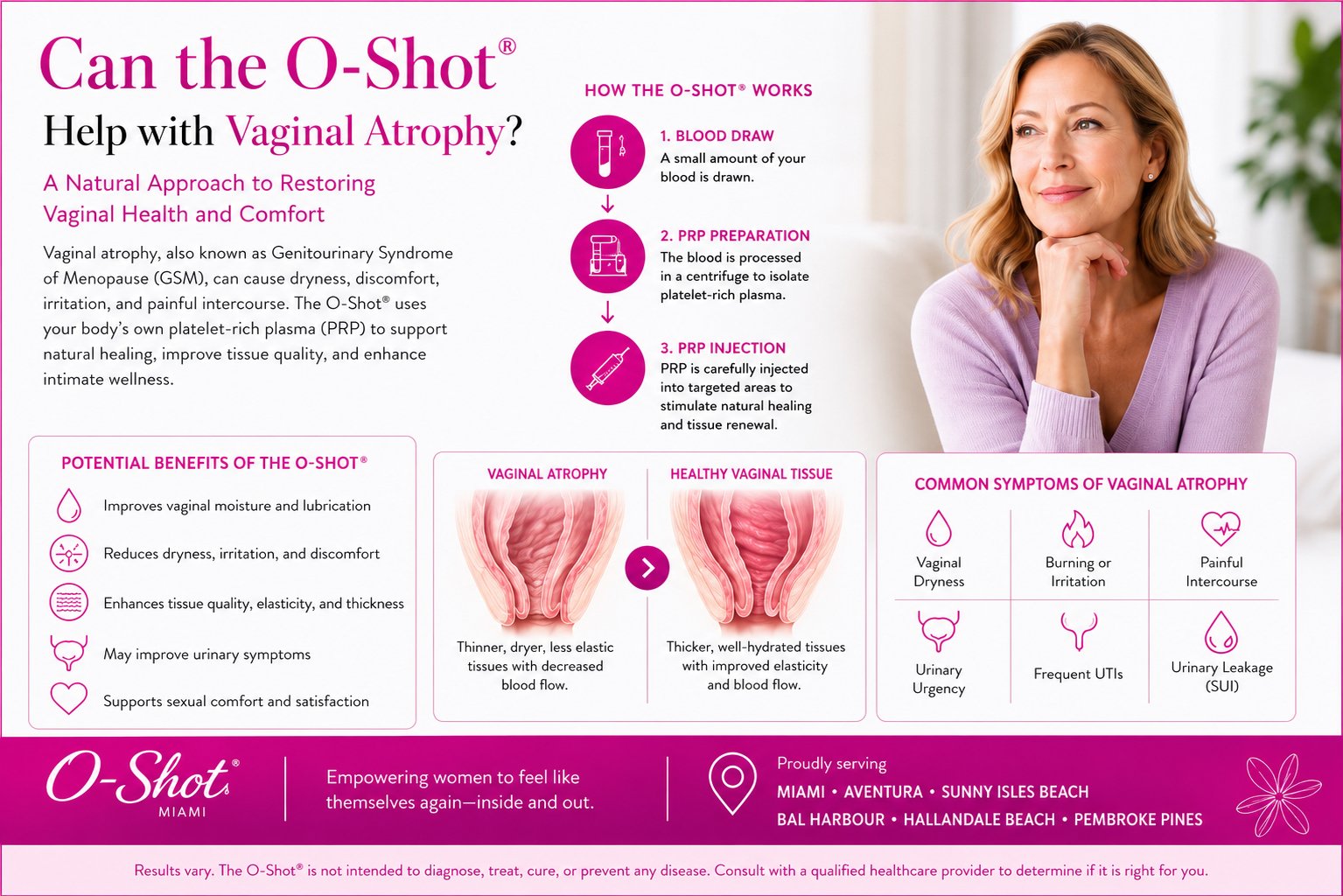
Vaginal atrophy occurs when estrogen levels decline, causing the vaginal tissues to become thinner, drier, and less flexible. Healthcare providers now use the term Genitourinary Syndrome of Menopause (GSM) because the condition affects not only the vagina but also the vulva, bladder, and urinary system.
Estrogen plays an important role in keeping vaginal tissues healthy. It helps maintain natural moisture, supports blood circulation, encourages collagen production, and keeps the tissue elastic. As estrogen levels decrease during menopause, these protective effects gradually decline.
Many women experience vaginal dryness first. Over time, they may notice itching, burning, discomfort during sexual activity, or urinary symptoms like urgency and frequent infections. These symptoms often affect confidence, relationships, and overall quality of life.
Research shows that more than half of postmenopausal women experience symptoms of GSM, yet many never seek treatment because they believe it is simply a normal part of aging. In reality, vaginal atrophy is a medical condition with several effective treatment options.
Why Does Vaginal Atrophy Develop?
The main reason vaginal atrophy develops is the natural decline in estrogen during menopause. However, menopause is not the only cause. Any condition that lowers estrogen levels can contribute to the development of GSM.
As estrogen decreases, several changes happen inside the vaginal tissues. The lining becomes thinner, blood flow is reduced, collagen production slows, and natural lubrication decreases. The vaginal pH also changes, making irritation and infections more likely.
Women who have had surgical menopause, chemotherapy, pelvic radiation, or certain breast cancer treatments may experience similar symptoms because these treatments can lower estrogen levels. Breastfeeding may also cause temporary vaginal dryness due to hormonal changes.
Smoking can further reduce blood circulation to vaginal tissues, increasing the risk of dryness and discomfort. Women who are not sexually active for long periods may also notice symptoms sooner because regular sexual activity helps maintain healthy blood flow and tissue flexibility.
Understanding these changes helps women recognize that vaginal dryness is not simply an unavoidable part of aging. It is a treatable medical condition that deserves proper evaluation and care.
Common Symptoms of Genitourinary Syndrome of Menopause
Symptoms of GSM vary from woman to woman. Some women experience only mild dryness, while others develop symptoms that significantly affect their daily life and relationships.
Common symptoms include:
- Vaginal dryness
- Burning or irritation
- Itching
- Reduced natural lubrication
- Pain during sexual intercourse
- Light bleeding after intimacy
- Vaginal tightness
- Frequent urinary tract infections
- Urinary urgency and frequent urination
- Mild urinary leakage
These symptoms often develop slowly, making them easy to ignore at first. However, they usually do not improve on their own. Instead, many women notice that discomfort gradually becomes worse over time.
The urinary symptoms of GSM are often overlooked. Women may believe they have repeated bladder infections when the underlying problem is actually thinning vaginal and urinary tissues caused by low estrogen.
If any of these symptoms are affecting your daily life, speaking with a qualified healthcare provider is the first step toward finding relief.
How Is Vaginal Atrophy Diagnosed?
Diagnosing Genitourinary Syndrome of Menopause usually begins with a discussion about your symptoms and medical history. Your healthcare provider may ask about vaginal dryness, painful intercourse, urinary symptoms, previous hormone therapy, medications, and your menopausal history.
A pelvic examination allows the provider to assess the condition of the vaginal tissues. During the exam, they look for thinning tissue, reduced elasticity, dryness, and other common signs of estrogen deficiency.
In most cases, additional testing is not necessary unless another condition is suspected. Your healthcare provider may recommend further evaluation if symptoms appear unusual or if infections need to be ruled out.
Getting the correct diagnosis is important because many different conditions can cause vaginal discomfort. Once GSM has been confirmed, your provider can recommend the treatment options most appropriate for your individual needs.
What Is the O-Shot?
The O-Shot® (Orgasm Shot) is a regenerative treatment that uses Platelet-Rich Plasma (PRP) made from your own blood. PRP contains concentrated platelets that release growth factors involved in the body's natural healing and tissue repair processes.
The procedure is relatively simple and is usually completed within an hour.
- First, a small amount of blood is taken from your arm, similar to a routine blood test. The blood is then placed into a centrifuge, which separates the platelet-rich plasma from the other blood components.
- Before treatment, a numbing cream or local anesthetic is applied to help improve comfort. The PRP is then carefully injected into specific areas of the vaginal tissue by a trained healthcare provider.
- Because PRP comes from your own blood, there is little risk of allergic reaction. Most women return to normal daily activities shortly after the procedure, although individual recovery experiences may vary.
The O-Shot is designed to support the body's natural healing response rather than introducing hormones into the body. For this reason, some women who cannot use estrogen or prefer a non-hormonal approach ask their physician whether PRP may be appropriate for them.
How Might PRP Help Vaginal Tissue?
The O-Shot for vaginal atrophy uses Platelet-Rich Plasma (PRP), which contains a high concentration of platelets taken from your own blood. These platelets release natural growth factors that play a role in tissue repair and healing throughout the body. PRP has been used in areas such as orthopedics, sports medicine, dermatology, and wound care for many years. More recently, researchers have started studying its potential benefits in women's intimate health.
The idea behind PRP is that these growth factors may help improve the health of vaginal tissue by encouraging the body's natural repair process. Researchers believe PRP may:
- Support collagen production
- Encourage the formation of new blood vessels (angiogenesis)
- Improve local blood circulation
- Promote tissue remodeling
- Support natural healing
Healthier tissue and improved blood flow may help reduce vaginal dryness after menopause, improve comfort during intimacy, and support overall vaginal health for some women.
However, it is important to understand that PRP does not replace estrogen. It works differently from hormone therapy and is not intended to restore hormone levels. Results can vary from one patient to another, depending on age, overall health, the severity of symptoms, and individual healing response.
What Does Current Research Say?
Interest in PRP for vaginal atrophy has increased over the past several years, and early research has shown encouraging results. Some small clinical studies have reported improvements in symptoms such as vaginal dryness, painful intercourse, lubrication, mild urinary symptoms, and sexual satisfaction after PRP treatment.
Many women participating in these studies also reported an improved quality of life and greater confidence in their intimate health. These early findings have made regenerative treatments like the O-Shot an area of growing interest among both patients and healthcare providers.
That said, current research still has important limitations. Many studies involve a small number of participants, use different methods to prepare PRP, and follow patients for different lengths of time. Because of these differences, comparing results between studies can be difficult.
Medical experts agree that larger, well-designed randomized controlled trials are still needed before PRP can be considered a standard treatment for Genitourinary Syndrome of Menopause (GSM). At this time, the O-Shot is generally viewed as an emerging regenerative therapy, not a proven cure.
If you are considering the O-Shot in Miami, your provider should explain both the potential benefits and the current evidence so you can make an informed decision based on your individual health needs.
O-Shot vs. Estrogen Therapy: What's the Difference?
One of the biggest differences between the O-Shot and traditional treatments is that PRP is non-hormonal.
Vaginal estrogen therapy has been used for many years and remains one of the most effective treatments for Genitourinary Syndrome of Menopause. It works by replacing the estrogen that the body no longer produces, helping restore moisture, improve tissue thickness, and reduce many GSM symptoms.
The O-Shot takes a different approach. Instead of adding hormones, it uses your body's own platelets to support tissue repair and regeneration. Because of this, some women who cannot use estrogen due to certain medical conditions or who simply prefer a non-hormonal option may ask their physician whether PRP could be appropriate.
Some healthcare providers may also recommend combining treatments. For example, vaginal estrogen may address hormone deficiency, while PRP may support tissue health. The right treatment plan depends on your medical history, symptoms, and personal goals.
There is no single treatment that is best for everyone. A personalized evaluation is the best way to determine which option is most suitable.
Who May Be a Good Candidate for the O-Shot?
Not every woman with vaginal atrophy is automatically a candidate for the O-Shot. A complete medical evaluation is important before deciding whether PRP treatment is appropriate.
You may be a potential candidate if you:
- Experience vaginal dryness after menopause
- Have discomfort during sexual activity
- Prefer a non-hormonal treatment option
- Are looking for additional support alongside other therapies
- Have been evaluated by a qualified healthcare provider
Women with certain medical conditions, active infections, bleeding disorders, or specific blood-related diseases may not be suitable candidates. Your provider will review your medical history and discuss whether PRP is a safe option for you.
If you live in Miami, Aventura, Sunny Isles Beach, Bal Harbour, Pembroke Pines, or Hallandale Beach, choosing an experienced medical provider who regularly performs PRP treatments can help ensure you receive a thorough evaluation and realistic expectations about the procedure.
Is the O-Shot a Cure for Vaginal Atrophy?
The simple answer is no.
Current medical evidence does not support describing the O-Shot as a cure for vaginal atrophy or Genitourinary Syndrome of Menopause.
Instead, research suggests that some women may experience improvement in symptoms, including vaginal dryness, lubrication, comfort during intimacy, and mild urinary concerns. Others may notice only modest improvements, while some may not experience significant changes.
Every woman's body responds differently. Factors such as age, hormone levels, overall health, and the severity of tissue changes can all influence treatment outcomes.
It is important to avoid advertisements that promise guaranteed results. A trustworthy healthcare provider will explain both the potential benefits and the current limitations of PRP therapy so you can make an informed decision.
Final Thoughts
Living with vaginal dryness after menopause or Genitourinary Syndrome of Menopause (GSM) can affect comfort, confidence, relationships, and overall quality of life. The good news is that these symptoms are common, treatable, and should never be considered something you simply have to accept.
The O-Shot for Vaginal Atrophy is an exciting area of regenerative medicine that continues to gain attention. Early studies suggest that PRP may help improve vaginal tissue health and relieve certain symptoms for some women. However, more high-quality research is still needed to fully understand its long-term effectiveness and identify which patients benefit the most.
If you are experiencing symptoms of GSM, the first step is to schedule a consultation with a qualified healthcare provider. They can evaluate your symptoms, discuss available treatment options, and help you decide whether vaginal estrogen, PRP therapy, or another approach is best suited to your needs.
For women seeking menopause treatment in Miami, Aventura, Sunny Isles Beach, Bal Harbour, Pembroke Pines, or Hallandale Beach, working with an experienced provider ensures you receive personalized care based on the latest medical evidence rather than marketing claims.
The right treatment can help you feel more comfortable, improve your intimate health, and support a better quality of life throughout menopause.
Schedule a Consultation
At OShotMiami.com, Dr. Nina Gupta provides comprehensive evaluations for women experiencing menopause-related sexual health concerns. Your consultation includes a personalised assessment to discuss evidence-based options, including lifestyle strategies, vaginal health therapies, hormone optimization, and regenerative treatments such as the O-Shot.
If intimacy has become painful or you are experiencing symptoms of GSM, contact us today to learn more about your options and develop a treatment plan tailored specifically to you.