
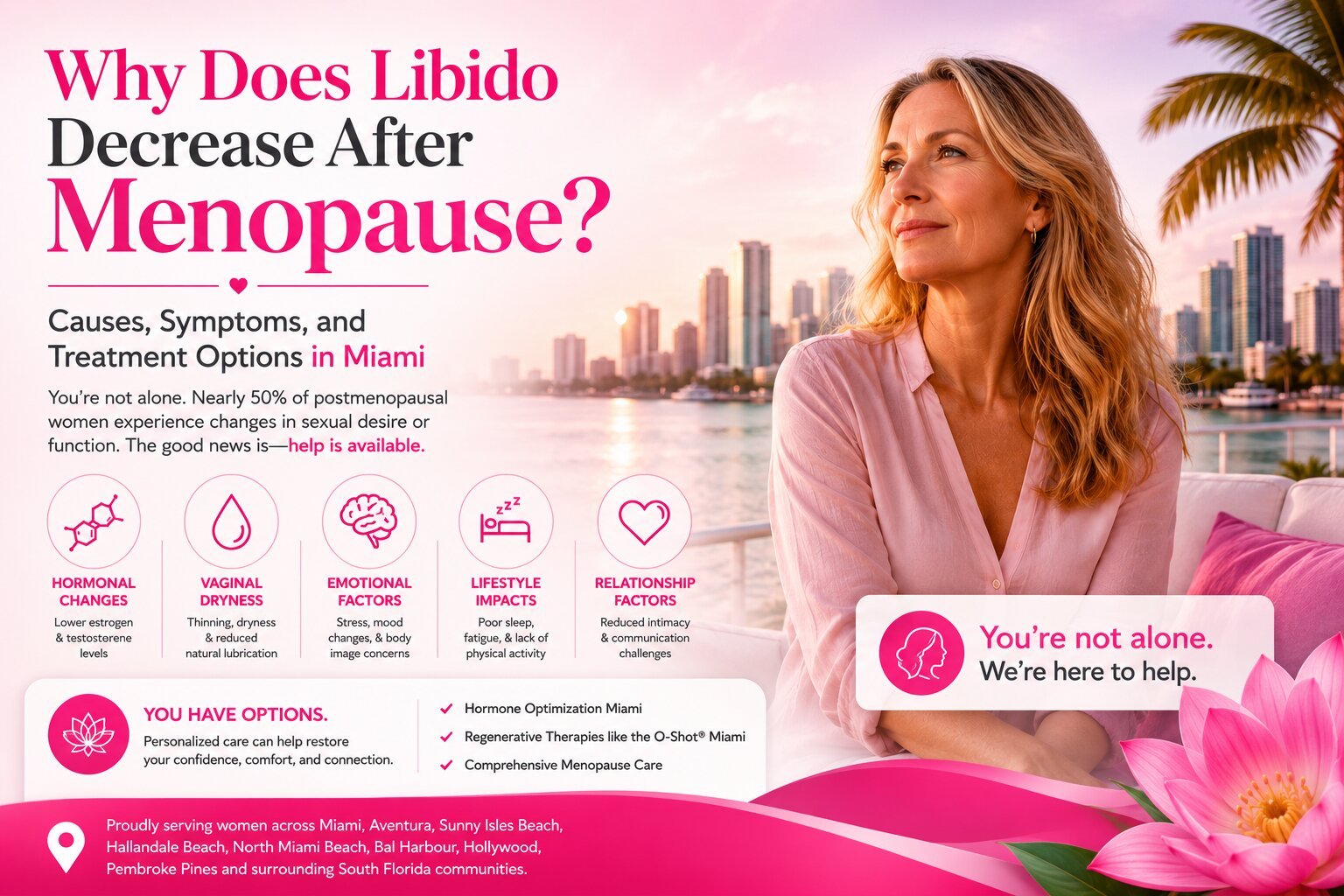
Many women experience changes in their bodies during menopause, and one of the most common concerns is low libido after menopause. A reduced interest in intimacy, difficulty becoming aroused, vaginal dryness, or discomfort during intercourse can feel frustrating and even isolating. The good news is that you're not alone. Studies suggest that nearly 50% of postmenopausal women experience changes in sexual desire or function, making it one of the most frequently reported menopause-related symptoms.
While many women assume that a lower sex drive is simply an unavoidable part of aging, that's not entirely true. Menopause and libido are closely connected because hormonal changes affect the body in several ways, but many of the underlying causes can be identified and treated. With the right medical evaluation, lifestyle changes, and personalized therapies, many women regain confidence, comfort, and satisfaction in their intimate lives.
At O-Shot Miami, we specialize in helping women improve their sexual wellness through evidence-based care. Our physician-led team provides personalized treatment options, including hormone optimization Miami, regenerative therapies like the O-Shot® Miami, and comprehensive menopause care for women throughout Miami, Aventura, Sunny Isles Beach, Hallandale Beach, North Miami Beach, Bal Harbour, Hollywood, Pembroke Pines, and surrounding South Florida communities.
Is It Normal to Lose Libido After Menopause?
Yes, a decline in sexual desire is common during and after menopause. However, experiencing low libido after menopause does not mean you have to accept it as a permanent part of life. Every woman's experience is different, and sexual health is influenced by much more than hormone levels alone.
During menopause, the ovaries gradually produce less estrogen and testosterone. These hormonal changes can affect vaginal health, blood flow, energy levels, mood, and overall sexual response. In addition, everyday factors such as stress, poor sleep, relationship issues, chronic medical conditions, and certain medications can further reduce sexual desire.
Many women delay seeking help because they believe nothing can be done. In reality, healthcare providers who specialize in women's sexual health Miami can identify contributing factors and recommend treatments that are tailored to your specific needs. Addressing the root cause often leads to significant improvements in comfort, desire, and overall quality of life.
What Causes Low Libido After Menopause?
Several physical, hormonal, emotional, and lifestyle factors contribute to low libido after menopause. Understanding these causes is the first step toward finding an effective treatment plan.
1. Declining Estrogen Levels
Estrogen plays a vital role in maintaining vaginal health and sexual function. As estrogen levels decline during menopause, many women notice physical changes that make intimacy less comfortable.
Lower estrogen may lead to:
- Vaginal dryness
- Reduced natural lubrication
- Thinner vaginal tissues
- Pain during intercourse
- Decreased genital blood flow
- Reduced sensitivity
When intimacy becomes uncomfortable or painful, it's natural for sexual desire to decrease over time.
2. Testosterone Levels Also Decrease
Although testosterone is often associated with men, women also produce this hormone in smaller amounts. Testosterone supports several aspects of female sexual health, including:
- Sexual desire
- Sexual thoughts and fantasies
- Energy levels
- Mood
- Sexual arousal
As testosterone gradually declines after menopause, many women notice less spontaneous desire and reduced interest in intimacy.
3. Reduced Blood Flow
Healthy sexual function depends on good circulation. After menopause, blood vessels become less responsive, reducing blood flow to the vaginal tissues and clitoris.
This may result in:
- Reduced arousal
- Lower sensitivity
- Less vaginal lubrication
- Difficulty achieving orgasm
Improving circulation through healthy lifestyle habits and appropriate medical treatments can help support sexual wellness.
4. Vaginal Atrophy (Genitourinary Syndrome of Menopause)
Many women develop Genitourinary Syndrome of Menopause (GSM), a condition caused by declining estrogen levels that affects the vagina and urinary tract.
Common symptoms include:
- Vaginal dryness
- Burning
- Itching
- Painful intercourse
- Frequent urinary symptoms
- Reduced vaginal elasticity
These symptoms can significantly impact intimacy and may discourage sexual activity if left untreated.
5. Emotional and Psychological Changes
Hormones influence much more than reproductive health. They also affect mood, emotional well-being, and self-confidence.
Women may experience:
- Anxiety
- Depression
- Increased stress
- Irritability
- Lower self-esteem
Emotional health plays a major role in sexual desire, making mental wellness an important part of treatment.
6. Poor Sleep
Night sweats, insomnia, and interrupted sleep are common during menopause. Poor sleep contributes to fatigue, mood changes, reduced energy, and lower interest in intimacy.
Improving sleep quality often benefits overall health as well as sexual function.
7. Medical Conditions and Medications
As women age, certain health conditions become more common and may contribute to decreased libido.
These include:
- Diabetes
- High blood pressure
- Heart disease
- Obesity
- Thyroid disorders
- Chronic pain conditions
Some medications used to treat these conditions—including certain antidepressants and blood pressure medications—may also reduce sexual desire. A healthcare provider can review your medications to determine whether adjustments are appropriate.
What Is Female Sexual Desire Disorder?
Female Sexual Interest/Arousal Disorder (FSIAD), sometimes referred to alongside the older term female sexual desire disorder, is a recognized medical condition characterized by a persistent reduction in sexual interest or arousal that causes personal distress.
Symptoms may include:
- Little or no interest in intimacy
- Few sexual thoughts or fantasies
- Difficulty becoming aroused
- Reduced excitement during sexual activity
- Less response to stimulation
- Avoiding sexual activity due to lack of desire
A diagnosis should always be made by a qualified healthcare professional after evaluating hormonal, physical, emotional, relationship, and medical factors. Proper assessment helps ensure that treatment addresses the underlying causes rather than just the symptoms.
Signs Your Low Libido May Need Medical Evaluation
Occasional changes in sexual desire are normal, but persistent symptoms should not be ignored.
Consider scheduling an evaluation if you experience:
- Loss of sexual desire lasting six months or longer
- Pain during intercourse
- Vaginal dryness despite using lubricants
- Reduced orgasm intensity
- Relationship concerns related to intimacy
- Emotional distress caused by changes in your sex life
Early evaluation allows your healthcare provider to identify treatable causes and recommend personalized therapies that support long-term sexual health.
How Is Low Libido After Menopause Diagnosed?
Finding the right treatment begins with understanding why your libido has changed. Since low libido after menopause can result from hormonal, physical, emotional, or lifestyle factors, a thorough evaluation is essential. Rather than focusing on one symptom, experienced providers take a comprehensive approach to identify all possible contributors.
Medical History
Your healthcare provider will discuss your overall health and symptoms, including:
- Menopause symptoms
- Current medications
- Chronic medical conditions
- Previous surgeries
- Sexual history
- Relationship concerns
- Lifestyle habits
These details help determine whether hormonal changes, medications, or other health conditions may be affecting your sexual wellness.
Hormone Evaluation
Depending on your symptoms and medical history, your provider may recommend laboratory testing to assess hormone balance and overall health.
Testing may include:
- Estradiol
- Testosterone
- SHBG (Sex Hormone-Binding Globulin)
- DHEA-S
- Thyroid function
- Vitamin D
- Other metabolic markers when clinically indicated
Not every woman needs extensive hormone testing. Your provider will recommend the most appropriate evaluation based on your individual needs.
Physical Examination
A physical examination can provide valuable information about vaginal and pelvic health.
Your provider may evaluate:
- Vaginal tissue health
- Signs of vaginal atrophy
- Pelvic floor muscle function
- Areas of tenderness or discomfort
This assessment helps identify conditions that may be contributing to pain during intercourse or reduced sexual function.
Treatment Options for Low Libido After Menopause
The best treatment depends on the underlying cause. Many women experience the greatest improvement with a combination of therapies rather than relying on a single treatment. A personalized plan can address hormonal changes, vaginal health, circulation, emotional well-being, and overall wellness.
1. Hormone Optimization
Hormonal changes are one of the leading causes of menopause and libido concerns. When clinically appropriate, hormone therapy may help restore hormonal balance and improve several menopause-related symptoms.
Potential benefits may include:
- Improved libido
- Better vaginal health
- Increased energy
- Improved mood
- Better sleep quality
- Greater comfort during intimacy
Hormone therapy is not suitable for everyone, which is why treatment should always be individualized after discussing your medical history, potential benefits, and possible risks with a qualified healthcare provider.
At O-Shot Miami, personalized hormone optimization Miami programs are designed to help women improve their overall well-being while addressing menopause symptoms safely and effectively.
2. Vaginal Health Treatments
For many women, discomfort during intimacy is one of the biggest reasons sexual desire decreases. Improving vaginal health often restores confidence and makes intimacy enjoyable again.
Treatment options may include:
- Prescription vaginal estrogen (when appropriate)
- Non-hormonal vaginal moisturizers
- Personal lubricants
- Pelvic floor physical therapy
These treatments can help reduce dryness, improve tissue health, and decrease pain during intercourse, making intimacy more comfortable.
3. O-Shot® Treatment
The O-Shot® Miami is a regenerative treatment that uses platelet-rich plasma (PRP) prepared from your own blood. After processing the blood, the concentrated PRP is injected into targeted areas to support tissue health and natural healing.
Some women report improvements in:
- Sexual arousal
- Vaginal lubrication
- Sensitivity
- Comfort during intimacy
- Mild urinary leakage
While many patients experience positive outcomes, individual results vary. Research on PRP therapies continues to evolve, and treatment should always be performed by a trained healthcare professional.
4. Lifestyle Changes That Support Sexual Wellness
Healthy lifestyle habits can have a significant impact on sexual function. Since good circulation, balanced hormones, and emotional well-being all contribute to libido, even small daily improvements may produce noticeable benefits over time.
Helpful lifestyle changes include:
- Regular physical activity
- Eating a Mediterranean-style diet
- Maintaining a healthy weight
- Prioritizing quality sleep
- Managing stress
- Quitting smoking
- Limiting alcohol consumption
These habits not only support women's sexual health Miami but also improve cardiovascular health, which plays an important role in healthy blood flow and sexual response.
5. Mental Health and Relationship Support
Sexual desire isn't influenced by physical health alone. Emotional well-being, relationship satisfaction, body image, and stress levels all affect intimacy.
If emotional or relationship concerns are contributing to low libido, counseling or sex therapy may be recommended. Working with a qualified therapist can help improve communication, reduce anxiety, rebuild confidence, and strengthen intimacy with your partner.
A comprehensive approach that combines medical care with emotional support often provides the best long-term results.
Can Libido Improve After Menopause?
Yes. Many women experience significant improvements once the underlying causes are identified and treated.
Although menopause changes hormone levels, it doesn't mean your sex life has to end. Personalized treatment plans that combine lifestyle improvements, appropriate medical therapies, vaginal health treatments, and hormone optimization can help restore comfort, confidence, and sexual satisfaction.
Every woman's experience is unique. Some women notice improvements within weeks, while others benefit from gradual progress over several months. The key is working with a healthcare provider who understands the many factors that influence female sexual wellness.
Why Choose O-Shot Miami?
At O-Shot Miami, we provide compassionate, physician-led care focused on helping women improve their quality of life through evidence-based treatments.
Our services include:
- Comprehensive menopause evaluations
- Personalized hormone optimization
- O-Shot® treatments
- Regenerative medicine therapies
- Individualized treatment plans
- Private, patient-centered care
We proudly serve women throughout:
Miami • Aventura • Sunny Isles Beach • Bal Harbour • Hallandale Beach • North Miami Beach • Hollywood • Pembroke Pines • Fort Lauderdale • South Florida
Whether you're experiencing vaginal dryness, reduced sexual desire, discomfort during intimacy, or other menopause-related concerns, our goal is to help you feel informed, supported, and confident in your treatment journey.
Schedule a Consultation
At OShotMiami.com, Dr. Nina Gupta provides comprehensive evaluations for women experiencing menopause-related sexual health concerns. Your consultation includes a personalised assessment to discuss evidence-based options, including lifestyle strategies, vaginal health therapies, hormone optimization, and regenerative treatments such as the O-Shot.
If intimacy has become painful or you are experiencing symptoms of low libido, contact us today to learn more about your options and develop a treatment plan tailored specifically to you.