
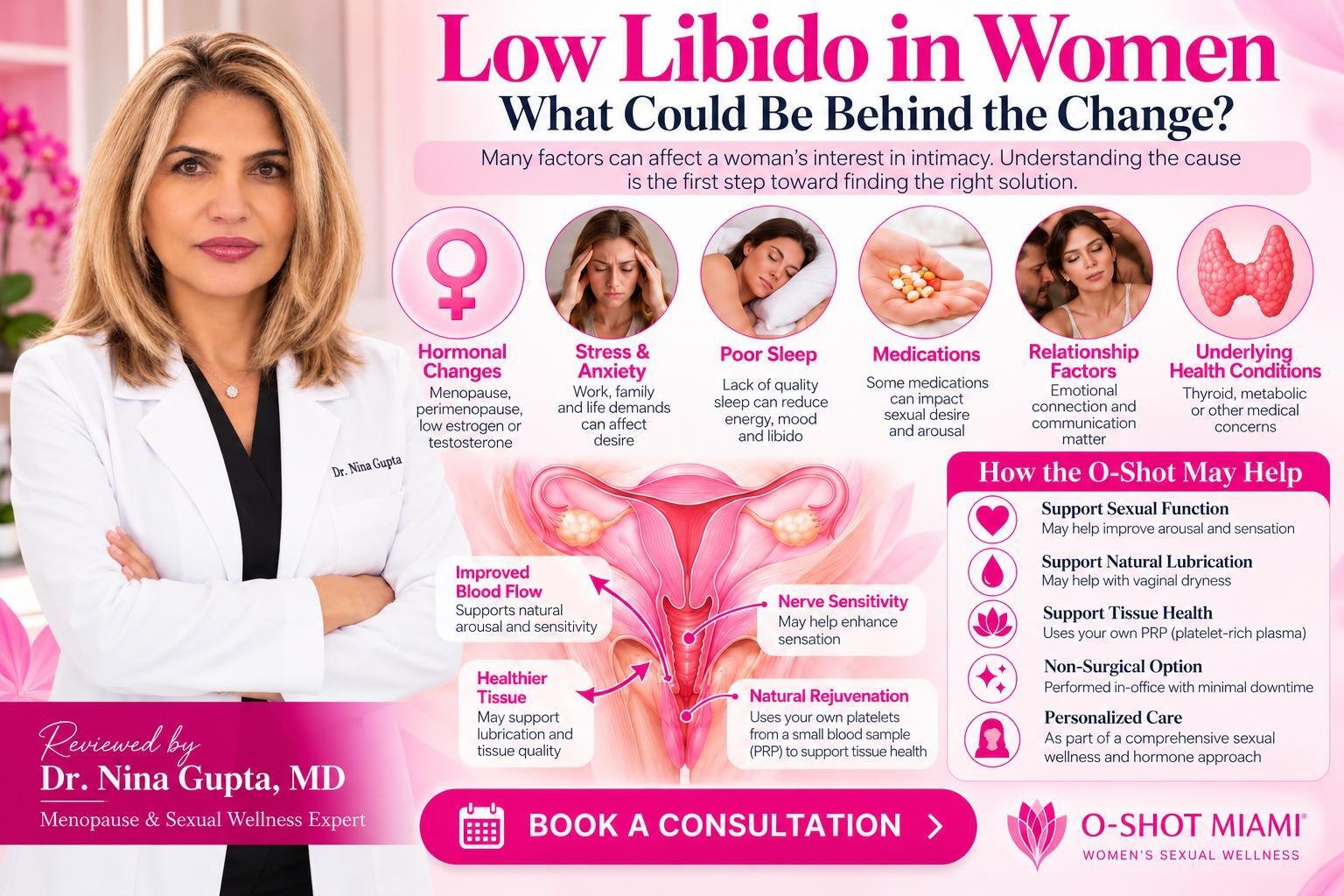
Changes in sexual desire can be difficult to talk about, even with someone you trust. Perhaps you have noticed that intimacy no longer interests you as much as it once did, or maybe your desire has gradually declined over several months. You might be wondering whether hormones are responsible, whether stress has finally caught up with you, or whether something else is happening with your health. Whatever your experience looks like, low libido in women is a common concern with several possible causes, and it deserves an individualized, compassionate approach.
Sexual desire is not a switch that stays in one position throughout your life. It can rise and fall with sleep, emotional well-being, relationships, physical comfort, medications, and hormonal changes. Some women experience a noticeable change during perimenopause or after childbirth, while others find that a demanding job, chronic illness, or a new prescription affects their interest in intimacy. There is no single level of sexual desire that every woman should experience.
At O-Shot Miami, understanding the possible reasons behind reduced sexual desire starts with looking at the whole person rather than assuming that one hormone or one treatment explains everything. This guide explores 12 potential contributors to low libido, explains what a medical evaluation may involve, and discusses treatment options that may help you make informed decisions about your sexual health.
Clinical Overview: 12 Key Causes
Key Takeaway: Decreased sexual desire in women is multi-dimensional. It is rarely solved by a single blood test or an isolated supplement. Causes range from physical factors (GSM, thyroid dysfunction, pelvic pain) to emotional overload, sleep deficits, and medication side effects. Identifying the true underlying source through a physician-led evaluation is the essential first step toward lasting comfort and intimacy.
Whether you are researching low libido treatment in Miami, looking for answers about hormonal changes, or simply trying to understand your body better, the goal is to help you identify useful next steps without unnecessary worry or unrealistic promises.
Understanding Low Sexual Desire in Women
Low libido refers to a reduction in sexual interest or desire compared with what feels typical or satisfying for an individual. It can involve fewer sexual thoughts, less interest in initiating intimacy, or a reduced response to situations that previously felt exciting. However, there is no universal benchmark for how often a woman should want sex, and a low level of desire is not automatically a medical problem.
For some women, desire appears spontaneously. They may feel interested in intimacy before any physical contact begins. Others experience what clinicians call responsive desire, meaning interest develops after affectionate touch, emotional connection, or other forms of stimulation. Neither pattern is inherently better than the other. Understanding your own pattern can help you recognize whether something has genuinely changed or whether your expectations have been shaped by unrealistic ideas about how sexual desire is supposed to work.
A decline in libido can also occur alongside changes in arousal, lubrication, orgasm, or sexual comfort. These experiences are related, but they are not identical. For example, a woman may still want intimacy but experience vaginal dryness (GSM) that makes penetration uncomfortable. Another woman may experience physical arousal without feeling interested in sex. Treating these situations as the same problem can lead to frustration, which is why identifying the specific concern matters.
When a Change in Libido Deserves Attention
The most important question is not whether your sex drive matches someone else's. It is whether your current experience concerns you, causes distress, or interferes with the kind of intimate life you want. Some women are comfortable with little or no sexual desire, and they do not need treatment simply because their preferences differ from those of a partner or from cultural expectations.
On the other hand, a persistent, unwanted change can be worth discussing with a healthcare professional. You might notice that your interest declined after starting medication, that intimacy has become uncomfortable, or that exhaustion leaves you with little energy for anything beyond everyday responsibilities. These clues can help guide an evaluation.
There is also an important difference between experiencing low desire and having hypoactive sexual desire disorder (HSDD). HSDD is a clinical diagnosis considered when low sexual desire is persistent, causes significant personal distress, and meets relevant diagnostic criteria. A clinician must consider whether medications, other medical conditions, psychological factors, or relationship circumstances better explain the symptoms.
You do not need to decide whether you meet a diagnostic definition before seeking help. A conversation about your symptoms, concerns, and goals is a reasonable first step, even if you are unsure what has changed. Read our foundational guide on low libido in women causes and treatments for deeper clinical context.
12 Possible Causes of Low Libido in Women
Reduced sexual desire rarely has just one explanation. Your physical health, emotional well-being, daily routine, medications, and hormonal changes can influence one another, sometimes creating a cycle that is difficult to recognize on your own. For example, menopause-related night sweats may interrupt sleep, poor sleep may increase irritability, and persistent fatigue may leave you with less interest in intimacy. In another situation, medication may affect sexual function while the condition being treated also influences mood and energy.
| Category | Specific Cause | Biological or Clinical Mechanism |
|---|---|---|
| Hormonal & Life Stage | 1. Perimenopause & Menopause 2. Vaginal Dryness (GSM) 9. Postpartum & Breastfeeding |
Fluctuating estrogen, elevated prolactin during lactation, thinning vulvovaginal epithelium, and vasomotor sleep disruption. |
| Psychological & Emotional | 3. Depression 4. Anxiety & Stress |
Dopamine/serotonin dysregulation, blunted reward response, chronic sympathetic overdrive, and performance anxiety. |
| Pharmaceutical | 5. Medications (SSRIs, etc.) 6. Hormonal Birth Control |
Elevated serotonin dampening dopamine, increased Sex Hormone-Binding Globulin (SHBG) lowering free testosterone. |
| Metabolic & Endocrine | 7. Hypothyroidism 8. Diabetes & Metabolic Health |
Reduced cellular energy and metabolism, microvascular changes, blunted genital blood flow, and chronic fatigue. |
| Physical & Somatic | 10. Sleep Deprivation 11. Pelvic Pain / Dyspareunia 12. Chronic Illness & Cancer |
Elevated nighttime cortisol, pelvic floor hypertonicity, anticipatory pain guarding, and oncologic treatment consequences. |
The following 12 factors are among the possible contributors to low sex drive in women. They are not a checklist for diagnosing yourself. Several may apply simultaneously, and having one of these conditions does not automatically mean it is responsible for a change in your libido. A healthcare professional can help you distinguish likely causes from unrelated symptoms and identify the most appropriate next steps.
1. Perimenopause and Menopause
Perimenopause and menopause are frequently discussed when women notice changes in sexual desire, particularly during their 40s and 50s. During perimenopause, hormone levels fluctuate as menstrual cycles become less predictable. After menopause, estrogen levels remain lower than during the reproductive years. These changes can affect sexual comfort, sleep, mood, and the physical responses associated with intimacy.
The connection between menopause and low libido is not simply a matter of having less estrogen. Hot flashes and night sweats may interrupt sleep, leaving you exhausted during the day. Changes in mood or anxiety can affect your interest in sex, while vaginal dryness or discomfort may make intimacy less appealing. When several of these symptoms occur together, sexual desire may change even if you still value intimacy and emotional connection.
It is equally important to recognize that menopause does not automatically cause a loss of sexual interest. Some women notice little difference, while others experience changes that affect their quality of life. Your medical history, medications, relationship circumstances, and general health all influence the picture.
If reduced desire begins around menopause, a consultation can help identify whether vaginal symptoms, sleep disruption, mood changes, or another factor deserves attention. Depending on your symptoms, treatment may involve menopause care, management of vaginal discomfort, medication review, or support for sleep and emotional health. Low libido after menopause is not something you must simply accept, but the right approach depends on the reason behind the change. Hormone treatment should be considered individually rather than prescribed automatically for every woman experiencing reduced desire.
2. Vaginal Dryness and Hormonal Tissue Changes
Imagine wanting to be intimate with your partner but anticipating discomfort before anything begins. Over time, that expectation can influence your interest in sex, even when the underlying issue is physical rather than emotional. Vaginal dryness and tissue changes can create precisely this experience for some women, particularly during and after menopause.
Lower estrogen levels may cause the vaginal and vulvar tissues to become thinner, less elastic, and more susceptible to irritation. These symptoms can be part of genitourinary syndrome of menopause (GSM), a condition that may also involve burning, urinary discomfort, or recurrent urinary tract infections. Dryness can occur at other stages of life as well, including during breastfeeding and while taking certain medications.
When sexual activity becomes uncomfortable, reducing or avoiding it can be a natural response. This does not necessarily mean your underlying desire has disappeared. Instead, your body may be anticipating pain, irritation, or an experience that no longer feels pleasurable. Understanding that distinction helps prevent the problem from being incorrectly attributed to hormones, relationship difficulties, or a lack of attraction.
Treatment depends on the severity and cause of the symptoms. Vaginal moisturizers may help with ongoing dryness, while lubricants can reduce friction during sexual activity. Some women may benefit from prescription vaginal estrogen or other clinician-recommended treatments after reviewing their medical history and individual risks. Persistent pain should be evaluated rather than managed indefinitely with over-the-counter products alone. Explore our guide on painful sex during perimenopause for relief protocols.
3. Depression and Emotional Health
Depression can affect much more than mood. It may change how you experience pleasure, motivation, concentration, energy, and connection with other people. Activities that once felt enjoyable can become less appealing, and intimacy may be affected in ways that are difficult to explain to a partner.
For some women, reduced libido develops alongside sadness, hopelessness, irritability, or a loss of interest in everyday activities. Others experience less obvious symptoms, such as emotional numbness, persistent fatigue, difficulty concentrating, or feeling disconnected from their usual selves. Sexual desire can decline as part of this broader change in emotional well-being.
The relationship between depression and libido can also be complicated by treatment. Certain antidepressants, particularly selective serotonin reuptake inhibitors (SSRIs), may affect sexual desire, arousal, or orgasm. Consequently, a woman might experience reduced libido because of depression, medication side effects, or a combination of the two. Identifying the timing of symptoms can help a clinician understand which possibilities deserve further investigation.
If you notice changes in your mood alongside reduced sexual desire, mention both during your consultation. Effective treatment for depression may improve overall quality of life and, for some women, sexual interest. If a medication appears to be contributing, your prescriber may discuss a supervised dose adjustment or alternative treatment when clinically appropriate. Never discontinue an antidepressant suddenly without medical guidance.
4. Anxiety, Stress, and Mental Overload
Have you ever reached the end of a busy day and realized that your mind is still racing, even though your body desperately needs rest? When responsibilities, worries, and unfinished tasks follow you into the evening, it can be difficult to feel present during intimacy. Stress is a major contributor to low libido because sexual interest often depends on feeling sufficiently comfortable, relaxed, and mentally available.
Work pressure, financial concerns, caregiving, parenting, relationship tension, and major life changes can all contribute to ongoing stress. Anxiety may add another layer, especially when you find yourself worrying about performance, body image, pregnancy, pain, or whether your partner will be disappointed. These thoughts can distract you from pleasurable sensations and make intimacy feel like another responsibility rather than something you choose for yourself.
Stress affects individuals differently. Some women notice an immediate decline in interest during demanding periods, while others experience a gradual change after months of inadequate rest and emotional strain. A busy lifestyle does not necessarily mean stress is the sole cause, and a clinician should still consider medical conditions, medication effects, and other contributors.
Addressing stress does not require eliminating every difficult situation from your life. Depending on your circumstances, useful approaches may include protecting time for rest, sharing household responsibilities, setting boundaries around work, or speaking with a mental health professional. Couples counseling may also help when communication difficulties or conflicting expectations contribute to distress.
5. Medication Side Effects
Sometimes, the timing of a change in libido provides an important clue. Perhaps your sexual interest was relatively stable until you started a new prescription, changed the dose of an existing medication, or began treatment for another health condition. Although timing cannot prove that a medication is responsible, it gives your healthcare professional a useful place to start.
Some antidepressants can reduce sexual desire or affect arousal and orgasm. Certain blood-pressure medications (such as beta-blockers or diuretics) may contribute to sexual difficulties in some individuals, while cancer treatments can affect sexual function through hormonal changes, fatigue, pain, or other side effects. Other prescriptions, including antihistamines and mood stabilizers, may also be relevant depending on the drug and your health history.
The effects are not identical for everyone. One woman may experience a noticeable reduction in desire, while another taking the same medication may report no sexual changes. The condition being treated can also contribute to low libido, making it important to consider the medication and the underlying illness together.
Before your appointment, make a list of your prescription medicines, over-the-counter products, and supplements. Include when you started each one and when you first noticed the change in sexual desire. This information can help your clinician assess whether a medication review is appropriate.
6. Hormonal Birth Control
Hormonal contraception can influence sexual experiences, but its effects on desire vary considerably. Some women notice lower sexual interest after starting a contraceptive pill, patch, ring, or implant. Others experience no meaningful change, and some report greater interest because reliable pregnancy prevention reduces anxiety and makes intimacy feel more comfortable.
Hormonal contraceptives affect reproductive hormones in different ways depending on the formulation and method. In some women, oral contraceptives stimulate the liver to produce higher levels of Sex Hormone-Binding Globulin (SHBG), which binds free testosterone in the bloodstream and may contribute to differences in desire, lubrication, or comfort. However, research does not support a simple rule that hormonal birth control universally lowers libido in all women.
Other explanations may be involved. A change in sexual desire could coincide with stress, mood changes, a new relationship, or another medication. If the change began shortly after starting contraception, the timing is worth discussing with your prescribing clinician, but it should not be treated as proof of causation.
During an appointment, explain which contraceptive method you use, how long you have used it, and what changes you have noticed. Your clinician can help you weigh potential side effects against the benefits of pregnancy prevention and discuss non-hormonal alternatives (such as a copper IUD or barrier methods) if appropriate.
7. An Underactive Thyroid
Your thyroid may be small, but the hormones it produces help regulate many essential processes throughout your body, including metabolism, temperature regulation, and energy levels. When the thyroid gland does not produce enough hormones, a condition known as hypothyroidism, you may experience fatigue, changes in mood, reduced energy, and other symptoms that can affect your interest in intimacy.
An underactive thyroid is one possible medical contributor to low libido in women, but reduced sexual desire alone is not enough to diagnose it. You might also notice unusual sensitivity to cold, constipation, dry skin, thinning hair, changes in your menstrual cycle, or unexplained weight changes. Some women experience only a few symptoms, while others develop several. These signs can overlap with menopause, depression, sleep problems, and other health conditions, which is why a proper medical assessment matters.
If your symptoms suggest a possible thyroid issue, your clinician may recommend a blood test measuring thyroid-stimulating hormone (TSH), with additional testing such as free thyroxine (free T4) when appropriate. When hypothyroidism is confirmed, treatment commonly involves thyroid hormone replacement (such as levothyroxine) prescribed and monitored by a physician.
8. Diabetes and Metabolic Health
Diabetes can affect sexual health in several ways, including changes in nerve function, circulation, energy, and overall physical well-being. Some women living with diabetes experience vaginal dryness, reduced genital sensation, discomfort during intercourse, or difficulty with sexual arousal. These symptoms may contribute to reduced interest in intimacy, particularly when they persist without adequate clinical support.
The connection between diabetes and libido is not the same for everyone. Blood glucose management, other medical conditions, medications, emotional health, and the duration of diabetes may all influence sexual experiences. Fatigue associated with fluctuating glucose levels or other complications can also leave you feeling less interested in activities that require physical or emotional energy.
Diabetes sometimes occurs alongside high blood pressure, cardiovascular disease, or neuropathic changes that can affect genital blood flow. Maintaining appropriate diabetes care remains critical, but sexual symptoms deserve attention in their own right. Depending on the findings, treatment might involve optimizing glycemic control, treating localized dryness, or reviewing prescription therapies.
9. Pregnancy, Postpartum Recovery, and Breastfeeding
Pregnancy and the months following childbirth bring dramatic physical, hormonal, and emotional changes. During this period, a woman's interest in intimacy may increase, decrease, or fluctuate from week to week. Lower libido after childbirth is extremely common, and it does not automatically indicate a medical problem or a lack of affection toward a partner.
Recovery after birth requires time. Depending on the type of delivery and any complications, you may be managing soreness, healing tissues, pelvic floor changes, or discomfort around a tear or episiotomy. Breastfeeding elevates prolactin levels, which naturally suppresses estrogen production and frequently causes noticeable vaginal dryness. Interrupted sleep, the demands of newborn care, and postpartum routine shifts leave little physical reserve for intimacy.
There is no universal deadline for wanting sex again after childbirth. Resuming sexual activity should depend on your recovery, comfort, preferences, and medical clearance. If low libido persists or causes distress, a postpartum consultation can help evaluate pelvic floor integrity, hormonal recovery, and mental wellness.
10. Sleep Deprivation and Ongoing Fatigue
Sleep is closely connected to mood, energy, concentration, and the ability to enjoy everyday experiences. When you are consistently exhausted, sexual intimacy may naturally move down your list of priorities. You might still care deeply about your partner and value your intimate relationship, yet find that your body and mind are simply too tired to engage.
Many circumstances can disrupt sleep: shift work, parenting responsibilities, caregiving, chronic pain, anxiety, and menopause-related night sweats. Chronic sleep disruption alters circadian rhythms and elevates nighttime cortisol levels, which can suppress reproductive hormone production and diminish sexual desire.
Fatigue can also be a symptom of an underlying medical condition like anemia, thyroid dysfunction, or sleep apnea. Addressing sleep issues—whether through optimizing nighttime vasomotor control, treating sleep disorders, or sharing household loads—is an essential pillar of restoring intimate vitality.
11. Pelvic Pain and Painful Intimacy
Pain can change how you think about intimacy long before sexual activity begins. If previous experiences have involved burning, pressure, sharp discomfort, or pain with penetration, you may start anticipating that discomfort the next time. Reducing sexual activity in response is a natural protective reaction rather than evidence that you have lost all sexual interest.
Several conditions can contribute to pelvic pain or painful intercourse (dyspareunia). These include pelvic floor muscle dysfunction (hypertonicity), endometriosis, vulvodynia, interstitial cystitis, vaginal infections, and vaginal atrophy. When pelvic floor muscles are overly tense and cannot relax, penetration becomes painful, setting off an involuntary guarding cycle.
Do not feel that you need to tolerate pain to maintain intimacy. Treatment depends on the diagnosis and may involve specialized pelvic floor physical therapy, topical treatments, infection care, or medical therapies. Read more about dyspareunia solutions.
12. Chronic Illness and Cancer Treatment
Sexual desire can be influenced by health conditions that do not initially seem connected to intimacy. Arthritis may make certain positions uncomfortable, neurological conditions (such as multiple sclerosis) can alter genital sensation, and chronic gastrointestinal or bladder disorders can cause discomfort and anxiety.
Cancer and its treatments present profound intimate health challenges. Chemotherapy, pelvic radiation, surgical oophorectomy, and endocrine therapies (such as aromatase inhibitors and tamoxifen) often cause sudden estrogen deprivation, severe vaginal dryness, and fatigue. Learn how we support cancer survivors in our dedicated guide on the O-Shot after breast cancer.
Sexual health remains an integral part of survivorship and overall well-being. You deserve compassionate, coordinated care that addresses intimate comfort alongside your broader medical treatment.
How Doctors Evaluate Low Libido in Women
An effective medical evaluation begins with an attentive conversation, not a predetermined treatment. Your clinician needs to understand what has changed, when the change began, how it affects your quality of life, and what you would like to achieve. There is no single laboratory test that can explain every case of low sexual desire, because desire reflects the complex interaction of physical health, neurochemistry, emotional state, medications, and relational intimacy.
During an appointment, your clinician will review your menstrual history, menopause symptoms, pregnancy or breastfeeding status, medications, and general health history. You may also discuss sleep, mood, chronic stressors, and whether you experience pain or dryness during intimacy. These questions help distinguish between a true desire disorder, arousal difficulties, and avoidance driven by physical discomfort.
Medical History, Symptoms, and Blood Tests
Blood tests can be valuable when an underlying medical condition is suspected, but there is no universal "libido blood panel." Testing should always be tailored to your symptoms and clinical history:
-
Thyroid Evaluation (TSH & Free T4): Recommended when fatigue, cold intolerance, weight changes, or menstrual irregularities accompany low desire.
-
Complete Blood Count (CBC) & Ferritin: Screen for iron deficiency anemia contributing to ongoing exhaustion.
-
Metabolic & Glycemic Screening (HbA1c, Fasting Glucose): Assess insulin resistance or undiagnosed diabetes affecting vascular and nerve health.
-
Hormone Panels (Estrogen, Progesterone, Prolactin, Testosterone): Interpreted within the context of your menstrual cycle or menopausal stage. Notably, a blood testosterone level alone cannot diagnose HSDD or prove that testosterone treatment is required.
A physical pelvic examination may be recommended if you report pain, burning, dryness, or unusual discharge. A gentle exam helps identify localized atrophy, pelvic floor muscle hypertonicity, or dermatologic vulvar conditions. Normal blood tests do not mean your symptoms are imaginary; they simply indicate that the cause may lie in medication side effects, tissue changes, sleep, or stress.
Treatment Options for Low Libido in Women
Because female sexual desire involves multiple biological and psychological systems, treatment must be personalized. For one woman, relief comes from treating vaginal dryness with localized estrogen; for another, it involves adjusting an antidepressant, undergoing pelvic floor therapy, or receiving counseling. Often, several approaches work synergistically.
A critical first step is separating the goal of improving sexual comfort from the goal of increasing desire. Treating vaginal dryness with moisturizers, lubricants, or low-dose local estrogen makes intimacy comfortable, but it does not automatically trigger spontaneous sexual thoughts. Similarly, addressing sleep or stress creates room for intimacy without directly curing localized pelvic floor tension.
Hormone Therapy, Counseling, and Personalized Care
Hormone therapies should be tailored to specific diagnoses. For menopausal women experiencing hot flashes, night sweats, and sleep disturbances, systemic hormone therapy may restore general well-being. For genitourinary symptoms, low-dose vaginal estrogen or DHEA restores tissue thickness and natural elasticity without significant systemic absorption.
For selected postmenopausal women diagnosed with Hypoactive Sexual Desire Disorder (HSDD), carefully monitored, physiologic-dose transdermal testosterone therapy may be considered following the ISSWSH Clinical Practice Guidelines. In the United States, this use is off-label and requires baseline laboratory testing and close physician monitoring to prevent side effects such as acne or hirsutism. Major medical societies do not recommend testosterone pellets for HSDD due to unpredictable, supraphysiologic hormone spikes. Learn more on our hormone optimization page.
For premenopausal women with generalized, acquired HSDD, FDA-approved nonhormonal prescription medications include flibanserin (Addyi) (a daily oral 5-HT1A agonist/5-HT2A antagonist) and bremelanotide (Vyleesi) (an as-needed subcutaneous melanocortin receptor agonist). Both require thorough medical screening for contraindications such as cardiovascular disease, hepatic impairment, or drug interactions.
Counseling and sex therapy play an invaluable role when anxiety, performance pressure, body image concerns, or relationship miscommunications are present. Addressing mental and emotional well-being complements medical care, ensuring comprehensive support.
Does the O-Shot Treat Low Libido?
The O-Shot® is a clinical procedure that uses autologous platelet-rich plasma (PRP) derived from a patient's own blood and injected into targeted intimate tissues (near the clitoris and anterior vaginal wall) after topical numbing. While widely discussed in intimate wellness, it is essential to distinguish evidence-based indications from broad marketing claims.
PRP contains concentrated growth factors that promote local tissue repair, vascularity, and nerve sensitivity. Clinical studies (including a 2026 randomized controlled trial published in Obstetrics & Gynecology) demonstrate that vaginal PRP can improve overall sexual function scores, local sensation, natural lubrication, and tissue comfort in appropriate candidates. However, the study observed that the sexual desire subscale did not show a statistically significant difference compared to control groups.
In other words, the O-Shot is designed to support local tissue health, genital sensation, natural lubrication, and mild stress urinary leakage—it is not an established medical treatment for central, brain-level Hypoactive Sexual Desire Disorder (HSDD). If low desire is primarily caused by physical discomfort, dryness, or decreased sensitivity during intimacy, improving those local symptoms through PRP may secondarily make intimacy more appealing. But if low libido is driven by stress, medications, or neurochemical factors, PRP alone will not solve the concern.
At O-Shot Miami, Dr. Nina Gupta provides honest, physician-led consultations to help you determine whether your primary concern involves sensation, comfort, or desire, ensuring you choose the most effective evidence-based path. Review our detailed guide on who is a good candidate for the O-Shot.
Compassionate Physician Consultation in Miami
Schedule a confidential, thorough evaluation with Dr. Nina Gupta to explore your hormonal health, intimate comfort, and personalized care options.
Book Your Private ConsultationWhen to Seek Medical Advice
You do not need to wait until reduced desire causes major personal distress or relationship conflict before consulting a physician. If a change in sexual desire persists over months, bothers you, or begins after a new medication or menopause transition, an appointment can help clarify what is occurring.
Seek medical evaluation promptly for:
-
Painful Intercourse: Recurring burning, stabbing, or aching sensations during or after penetration.
-
Postmenopausal Bleeding: Any vaginal bleeding after menopause must always be evaluated promptly to rule out endometrial pathology.
-
Bleeding After Sex (Postcoital Bleeding): Unexplained bleeding requires cervical and vaginal assessment.
-
Severe Pelvic Pain or Fever: New, acute pelvic pain, especially accompanied by fever or abnormal discharge, requires urgent medical care.
-
Depression or Overwhelming Anxiety: Persistent mood symptoms interfering with everyday life require timely psychiatric or medical support.
Your safety, bodily boundaries, and consent are paramount. You should never feel pressured to engage in unwanted sexual activity. The goal of medical care is to empower you with clarity, physical comfort, and treatments aligned with your priorities.
Frequently Asked Questions About Low Libido in Women
1. Is low libido in women always caused by low hormones?
No. Hormonal changes can influence sexual desire, especially during perimenopause, menopause, and postpartum recovery, but they are only one part of the picture. Medication side effects, depression, anxiety, sleep deprivation, painful intercourse, chronic illness, and relationship circumstances may also contribute. More than one factor can be present at the same time. Treatment should be based on your individual history rather than an assumption that hormone therapy is always required.
2. Can women have low libido even when blood tests are normal?
Yes. Blood tests can help identify conditions like hypothyroidism or anemia, but they cannot measure every biological or psychological factor influencing desire. Stress, sleep quality, medication effects, pelvic floor hypertonicity, and relationship dynamics can significantly blunt libido without altering blood chemistry. Normal lab tests mean your concerns require a holistic clinical evaluation rather than being dismissed.
3. Is low sexual desire after age 40 normal?
Sexual desire can fluctuate at any age, and many women notice changes in their 40s as perimenopause begins. Fluctuating hormones, night sweats, vaginal dryness, stress, and lifestyle shifts can all play a role. However, age alone does not explain every case, and there is no reason to accept distressing symptoms as an inevitable consequence of aging when effective solutions exist.
4. Should I stop taking an antidepressant if my libido decreases?
No. Never stop an antidepressant or change your dose without speaking to your prescribing physician. Abruptly stopping medication can trigger distressing withdrawal symptoms or a relapse of depression and anxiety. Your doctor can explore supervised dose adjustments, adjunctive treatments, or alternative medications that carry fewer sexual side effects.
5. Does low libido mean something is wrong with my relationship?
Not necessarily. Reduced desire frequently stems from physical factors like exhaustion, hormonal shifts, pain, or medication side effects. While relationship stress can play a role, experiencing low libido does not mean that your relationship is failing or that your affection for your partner has diminished. Open communication and physician support can help separate medical causes from relational dynamics.
Conclusion: Finding the Right Support for Your Sexual Health
Low libido in women is a common, nuanced concern with 12 distinct potential contributors—from menopause-related tissue changes and thyroid imbalances to medication side effects, chronic stress, and sleep deprivation. Because female sexual response involves an intricate dance between hormones, neurotransmitters, physical comfort, and emotional safety, no single treatment or supplement serves as a universal cure.
Your sexual desire does not need to conform to anyone else's expectations. What matters most is whether you feel comfortable in your body and whether changes in desire are causing distress. When reduced interest persists or is accompanied by pain, dryness, or exhaustion, seeking professional medical guidance provides clarity and actionable solutions.
At O-Shot Miami, Dr. Nina Gupta provides attentive, evidence-based care tailored to your unique biology and goals. Whether you need an evaluation for menopause symptoms, a review of hormone therapies, or regenerative treatments to restore local intimate comfort, you are met with respect, confidentiality, and medical excellence.
Request a Consultation at O-Shot Miami
If changes in sexual desire have been affecting your comfort, confidence, or intimate life, you do not have to navigate these concerns alone. A physician-led consultation can help identify contributing factors and formulate an individualized care plan.
- Location: 20200 West Dixie Hwy, Suite 808D, Miami, FL 33180
- Phone: (305) 916-1454
- Lead Physician: Dr. Nina Gupta, MD, ABAARM, FAARM
- O-Shot Treatment Pricing: $1,500 (transparent pricing; see our cost guide)
Medical Disclaimer: This article is for general educational purposes only and does not substitute for personalized medical evaluation, diagnosis, or treatment. Dr. Nina Gupta confirms the clinic's clinical screening, informed consent, and evidence-based protocols. Always seek medical guidance for persistent pelvic pain, abnormal bleeding, or acute symptoms.
Medical References
- American College of Obstetricians and Gynecologists (ACOG). Your Sexual Health. Clinical FAQ.
- National Institute on Aging (NIA). Sex and Menopause: Treatment for Symptoms.
- The Menopause Society (formerly NAMS). Genitourinary Syndrome of Menopause (GSM).
- American College of Obstetricians and Gynecologists (ACOG). When Sex Is Painful (Dyspareunia).
- International Society for the Study of Women's Sexual Health (ISSWSH). Global Consensus Position Statement on the Use of Testosterone Therapy for Women. J Sex Med.
- U.S. Food and Drug Administration (FDA). Addyi (flibanserin) Prescribing Information.
- DailyMed / National Library of Medicine. Vyleesi (bremelanotide) Prescribing Information.
- Vaginal Injection of Platelet-Rich Plasma for Sexual Function: A Randomized Controlled Trial. Obstetrics & Gynecology. 2026. PubMed: 41855531.