
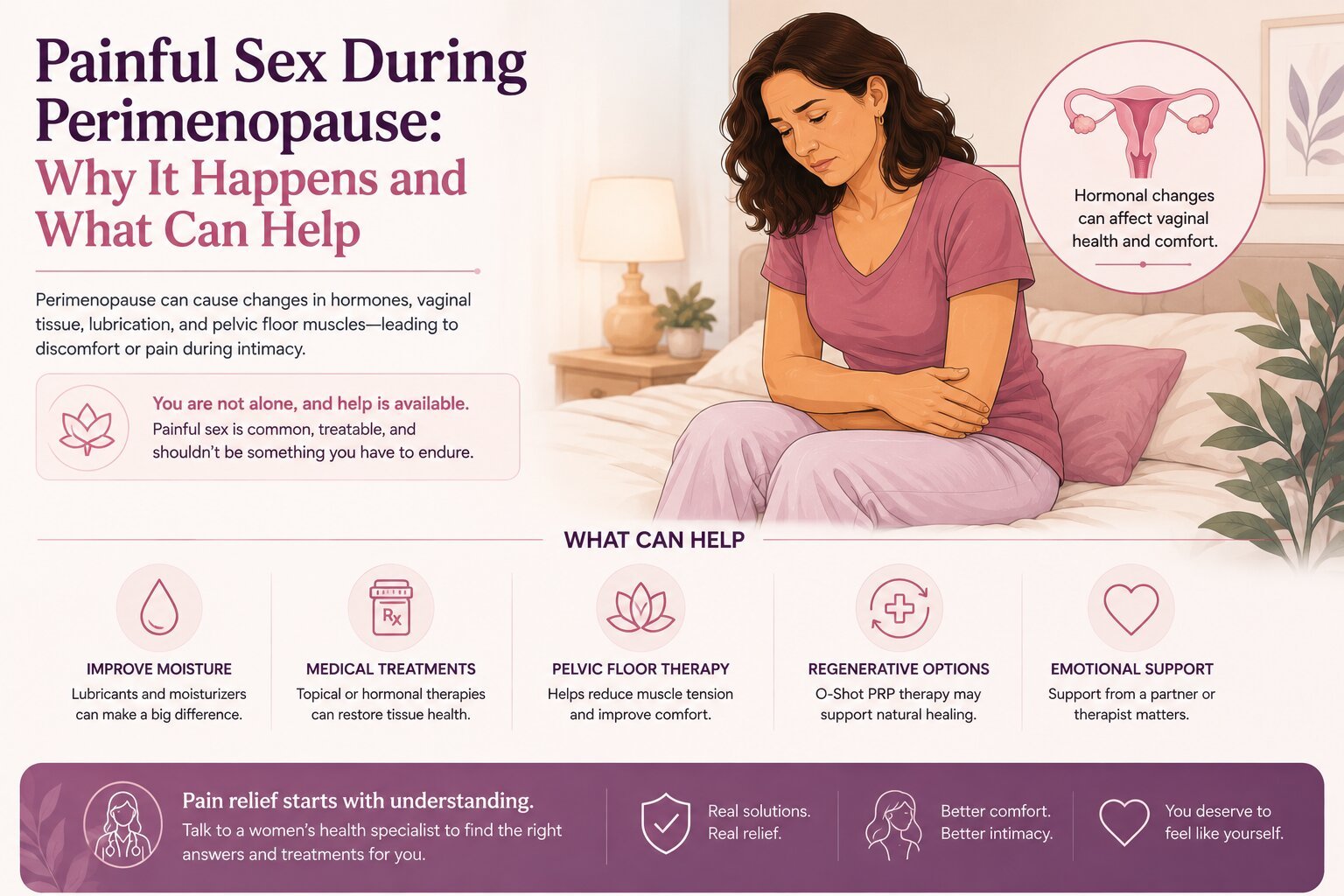
Painful sex during perimenopause can feel like an unwelcome surprise, especially if intimacy was comfortable for most of your adult life. You may notice subtle dryness at first, followed by burning, irritation, tenderness, or sharp pain with penetration. Recognizing that fluctuating hormones, changing tissues, and pelvic floor reflexes are responsible is the first step toward restoring comfort and pleasure.
Perhaps you find yourself needing much more time to become physically aroused, or you start avoiding intercourse because you anticipate the discomfort. It can be frustrating, confusing, and difficult to talk about. You might even wonder whether the problem is physical, emotional, hormonal, or somehow related to your relationship. In reality, it is often an interplay of several factors.
Perimenopause can change the vaginal and vulvar tissues, natural lubrication, pelvic floor muscle tone, sexual response, and overall comfort. However, painful intercourse is not an inevitable consequence of aging that you simply have to endure.
The medical term for persistent or recurrent pain associated with sexual intercourse is dyspareunia. Dyspareunia is a symptom rather than a standalone diagnosis, meaning there are distinct physiological, hormonal, and anatomical reasons behind it.
For many women approaching menopause, fluctuating and eventually declining estrogen levels are an important piece of the puzzle. Estrogen helps maintain vaginal tissue thickness, microvascular blood flow, natural moisture, elasticity, and the protective acidic vaginal biome. When estrogen availability drops, tissues become fragile and prone to friction.
However, infections, vulvar dermatologic conditions, pelvic floor hypertonicity, medications, and psychological factors can also contribute. The encouraging reality is that effective, evidence-based treatments exist—ranging from advanced topical moisturizers and local prescription therapies to hormone optimization, specialized pelvic physical therapy, and regenerative O-Shot PRP therapy. The key is identifying why sex hurts in the first place.
What Is Perimenopause?
Perimenopause is the natural transitional phase leading up to menopause—the point marked by twelve consecutive months without a menstrual period. It does not begin at a fixed age; while many women notice changes in their early-to-mid 40s, symptoms can start earlier or later and typically span four to eight years.
During perimenopause, ovarian follicular activity gradually shifts. Instead of following a predictable cyclic rhythm, estrogen and progesterone levels fluctuate erratically—surging high one week and dropping dramatically the next. You might have months when your body feels completely normal, followed by cycles marked by irregular bleeding, hot flashes, sleep disruptions, mood changes, and unexpected intimate discomfort.
This unpredictability can be disorienting. Sexual desire and physical lubrication are governed by distinct physiological pathways. You can feel deeply attracted to your partner, desire intimacy, and yet experience severe vaginal dryness or painful penetration because your mucosal tissues are responding to low estrogen.
How Hormone Fluctuations Affect Sexual Health
Estrogen receptors are densely distributed throughout the vulva, vagina, clitoris, urethra, and bladder base. When estrogen levels decline or swing wildly, several micro-structural changes take place:
- Epithelial Thinning: The vaginal lining thins from a robust multi-layered mucosa to a fragile, translucent layer prone to micro-tears.
- Loss of Rugae and Elasticity: The natural rugae (folds) of the vaginal canal flatten, reducing tissue stretch and compliance during penetration.
- Decreased Transudate Lubrication: Reduced pelvic blood flow diminishes the natural vascular transudate that provides moisture during arousal.
- Shift in Vaginal pH: The vaginal environment becomes less acidic (pH rises above 4.5), reducing protective lactobacilli and increasing susceptibility to irritation and infections.
These physiological changes explain why sexual comfort can decline even when emotional intimacy remains strong. Recognizing this removes the self-blame many women experience when intimacy becomes painful.
Why Does Sex Become Painful During Perimenopause?
There is no single, identical explanation for painful sex during perimenopause. For one woman, decreased lubrication is the primary issue. For another, cellular mucosal thinning creates friction despite copious lubricants. A third woman may develop involuntary pelvic floor spasms after experiencing painful intercourse for several months.
Understanding the character, timing, and location of the pain provides vital diagnostic direction:
Estrogen Changes and Vaginal Tissue
Without steady estrogen stimulation, the cellular turnover of the vaginal epithelium slows down. The tissue loses collagen and glycogen, leading to what clinicians historically called vaginal atrophy (now part of GSM).
Penetration against thinned tissue causes mechanical shearing stress, resulting in micro-fissures, inflammation, and burning sensations that can linger for hours or days after intercourse. A thorough pelvic exam can easily differentiate hormonal tissue thinning from infections or dermatologic issues.
Vaginal Dryness and Reduced Lubrication
Vaginal dryness is among the most widespread symptoms of perimenopause, affecting over 50% of women during the transition. Dryness increases friction, which directly triggers nerve pain receptors at the introitus (vaginal opening).
When intercourse repeatedly hurts, the brain instinctively anticipates pain. This anticipation triggers involuntary protective muscle tightening, creating a painful cycle of dryness, tension, friction, and soreness.
What Is Genitourinary Syndrome of Menopause (GSM)?
In 2014, the North American Menopause Society (NAMS) and the International Society for the Study of Women's Sexual Health (ISSWSH) introduced the term Genitourinary Syndrome of Menopause (GSM) to replace outdated terms like "vulvovaginal atrophy."
GSM accurately describes the full spectrum of anatomical and functional changes affecting the vulva, vagina, vestibule, clitoris, urethra, and bladder when sex steroid levels decline. Crucially, GSM symptoms frequently begin during perimenopause—long before menstrual periods cease entirely.
| Genital Symptoms | Sexual Symptoms | Urinary Symptoms |
|---|---|---|
| Dryness, burning, and persistent irritation | Pain during intercourse (dyspareunia) | Urinary urgency and increased frequency |
| Loss of vulvar fullness & labial elasticity | Decreased natural lubrication during intimacy | Pain or burning with urination (dysuria) |
| Tissue fragility, chafing, and postcoital spotting | Difficulty reaching orgasm & reduced sensitivity | Recurrent urinary tract infections (UTIs) |
Unlike vasomotor symptoms (such as hot flashes) that often resolve on their own after several years, GSM is progressive and typically worsens over time without targeted treatment. Early intervention preserves tissue health and prevents severe dyspareunia.
Is Painful Sex Always Caused by Perimenopause?
No. While perimenopause is a frequent cause of midlife dyspareunia, it should not automatically be blamed for every instance of sexual discomfort. Many other conditions can coincide with perimenopause:
- Vaginal & Cervical Infections: Bacterial vaginosis, candidiasis (yeast), or sexually transmitted infections (STIs).
- Vulvar Dermatologic Conditions: Lichen sclerosus, lichen planus, or contact dermatitis from fragranced washes and laundry detergents.
- Structural Pelvic Conditions: Uterine fibroids, endometriosis, pelvic organ prolapse, or adenomyosis.
- Medication Side Effects: Antidepressants (SSRIs/SNRIs), antihistamines, oral contraceptives, or tamoxifen/aromatase inhibitors.
Any new, severe, or recurrent pelvic pain—especially when accompanied by unexplained bleeding or abnormal discharge—warrants an in-person medical evaluation to ensure an accurate diagnosis.
Where You Feel the Pain Can Matter
Clinical assessment divides dyspareunia into two primary anatomical categories: superficial (entry) pain and deep pain.
1. Pain at the Vaginal Opening (Entry Dyspareunia)
Entry pain is felt right at the introitus as penetration begins. Women describe it as sharp stinging, burning, rawness, or a feeling of tight sandpaper.
Common causes include estrogen-deficient GSM, provoked vestibulodynia, localized contact dermatitis, and hypertonic pelvic floor muscle guarding. Pushing through entry pain is counterproductive, as it reinforces involuntary muscular spasms.
2. Deep Pelvic Pain During Sex (Deep Dyspareunia)
Deep pain occurs with deep thrusting or specific positions and is felt higher in the pelvis, abdomen, or lower back. It typically feels like a dull ache, sharp stabbing, or intense cramping.
Deep dyspareunia is frequently associated with pelvic conditions such as endometriosis, pelvic adhesions from previous surgeries, ovarian cysts, uterine fibroids, or retroverted uterine positioning. Describing the exact location and timing helps your doctor determine whether pelvic imaging or specialized care is needed.
The Role of the Pelvic Floor
The pelvic floor is a dynamic muscular sling that supports the pelvic viscera and surrounds the vaginal canal. For comfortable intercourse, these muscles must be able to stretch and relax fully.
When a woman experiences vaginal dryness or pain, the pelvic floor muscles instinctively contract to protect the area. Over time, this creates hypertonic pelvic floor dysfunction (chronic muscle overactivity).
Why More Kegels Can Worsen Pain
Women are often advised to perform Kegel exercises for any pelvic concern. However, if your sexual pain is caused by overly tight or guarded muscles, traditional Kegels can worsen tension and increase intercourse pain. Specialized pelvic floor physical therapists focus on down-training, manual myofascial release, diaphragmatic breathing, and gentle stretching to restore muscle relaxation.
What Can Help Painful Sex During Perimenopause?
Because painful sex during perimenopause involves overlapping hormonal, mucosal, and muscular factors, treatment is most successful when tailored to your individual needs. Multiple effective solutions are available:
1. Lubricants and Long-Acting Vaginal Moisturizers
Lubricants (water-based or long-lasting silicone-based) are applied immediately before intercourse to eliminate surface friction. Vaginal moisturizers (such as hyaluronic acid-based gels) are used 2–3 times per week to trap water in mucosal tissues and provide lasting baseline hydration. Avoid products with parabens, synthetic fragrances, or warming additives that can irritate sensitive vulvar skin.
2. Low-Dose Local Vaginal Estrogen & Prescription Therapies
For moderate-to-severe GSM, low-dose local vaginal estrogen (available as estradiol creams, tiny vaginal tablets, softgel inserts, or flexible rings) directly restores tissue thickness, elasticity, and blood flow with minimal systemic absorption. Other FDA-approved prescription options include vaginal prasterone (DHEA inserts) and oral ospemifene.
Learn More About Estrogen Solutions →3. Systemic Hormone Optimization & BHRT
When painful sex occurs alongside hot flashes, severe night sweats, mood volatility, and sleep deprivation, comprehensive Bioidentical Hormone Replacement Therapy (BHRT) or hormone pellet therapy can balance systemic hormones while improving pelvic tissue resilience and vitality.
Explore Hormone Optimization →4. Regenerative Platelet-Rich Plasma (The O-Shot)
The O-Shot procedure utilizes autologous platelet-rich plasma (PRP) concentrated from your own blood. Rich in growth factors (VEGF, PDGF, TGF-beta), PRP is gently injected into the anterior vaginal wall and clitoral area to stimulate new capillary growth (angiogenesis), enhance collagen synthesis, improve natural lubrication, and support intimate comfort without synthetic medications.
Discover O-Shot Therapy →5. Pelvic Floor Physical Therapy & Intimacy Adjustments
Working with a specialized pelvic floor physical therapist helps release chronic muscular trigger points. Combining physical therapy with adjusted sexual pacing, extended non-penetrative intimacy, and open communication removes performance pressure and re-trains the nervous system to enjoy intimacy safely.
When Should You See a Healthcare Professional?
You do not need to wait until sexual pain becomes severe before seeking help. Schedule an evaluation with a women’s health physician or menopause specialist if:
- Painful intercourse is recurrent and interferes with your emotional wellbeing or relationship.
- Over-the-counter lubricants and moisturizers fail to provide adequate comfort.
- You experience postcoital bleeding, spotting, or raw tissue tears.
- Sexual pain is accompanied by urinary urgency, burning, or recurrent UTIs.
- You notice unexplained pelvic aching, vulvar skin color changes, or persistent itching.
A clinical evaluation with an experienced specialist like Dr. Nina Gupta in Aventura/Miami provides a private, compassionate setting to explore personalized medical and regenerative solutions.
How Pain Can Affect Desire and Relationships
When sex hurts, low desire is a completely normal protective reaction. The human brain is hardwired to avoid pain. If intercourse repeatedly leads to burning or soreness, your nervous system responds by dampening sexual desire to protect your body.
Partners often misinterpret avoidance as a loss of emotional connection or attraction, while the woman experiencing pain may feel guilt, anxiety, or frustration. Open communication bridges this gap.
Temporarily shifting intimacy away from penetrative intercourse toward sensual touch, massage, and clitoral stimulation allows couples to maintain closeness while underlying hormonal and physical causes are actively treated.
Painful Sex During Perimenopause Is Treatable
Painful sex during perimenopause is common, distressing, and completely treatable. Biological changes may thin vaginal mucosa, diminish natural lubrication, and trigger pelvic floor muscle guarding, but you do not have to accept dyspareunia as your permanent reality.
By identifying the precise combination of hormonal, mucosal, and muscular factors responsible, you can implement targeted solutions that restore your physical comfort, sexual confidence, and quality of life.
You deserve to enjoy intimacy comfortably at every stage of life. If intercourse has become painful, reach out to an experienced women's health physician and take the first step toward reclaiming your intimate wellness.
Frequently Asked Questions About Painful Sex During Perimenopause
Medical References & Clinical Guidelines
- American College of Obstetricians and Gynecologists (ACOG). Vulvovaginal Health. acog.org/vulvovaginal-health
- American College of Obstetricians and Gynecologists (ACOG). Your Sexual Health. acog.org/your-sexual-health
- American College of Obstetricians and Gynecologists (ACOG). Hormone Therapy for Menopause. acog.org/hormone-therapy
- Mayo Clinic. Painful Intercourse (Dyspareunia): Symptoms, Causes, Diagnosis & Treatment. mayoclinic.org/painful-intercourse
- The North American Menopause Society (NAMS). The 2020 Genitourinary Syndrome of Menopause Position Statement. Menopause. 2020;27(9):976–992. pubmed.ncbi.nlm.nih.gov/32852449
Medical Disclaimer: This article is for educational purposes only and does not replace individualized medical advice, diagnosis, or treatment. If you are experiencing persistent, severe, or unexplained sexual pain, speak with a qualified healthcare professional.