
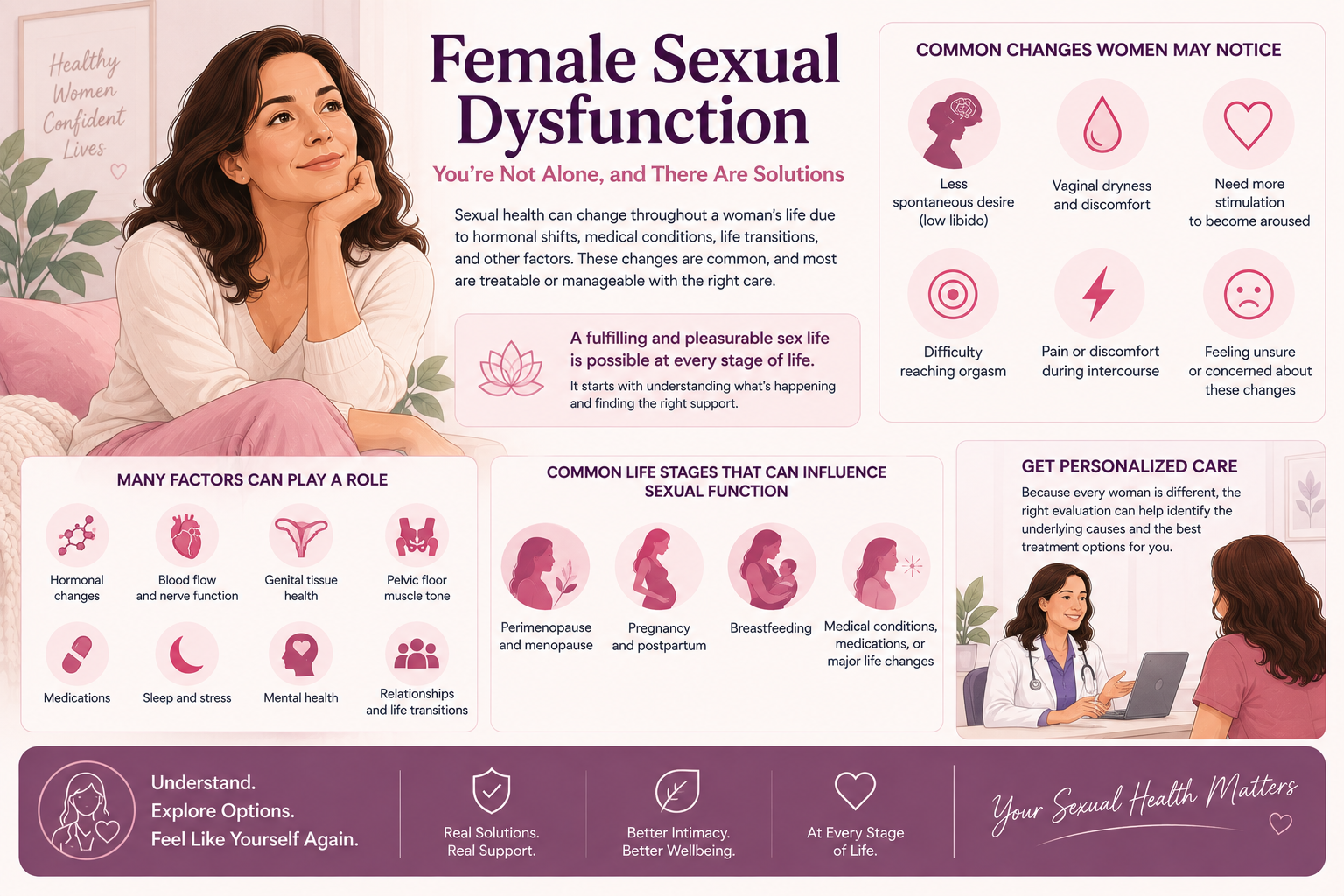
Sexual health can change dramatically throughout a woman’s life, yet conversations about those changes are often surprisingly difficult to have. A woman may notice that she no longer feels spontaneous desire, experiences persistent vaginal dryness and discomfort, needs substantially more stimulation to become aroused, struggles to reach orgasm, or finds sexual intercourse uncomfortable or outright painful.
She may quietly wonder whether something is fundamentally wrong with her—or whether she is simply expected to accept these changes as a normal part of getting older. The clinical reality is far more reassuring: sexual dysfunction in women is exceptionally common, multifactorial, and highly treatable or manageable once the underlying contributors are properly evaluated.
Female sexual function is governed by an intricate interplay of circulating hormones, microvascular blood flow, nerve conduction, genital tissue elasticity, pelvic-floor muscle tone, prescription medications, sleep architecture, stress levels, mental health, relationship dynamics, and overall physical wellbeing. Because so many systems coordinate to create a healthy sexual response, there is rarely one single explanation for every woman. Two women reporting the exact same symptom—such as low sexual desire (low libido)—may have completely different physical and emotional drivers, requiring entirely personalized care pathways.
These concerns frequently become noticeable during the perimenopause and menopause transition, when erratic fluctuations and eventual steep declines in estrogen, progesterone, and androgens alter mucosal hydration, clitoral blood flow, sleep quality, and mood. Pregnancy, postpartum healing, breastfeeding, chronic medical conditions, new medications, and major life transitions can also profoundly influence intimacy.
Experiencing changes in your intimate response does not mean that a fulfilling, pleasurable sex life has to disappear. The essential first step is understanding what is happening anatomically and emotionally, and discerning whether the primary challenge involves desire, physical arousal, climax, sexual pain, vaginal tissue health, or a combination of these elements.
What Is Sexual Dysfunction in Women?
Female sexual dysfunction (FSD) is a clinical umbrella term used to describe persistent or recurrent difficulties involving sexual desire, subjective or physical arousal, orgasmic capacity, or pain associated with sexual activity. It is not a single disease entity, and it manifests uniquely in every individual.
Some women struggle primarily with a lack of sexual thoughts or interest, while others remain deeply attracted to their partner and desire intimacy, yet experience genital discomfort or an inability to become physically aroused. Still others experience normal desire and smooth lubrication, but encounter a sudden or gradual inability to reach orgasm.
This distinction matters because human sexual response is not a simple on-and-off electrical switch. Think of it as a complex symphonic orchestra:
Hormonal Rhythm
Estrogen, progesterone, and testosterone provide the biological baseline for tissue elasticity, vaginal lubrication, and central neurochemical motivation.
Vascular & Nerve Flow
Intact pudendal nerve pathways and microvascular engorgement deliver sensation and lubrication to the clitoris, labia, and vaginal canal.
Pelvic Floor Coordination
The pelvic floor muscles must relax to allow comfortable penetration and contract rhythmically during climax.
Emotional Wellbeing
Psychological safety, stress resilience, mood stability, and relationship harmony modulate the brain's sexual inhibition and excitation centers.
If one instrument in this orchestra falls out of tempo—such as when estrogen drops or stress skyrockets—the overall intimate experience can feel completely different. Common symptoms include reduced or absent libido, difficulty becoming or staying aroused, blunted clitoral sensitivity, insufficient lubrication, delayed or absent orgasm, muted climax intensity, or burning, tightness, and pain during intercourse.
Importantly, having an occasional lull in sexual desire or an isolated episode of lubrication difficulty does not mean a woman has a clinical sexual dysfunction. Sexual desire naturally fluctuates. A demanding workweek, sleep deficit, parenting exhaustion, acute illness, temporary relationship friction, or cyclical hormone shifts can alter interest in sex without representing a medical condition.
When Does a Sexual Concern Become a Disorder?
In medical and clinical psychology frameworks, there is no universal benchmark for how often a woman should desire sex, how quickly she should become lubricated, or how frequently she should climax. Normal female sexuality encompasses a wide spectrum, and what is deeply fulfilling for one individual may differ entirely from another.
A sexual concern is clinically classified as a dysfunction or disorder when it meets three key criteria:
- Persistence: The symptom has been present consistently or recurrently for at least 6 months.
- Unwanted Change: The change represents a distinct shift from the woman’s established personal baseline.
- Personal Distress: The symptom causes significant emotional frustration, anxiety, relationship distress, or diminished quality of life.
For instance, a woman who has naturally experienced low spontaneous desire throughout her life but feels peaceful and connected in her intimate relationship does not require medical intervention. Conversely, a woman whose desire or orgasmic response has plummeted and who feels distressed, alienated, or grieved by that loss benefits tremendously from a comprehensive clinical evaluation.
A thorough medical assessment also uncovers issues hiding behind broad complaints. A patient may report "loss of desire," when in reality, sex has become physically painful due to estrogen deficiency after menopause, leading her brain to defensively avoid intimacy. Treating the root physical pain often restores desire naturally.
Main Types of Female Sexual Dysfunction
In clinical practice, female sexual dysfunction is categorized into four primary domains: desire disorders, arousal disorders, orgasmic disorders, and sexual pain disorders. Because these phases of the sexual response cycle are deeply interconnected, women often experience overlapping symptoms.
Low Sexual Desire
Low sexual desire, medically termed Hypoactive Sexual Desire Disorder (HSDD) when persistent and distressing, is among the most frequently reported intimate concerns in women. It manifests as a marked reduction in sexual thoughts, erotic fantasies, willingness to initiate or accept intimacy, and a feeling that sex has lost its personal importance.
Desire in women is rarely purely spontaneous; it is often responsive—emerging after physical closeness, emotional safety, or sensory arousal has begun. When responsive desire also diminishes, multiple factors are usually at play. Hormonal shifts during perimenopause and menopause can lower androgen and estrogen levels, but sleep deprivation, depressive disorders, chronic anxiety, relationship conflict, body-image concerns, and chronic exhaustion play equally powerful roles.
Simply assuming that low libido requires a single supplement or hormone cream is an oversimplification. Comprehensive care evaluates the entire individual: what changed, when the change began, and what biological or life events coincided with the shift.
Sexual Arousal Difficulties
Sexual desire and physical arousal are distinct physiological processes. A woman can deeply desire intimacy and feel emotional attraction to her partner, yet find that her body does not respond physically as expected. This condition, known as Female Sexual Arousal Disorder (FSAD), is characterized by inadequate natural lubrication, diminished clitoral engorgement, reduced genital sensitivity, and difficulty maintaining arousal.
This creates immense emotional frustration. Women often wonder, "Why does my body feel disconnected from my mind?" This disconnect frequently stems from biological changes:
- Mucosal Thinning: Estrogen maintains vaginal wall rugae, glycogen production, and vascular transudate (lubrication). When estrogen falls, tissues become fragile and dry.
- Vascular Constriction: Cardiovascular changes, smoking, diabetes, or sympathetic nervous system dominance (stress) reduce pelvic blood flow.
- Sensory Blunting: Changes in local nerve endings can make standard tactile stimulation feel muted or ineffective.
Difficulty Reaching Orgasm
Known clinically as Female Orgasmic Disorder (FOD) or anorgasmia, this occurs when a woman experiences persistent delay, infrequency, marked reduction in intensity, or complete absence of climax despite adequate sexual desire, lubrication, and stimulation.
Many women find that reaching orgasm becomes substantially harder during midlife. For in-depth insights into why this occurs, read our dedicated clinical guide on causes of sudden orgasm difficulty in women over 40 and our comprehensive overview of difficulty reaching orgasm causes and treatments.
Contributors include selective serotonin reuptake inhibitor (SSRI) antidepressants, reduced clitoral blood flow, pelvic floor hypertonicity, neurological conditions, and psychological performance anxiety. Identifying when the orgasmic difficulty began—after a medication change, following childbirth, or alongside perimenopause—guides effective clinical intervention.
Painful Intercourse
Pain during sexual intercourse—clinically termed dyspareunia—is a physical medical symptom that no woman should ever be expected to simply tolerate or endure. Sexual pain can feel like sharp burning at the vaginal introitus (opening), friction and tearing inside the canal, deep aching during thrusting, or post-coital soreness that lasts for hours or days.
During and after menopause, the leading physical cause is Genitourinary Syndrome of Menopause (GSM). Estrogen depletion thins the vaginal epithelium, reduces elasticity, and alters natural vaginal pH. Pain can also stem from pelvic-floor muscle spasms (vaginismus), vestibulodynia, endometriosis, prior pelvic surgeries, or local dermatologic conditions such as lichen sclerosus.
Importantly, recurrent physical pain triggers an involuntary physiological defense cycle: the nervous system anticipates discomfort, the pelvic floor muscles clench tightly before penetration, natural lubrication shuts down, and intercourse becomes even more painful. Breaking this cycle requires addressing both the underlying tissue biology and the muscular response. Learn more in our clinical review of painful sex during perimenopause.
Common Causes of Sexual Dysfunction in Women
Female sexual health relies on multiple interconnected physiological and psychological systems. Because of this complexity, sexual dysfunction is rarely caused by an isolated factor. More often, it represents the cumulative effect of several overlapping biological, psychological, and lifestyle contributors.
Hormonal Changes, Perimenopause & Menopause
Hormonal transitions represent one of the most prominent biological drivers of female sexual changes. During perimenopause—which can span 4 to 8 years before the final menstrual period—estrogen and progesterone levels swing unpredictably. Women often experience hot flashes, night sweats, sleep fragmentation, mood swings, fatigue, and erratic menstrual cycles alongside fluctuating libido.
Following menopause, estrogen levels drop permanently. Estrogen receptors are densely distributed throughout the vulva, clitoris, vagina, bladder, and pelvic floor. As estrogen declines:
- Vaginal wall thickness decreases from numerous plump cell layers to just a few fragile layers.
- Collagen and elastin content within genital tissues breaks down, reducing tissue stretchability.
- Microvascular blood flow diminishes, slowing natural arousal transudation.
Androgens such as testosterone and DHEA also decline with age and ovarian transition. While testosterone supports central sexual motivation and genital sensation, responsible medical care recognizes that hormone therapy must be customized based on overall symptoms, age, and individual health history rather than chasing an arbitrary lab number. Discover more about our approach to evidence-based hormone optimization and bioidentical hormone replacement therapy (BHRT).
Vaginal Dryness and Genitourinary Syndrome of Menopause
Vaginal dryness is far more than a minor annoyance; it is a progressive biological condition. Without sufficient moisture and tissue elasticity, intimate contact causes micro-fissures, inflammation, burning, and severe friction.
Genitourinary Syndrome of Menopause (GSM) is the comprehensive medical diagnosis encompassing genital, sexual, and urinary symptoms caused by low estrogen. Symptoms include:
Unlike vasomotor hot flashes, which often subside over time, GSM symptoms are progressive and typically worsen without appropriate intervention. Fortunately, modern medicine offers highly effective non-hormonal, local hormonal, and regenerative options to restore tissue health.
Stress, Mental Health & Relationship Factors
Female sexual response is profoundly biopsychosocial. The brain is the body’s primary sex organ, continuously evaluating safety, emotional intimacy, and physical comfort before allowing sexual excitation pathways to engage.
Chronic high stress elevates cortisol and activates the sympathetic ("fight-or-flight") nervous system. In this state, the body prioritizes survival over reproduction, shunting blood away from the pelvic organs and dampening sexual desire. Clinical depression and generalized anxiety disorders also suppress dopamine and oxytocin, making erotic pleasure difficult to access.
Interpersonal dynamics—such as unresolved partner conflict, emotional disconnection, uneven distribution of domestic labor, poor communication regarding sexual preferences, or past negative experiences—directly impact sexual wellness. Integrating psychological support, sex therapy, or mindfulness can be a transformative component of medical treatment.
Medications and Underlying Medical Conditions
Medication side effects are a frequently overlooked cause of sudden sexual dysfunction. Many commonly prescribed pharmaceutical agents alter neurotransmitters or blood vessel dynamics:
- Antidepressants: SSRIs (such as fluoxetine, sertraline, escitalopram) and SNRIs can significantly blunt desire, impair arousal, and induce anorgasmia.
- Antihypertensives: Beta-blockers and certain diuretics can reduce peripheral pelvic blood flow.
- Hormonal Contraceptives: Oral birth control pills elevate Sex Hormone-Binding Globulin (SHBG), lowering free circulating testosterone and occasionally causing vestibulodynia.
- Antihistamines & Sedatives: Can dry mucous membranes throughout the body, including vaginal tissues.
Underlying chronic medical conditions such as diabetes (which damages pelvic nerves and microvessels), thyroid disorders, multiple sclerosis, autoimmune illnesses, and cardiovascular disease can also manifest early as changes in sexual sensation and lubrication.
How Is Female Sexual Dysfunction Diagnosed?
Because female sexual dysfunction is multifaceted, there is no single laboratory blood test or imaging scan that can diagnose it. Instead, an accurate diagnosis relies on a compassionate, comprehensive, and structured clinical evaluation conducted by a qualified physician.
A thorough medical assessment typically includes:
The Diagnostic Framework:
- Detailed Medical & Sexual History: Reviewing the onset of symptoms (gradual vs. sudden), specific nature of difficulties (desire, lubrication, orgasm, pain), relationship factors, and past obstetric/gynecologic history.
- Medication & Supplement Review: Identifying potential pharmacological contributors such as SSRIs, oral contraceptives, blood pressure drugs, or antihistamines.
- Targeted Physical & Pelvic Examination: Evaluating external genitalia, vestibular sensitivity (Q-tip cotton swab test), vaginal mucosal integrity, signs of GSM or lichen sclerosus, and pelvic floor muscle tone/tenderness.
- Laboratory Testing (when indicated): Comprehensive hormone panels (estradiol, total and free testosterone, SHBG, DHEA-S, progesterone), thyroid function (TSH, free T3/T4), complete metabolic panel, and lipid biomarkers.
The ultimate goal of clinical diagnosis is not to attach a rigid label to a patient, but to clearly identify the distinct physiological, psychological, and anatomical drivers behind her symptoms so that a targeted, individualized treatment plan can be designed.
Treatment Options for Sexual Dysfunction in Women
Because female sexual concerns arise from varied causes, there is no one-size-fits-all therapy. Successful management often combines localized treatments, systemic medical therapies, lifestyle adjustments, and regenerative options to address both physical tissue vitality and neuromuscular response.
Lubricants, Vaginal Moisturizers & Menopause Treatments
For women struggling with vaginal dryness and minor discomfort during intercourse, over-the-counter moisturizers and personal lubricants represent essential first-line supportive care:
- Personal Lubricants: Used immediately before and during intimacy to minimize friction. High-quality silicone-based or isotonic water-based lubricants free of parabens, glycerin, and warming agents are recommended.
- Vaginal Moisturizers: Applied regularly 2–3 times per week (regardless of sexual activity) to bind water into the vaginal epithelium and maintain daily baseline comfort. Formulations containing hyaluronic acid have demonstrated excellent mucosal rehydration.
When tissue changes stem from estrogen deficiency (GSM), non-hormonal products provide symptomatic relief but do not reverse underlying cellular thinning. In these cases, prescription local vaginal estrogen (creams, tablets, or rings) or non-hormonal prescription options (such as ospemifene or intravaginal DHEA) can restore the mucosal lining, normalize vaginal pH, and relieve dyspareunia.
Hormone Therapy and Hormone Evaluation
For women experiencing systemic menopausal symptoms alongside sexual difficulties—such as severe hot flashes, night sweats, sleep fragmentation, and mood changes—systemic Menopausal Hormone Therapy (MHT) or individualized Bioidentical Hormone Replacement Therapy (BHRT) can deliver comprehensive relief.
By stabilizing estrogen and progesterone, systemic therapy improves sleep architecture, restores energy levels, enhances mood, and supports healthy vaginal blood flow. Additionally, in carefully selected postmenopausal women diagnosed with Hypoactive Sexual Desire Disorder (HSDD), evidence-based low-dose testosterone therapy may be prescribed following international clinical guidelines to help restore sexual interest and clitoral responsiveness.
Pelvic-Floor Physical Therapy
The pelvic floor is a complex hammock of muscles, ligaments, and nerves supporting the bladder, uterus, and bowel. When these muscles become hypertonic (chronically contracted and tight), they restrict local circulation, cause profound pain during penetration, and prevent the rhythmic contractions necessary for orgasm.
Pelvic-floor physical therapy is a specialized discipline that focuses on:
- Manual trigger-point release of tight vaginal and pelvic musculature.
- Diaphragmatic breathing and pelvic floor down-training (learning to consciously relax the muscles).
- Gradual desensitization and guided dilator therapy to restore elasticity and confidence.
- Neuromuscular re-education to enhance sensation and orgasmic coordination.
Medication Review and Lifestyle Changes
If sexual dysfunction developed after starting or changing a prescription medication, a collaborative medication review is crucial. For example, if an SSRI antidepressant is causing anorgasmia, your physician may consider dosage titration, shifting to an antidepressant with lower sexual side-effect profiles (such as bupropion), or timing intimate activity strategically. Never stop or alter prescription psychiatric medications without medical supervision.
Supporting daily lifestyle practices also create the biological foundation for sexual vitality:
- Prioritizing Restorative Sleep: 7–8 hours of quality sleep restores testosterone and growth hormone production while reducing cortisol.
- Cardiovascular Exercise: Enhances systemic and pelvic nitric oxide production, improving blood flow to erectile tissues.
- Stress Reduction & Mindfulness: Yoga, meditation, and mindfulness-based cognitive strategies lower nervous system arousal and improve sensory immersion during intimacy.
What Is the O-Shot and How Does It Work?
The O-Shot® (Orgasm Shot®) is an in-office regenerative medicine procedure that utilizes autologous Platelet-Rich Plasma (PRP) concentrated from the patient’s own blood. PRP is naturally rich in bioactive growth factors (including VEGF, PDGF, EGF, and FGF) that stimulate cellular repair, tissue regeneration, and angiogenesis (new capillary formation).
During the procedure, a small sample of blood is drawn and spun in a specialized centrifuge to isolate the platelet-rich plasma. After applying a potent medical-grade topical anesthetic to ensure comfort, the concentrated PRP is precisely injected into the clitoral hood and anterior vaginal wall (the O-Spot / G-Spot region).
Potential Benefits of O-Shot PRP Therapy:
- Enhanced natural vaginal lubrication and mucosal transudation.
- Increased clitoral sensitivity and heightened tactile responsiveness.
- Easier ability to achieve orgasm with greater climax intensity.
- Reduction in minor stress urinary incontinence (leaking with coughing or sneezing).
- Improved intimate comfort when paired with hormone and pelvic floor therapies.
At the same time, it is vital to approach regenerative medicine with grounded, realistic expectations. The O-Shot is not a universal cure for all female sexual disorders, and research on PRP in sexual medicine is ongoing. It does not replace evaluation for treatable infections, severe pelvic floor dysfunction, or systemic medical illnesses.
At O-Shot Miami, Dr. Nina Gupta provides physician-led female sexual wellness care. Dr. Gupta was directly trained by Dr. Charles Runels, the physician who invented the O-Shot technique. During a private consultation, Dr. Gupta evaluates your complete intimate history to determine whether the O-Shot is an appropriate, synergistic therapy for your specific wellness goals.
When Should You See a Doctor?
You do not need to wait until sexual symptoms become severe or unbearable before seeking medical guidance. If a change in sexual desire, lubrication, orgasm, or comfort is persistent, recurrent, unexpected, or causing you personal or relational distress, an evaluation is strongly recommended.
Specific signs that warrant a prompt clinical evaluation include:
- Pain, burning, or tightness during sexual activity that makes penetration difficult or impossible.
- Sudden loss of clitoral or genital sensation or sudden inability to achieve orgasm.
- Post-coital bleeding, unusual vaginal discharge, or unexplained pelvic aching.
- Severe vaginal dryness, itching, or visible changes to the vulvar tissue architecture.
- Co-occurring urinary symptoms such as burning, constant urgency, or urinary leakage.
- Sexual changes that coincide with a new medication, menopause, or postpartum recovery.
Remember: seeking medical care for sexual health is not an admission of failure. Intimate function is an integral component of your overall vascular, neurological, and hormonal health, and it deserves the exact same thoughtful, evidence-based attention as cardiovascular or metabolic wellness.
Female Sexual Wellness Care in Miami
A woman’s sexual health evolves across every stage of adulthood. The factors shaping intimacy in your 30s differ substantially from those during perimenopause in your 40s or after menopause in your 50s and beyond. Pregnancy, hormonal transitions, career stress, medications, and physical changes all leave their mark on intimate wellbeing.
At O-Shot Miami, Dr. Nina Gupta, MD offers dedicated, physician-led sexual wellness and intimate health care for women throughout Miami, Aventura, Fort Lauderdale, and South Florida. With over 37 years of clinical medical experience, Dr. Gupta focuses on root-cause medicine—integrating advanced hormone evaluation, GSM management, pelvic health, and precision regenerative therapies.
Our clinical approach begins with deep listening in a compassionate, confidential, and supportive environment. Whether you are navigating painful intercourse, low desire, diminished sensation, or menopausal changes, we craft personalized treatment plans tailored to your body and your goals.
Reclaim Your Intimate Confidence & Vitality
Schedule a private, comprehensive intimate wellness consultation with Dr. Nina Gupta at our Aventura/Miami clinic.
Conclusion
Sexual dysfunction in women is complex, multifactorial, and deeply personal—but it is never something you have to silently accept as an unavoidable trade-off of aging or hormonal change.
Whether your primary challenge involves low libido, difficulty with physical arousal, anorgasmia, vaginal dryness, or painful intercourse, modern clinical medicine offers a diverse spectrum of effective solutions. From targeted vaginal moisturizers and local estrogen therapy to bioidentical hormone replacement, pelvic-floor rehabilitation, medication optimization, and regenerative PRP treatments like the O-Shot, effective options exist to restore your comfort and vitality.
Taking the first step starts with open, informed conversation. By consulting with a knowledgeable physician who specializes in female sexual health, you can transform private frustration into a clear, empowering, and personalized roadmap to intimate wellness.
FAQs About Sexual Dysfunction in Women
Medical References & Clinical Guidelines
- American College of Obstetricians and Gynecologists (ACOG). Female Sexual Dysfunction. Practice Bulletin No. 213. Obstetrics & Gynecology. 2019;134(1):e1-e18.
- The Menopause Society. The 2020 Genitourinary Syndrome of Menopause Position Statement. Menopause. 2020;27(9):976–992.
- International Society for the Study of Women’s Sexual Health (ISSWSH). Clinical Practice Guidelines for the Assessment and Treatment of Hypoactive Sexual Desire Disorder in Premenopausal and Postmenopausal Women. Mayo Clinic Proceedings. 2021.
- Faubion SS, et al. Genitourinary Syndrome of Menopause: Management Strategies for the Clinician. Mayo Clinic Proceedings. 2017;92(12):1842-1849.
Medical Disclaimer: This article is for educational and informational purposes only and does not constitute formal medical advice, diagnosis, or treatment. If you are experiencing persistent pain, sudden numbness, bleeding, or other distressing symptoms, please schedule an appointment with a licensed healthcare provider for individualized care.