
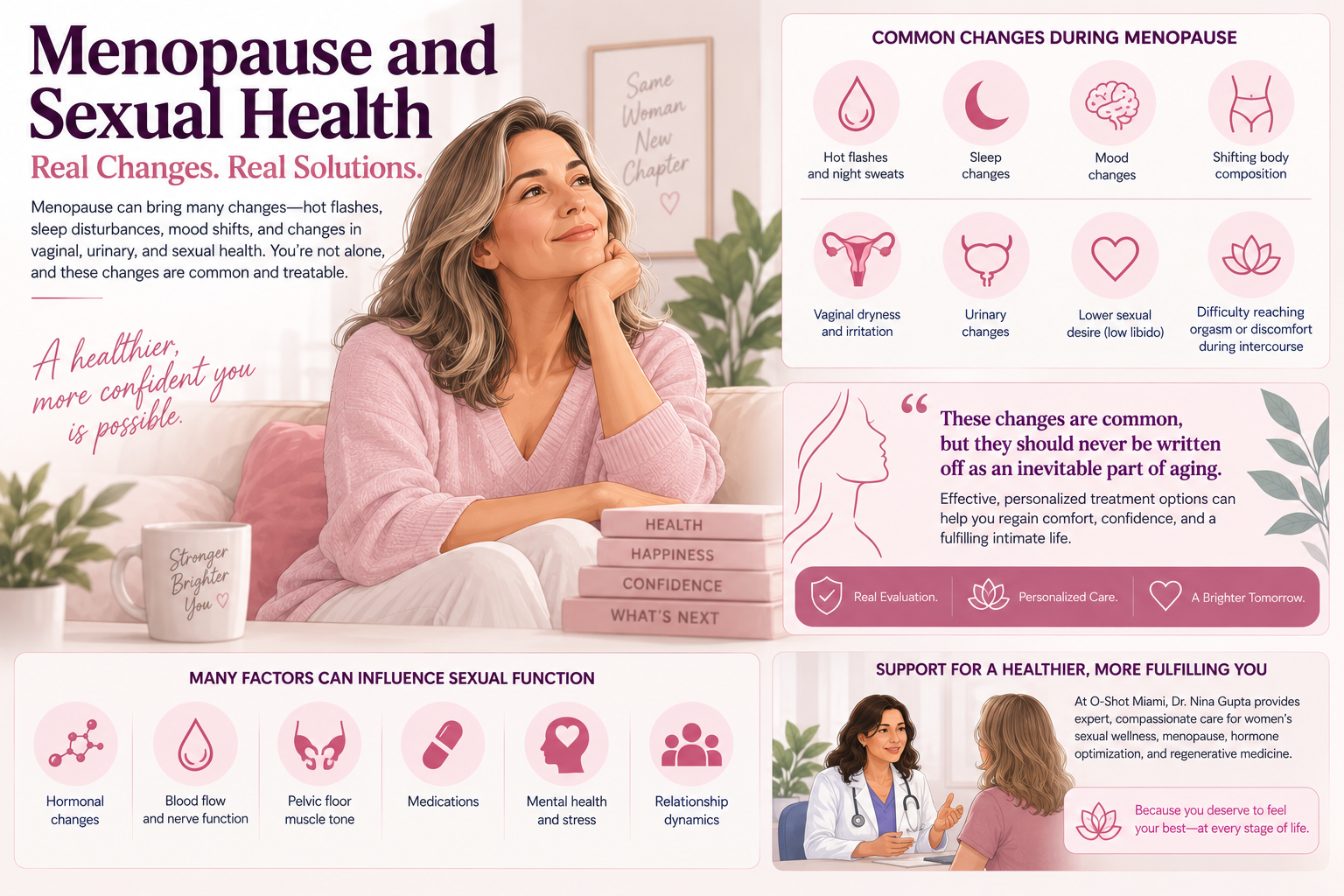
Menopause can change much more than menstrual cycles. For many women, the biological transition brings hot flashes, disrupted sleep, mood changes, shifting body composition, and distinct changes in vaginal and urinary health. Sexual function can change too—and that dimension of menopause and intimate health is often discussed far less openly.
A woman may notice that she no longer thinks about sex as often, needs considerably more stimulation to become aroused, experiences persistent vaginal dryness and irritation, or finds intercourse uncomfortable when it was pleasurable for decades. Another woman may retain a healthy romantic desire for intimacy, yet discover that climax takes significantly longer, feels muted, or no longer occurs reliably.
These experiences can feel disorienting and frustrating, particularly when a woman feels as though her body has suddenly become unfamiliar. However, there is a vital clinical distinction between a condition being common and being untreatable. Sexual changes become a medical concern when they persist and cause personal distress, physical discomfort, relationship tension, or a meaningful reduction in quality of life. They should never be written off as an inevitable tax on aging.
Female sexual dysfunction after menopause is not a single condition with a single cause. Sexual response depends on an intricate interplay of hormones, genital tissue integrity, microvascular circulation, pudendal nerve conduction, pelvic-floor muscle tone, prescription medications, sleep architecture, mental health, and relationship dynamics. Think of sexual function less like a simple light switch and more like an audio mixing console: several sliders can shift simultaneously, and adjusting only one may not restore the overall harmony.
That is why an individualized, root-cause clinical evaluation is essential. A woman whose primary barrier is tissue fragility from Genitourinary Syndrome of Menopause (GSM) requires a very different approach from someone navigating medication-related anorgasmia or chronic sleep deprivation. At O-Shot Miami, Dr. Nina Gupta provides physician-led care focused on women's sexual wellness, menopause, hormone optimization, and regenerative medicine to help women regain comfort and vitality.
What Is Female Sexual Dysfunction After Menopause?
Female sexual dysfunction after menopause is a clinical umbrella term used to describe persistent or recurrent difficulties involving sexual desire, subjective or physical arousal, orgasmic capacity, or sexual pain that cause significant personal or relational distress.
It is not defined by how frequently a woman engages in sexual activity, how often she experiences erotic thoughts, or whether her intimate life conforms to external societal expectations. There is no universal "normal" level of libido, and sexual priorities naturally evolve across adulthood. A woman may experience low spontaneous desire and feel completely content and fulfilled; another woman experiencing the exact same shift may feel distressed and disconnected. The clinical benchmark is whether the changes are unwanted, persistent, and distressing to the woman herself.
Postmenopausal sexual concerns frequently overlap in complex ways:
Low Sexual Desire
Marked reduction in spontaneous or responsive sexual interest, fewer intimate thoughts, and reduced motivation for intimacy.
Arousal & Lubrication Deficits
Difficulty generating natural vaginal lubrication, blunted clitoral engorgement, and delayed physical excitement.
Orgasmic Difficulties
Marked delay, infrequency, diminished intensity, or complete absence of climax despite adequate stimulation.
Painful Intercourse (Dyspareunia)
Burning, friction, tightness, or deep pelvic aching during or following penetration due to tissue fragility or muscle spasm.
For example, severe vaginal dryness can make intercourse physically painful. If intercourse repeatedly hurts, the brain instinctively develops an avoidance reflex, tensing the pelvic muscles and shutting down anticipation. In this common scenario, what initially presents as "low libido" is actually a protective response driven by underlying physical pain.
Common Sexual Changes Women May Experience
There is no uniform way that menopause impacts female sexual physiology. Some women navigate the transition with minimal intimate disruption, while others notice multiple concurrent changes across desire, sensation, and comfort.
The most frequently reported postmenopausal sexual concerns include:
- Reduced sexual desire or fewer spontaneous sexual thoughts.
- Difficulty becoming physically or mentally aroused, even in romantic settings.
- Vaginal dryness, burning, or insufficient natural lubrication during intimacy.
- Pain, friction, or burning during penetration (painful sex after menopause).
- Decreased genital sensitivity in the clitoris, labia, and vaginal entrance.
- Extended time required to reach climax or difficulty reaching orgasm entirely.
- Changes in orgasm intensity, feeling muted or less satisfying.
- Avoidance of intimacy due to anticipation of physical discomfort.
Recognizing these distinct symptoms is critical because clinical treatment must match the exact biological or neurological mechanism at work. Increasing stimulation, for instance, cannot heal atrophic vaginal tissue; similarly, a lubricant cannot correct anorgasmia caused by an SSRI antidepressant.
Why Does Menopause Affect Sexual Function?
Menopause is officially reached after 12 consecutive months without a menstrual period (in the absence of other physiological causes). However, the hormonal fluctuations driving sexual changes begin years earlier during perimenopause and continue into the postmenopausal years.
Estrogen plays a central role in maintaining the structural integrity of the female vulvovaginal architecture. When ovarian estrogen production drops permanently:
- Epithelial Thinning: The vaginal lining transforms from a thick, multi-layered, rugated tissue to a pale, thin, fragile barrier with minimal cellular layers.
- Loss of Collagen & Elasticity: Connective tissue loses elasticity, causing the vaginal canal to become shorter, narrower, and less compliant during intercourse.
- Microvascular Perfusion Decline: Blood flow to the clitoris, vestibular bulbs, and vaginal walls decreases, diminishing sensory engorgement and transudate lubrication.
Beyond the pelvic anatomy, systemic menopause symptoms trigger a cascade of indirect sexual challenges. Chronic vasomotor hot flashes and night sweats fragment sleep architecture, leading to severe daytime exhaustion. Mood fluctuations, anxiety, and changes in body composition further deplete emotional energy for intimacy.
The Role of Estrogen and Other Hormones
While estrogen is the primary hormone safeguarding genital tissue health, female sexual response also relies on progesterone, dehydroepiandrosterone (DHEA), and testosterone.
Androgens like testosterone circulate throughout a woman's life, supporting central dopamine pathways in the brain (which govern motivation and sexual desire) as well as nitric oxide-mediated blood flow in clitoral erectile tissue. Testosterone levels decline gradually with age and drop substantially following surgical menopause (oophorectomy).
However, diagnosing sexual dysfunction is never as simple as looking at an isolated blood test. A woman may have laboratory values within normal reference ranges while experiencing distressing intimate symptoms, or vice versa. Responsible medical care integrates comprehensive hormone testing with clinical symptoms, personal history, and individualized patient goals. Discover more about our approach to personalized hormone optimization and bioidentical hormone replacement therapy (BHRT).
Genitourinary Syndrome of Menopause and Sexual Health
One of the most consequential yet underdiagnosed conditions affecting postmenopausal women is Genitourinary Syndrome of Menopause (GSM). Formerly referred to as vulvovaginal atrophy, GSM encompasses a comprehensive spectrum of anatomical, physiological, and clinical changes affecting the vulva, vagina, urethra, and bladder resulting from estrogen deficiency.
Unlike vasomotor hot flashes—which frequently peak and gradually subside over a few years—GSM is progressive and typically worsens over time without targeted medical intervention. An estimated 50% to 70% of postmenopausal women experience GSM symptoms, yet fewer than 10% receive appropriate treatment.
The Three Symptom Pillars of GSM:
Genital Symptoms
Vaginal dryness, burning, itching, irritation, and loss of labial fullness.
Sexual Symptoms
Lack of lubrication, entry pain, deep dyspareunia, post-coital soreness, and bleeding.
Urinary Symptoms
Urinary urgency, frequent nighttime urination (nocturia), dysuria, and recurrent UTIs.
Vaginal Dryness, Irritation, and Pain
To understand why postmenopausal vaginal dryness causes such profound pain, consider basic biomechanics. Healthy, estrogen-rich vaginal tissue produces a protective transudate fluid and maintains elastic folds (rugae) that expand comfortably during intercourse.
When estrogen declines, the vaginal walls become thin, smooth, and dry. Friction during penetration creates microscopic tears in the fragile epithelium, resulting in acute burning, raw inflammation, and post-coital spotting. If intercourse repeatedly causes pain, the nervous system enters an anticipatory fight-or-flight state, causing the surrounding pelvic floor muscles to clench defensively.
It is important to remember that persistent pelvic or introital pain should never be automatically assumed to be menopause-related. Pelvic floor muscle hypertonicity (vaginismus), vestibulodynia, lichen sclerosus, chronic infections, and other gynecologic disorders require careful clinical differentiation. Learn more in our detailed analysis of painful sex during the menopausal transition.
Low Libido After Menopause
"Why don't I want sex anymore?" is one of the most common, emotionally vulnerable questions women ask their physicians after menopause.
Low libido—classified clinically as Hypoactive Sexual Desire Disorder (HSDD) when persistent and distressing—is rarely caused by a single biological factor. In women, sexual desire is responsive rather than purely spontaneous, mediated by a delicate balance between sexual excitation and sexual inhibition in the central nervous system.
Why Desire Can Change
Imagine attempting to feel sensual and receptive after several nights of broken sleep from drenching night sweats, while navigating work stress, experiencing hot flashes, and anticipating that penetration will hurt. Under those conditions, a loss of desire is not a biological defect; it is a normal protective response by a fatigued brain prioritizing rest and safety.
Key contributors to low postmenopausal libido include:
- Physical Discomfort: Anticipation of vaginal pain and burning extinguishes arousal before it can begin.
- Hormonal Decline: Reductions in free testosterone and estradiol blunt central dopamine pathways.
- Chronic Exhaustion: Sleep fragmentation from night sweats deprives the brain of restorative REM sleep.
- Mood & Stress: Depression, generalized anxiety, and cumulative life stress elevate cortisol, suppressing intimacy.
- Relationship Dynamics: Unresolved partner communication or emotional disconnection reduces feelings of safety and intimacy.
For an extensive clinical guide, explore our dedicated resource on low libido in women causes and treatments and why libido decreases after menopause.
Difficulty With Arousal and Genital Sensitivity
Desire (the emotional interest in sex) and physical arousal (the body's physical response) are governed by distinct physiological pathways. Many postmenopausal women deeply desire physical closeness and feel strong romantic affection toward their partners, yet discover that their bodies do not respond as quickly or intensely as before.
Women may notice that the clitoris and labia feel less sensitive to gentle touch, that natural lubrication takes much longer to produce, or that physical stimulation does not build into pleasurable arousal.
This sensory disconnect is primarily biological:
- Vascular Constriction: Reduced microvascular nitric oxide signaling decreases blood flow to the erectile clitoral bulbs.
- Neurosensory Attenuation: Sensory nerve endings in the vulva and clitoral glans become less reactive to standard tactile stimulation.
- Tissue Fragility: Dry mucosal tissues create friction rather than smooth, pleasurable gliding sensations.
There is nothing wrong with needing more time, different angles of touch, or dedicated lubrication. Female sexual response is not a race, and bodies are not meant to operate on a rigid stopwatch. When these changes cause distress or numbness, medical and regenerative solutions can help restore sensory responsiveness.
Difficulty Reaching Orgasm After Menopause
Achieving orgasm involves a complex neurological, vascular, hormonal, and muscular sequence. The brain receives sensory signals from the pudendal nerve, triggers central dopamine and oxytocin release, engorges pelvic erectile tissue, and culminates in involuntary, rhythmic contractions of the pelvic floor muscles.
After menopause, several factors can disrupt this intricate sequence, leading to Female Orgasmic Disorder (anorgasmia) or muted climax:
Elevated central serotonin blunts dopamine surges required for climax.
Chronically tight muscles cannot contract and release rhythmically.
Microvascular changes reduce sensation and engorgement.
Anxiety and performance pressure prevent deep relaxation.
For a deeper exploration into why climax becomes elusive in midlife, read our clinical guides on causes of sudden orgasm difficulty in women over 40 and difficulty reaching orgasm causes and treatments.
Medications, Sleep, Stress, and Medical Conditions
Female sexual function never operates in isolation from general medical health. A woman can possess healthy genital anatomy yet experience severe sexual dysfunction due to systemic medications or underlying health conditions.
Common systemic contributors include:
- Prescription Medications: Antidepressants (SSRIs/SNRIs), beta-blockers, antihistamines, sedatives, and anti-androgens frequently impair libido, lubrication, and climax.
- Metabolic & Vascular Conditions: Diabetes damages peripheral autonomic nerves and microvessels; hypertension and dyslipidemia impair pelvic arterial flow.
- Thyroid Disorders: Hypothyroidism slows metabolism, suppresses libido, and worsens fatigue.
- Neurological & Autoimmune Diseases: Multiple sclerosis, Parkinson’s, and fibromyalgia alter sensory perception and cause chronic fatigue.
This is why a comprehensive medical consultation is far more effective than self-prescribing over-the-counter supplements. A skilled physician evaluates your whole health profile to identify and correct these hidden barriers.
How Female Sexual Dysfunction Is Diagnosed
Because female sexual dysfunction is multifaceted, there is no single laboratory blood test, imaging scan, or diagnostic device that can instantly provide an answer. Accurate diagnosis relies on a thorough, compassionate, and structured clinical consultation.
What to Expect During a Medical Evaluation
A physician-led evaluation should feel like a supportive, non-judgmental conversation rather than a clinical interrogation. Your doctor will evaluate:
Comprehensive Diagnostic Components:
- Detailed Symptom History: Pinpointing whether the primary issue is desire, lubrication, orgasm, pain, or a combination, and identifying when changes began.
- Pharmacological Audit: Reviewing all prescription medications, over-the-counter drugs, and herbal supplements for sexual side effects.
- Targeted Pelvic & Vulvovaginal Exam: Inspecting tissue hydration, epithelial pallor, vestibular tenderness (cotton swab Q-tip test), and pelvic floor muscle tone.
- Biomarker & Hormone Labs: Assessing estradiol, total/free testosterone, SHBG, DHEA-S, thyroid panel (TSH, free T3/T4), and metabolic markers when indicated.
The ultimate objective is to clarify the specific biological, psychological, and lifestyle drivers so that an individualized, multi-layered treatment plan can be developed.
Treatment Options for Female Sexual Dysfunction After Menopause
Effective postmenopausal sexual wellness care is never one-size-fits-all. Because symptoms frequently involve multiple overlapping causes, modern clinical practice employs a combination of non-hormonal supportive care, local and systemic hormone therapies, pelvic floor therapy, and advanced regenerative options.
Vaginal Lubricants and Moisturizers
For women experiencing mild vaginal dryness or discomfort during intimacy, over-the-counter non-hormonal products provide an essential first step:
- Personal Lubricants: Applied immediately before and during sexual activity to eliminate surface friction. Medical-grade silicone or isotonic water-based lubricants free of parabens, glycerin, and warming agents are recommended.
- Vaginal Moisturizers: Applied regularly 2 to 3 times per week (regardless of sexual activity) to bind water into the vaginal epithelium and maintain daily baseline comfort. Products formulated with hyaluronic acid offer superior tissue rehydration.
While moisturizers provide symptomatic relief, they do not reverse the underlying cellular thinning of GSM. When tissue changes are moderate to severe, prescription therapies are necessary.
Vaginal Estrogen and Other Menopause Treatments
Local vaginal estrogen is the gold-standard, evidence-based therapy for postmenopausal women suffering from Genitourinary Syndrome of Menopause (GSM).
Available in low-dose creams, vaginal tablets/inserts, and flexible silastic rings, local estrogen acts directly on estrogen receptors in the vaginal epithelium and bladder base with minimal systemic absorption. Over 6 to 12 weeks of consistent use, local estrogen:
- Restores the thickness and cellular layers of the vaginal lining.
- Re-establishes natural glycogen production and acidic vaginal pH (preventing infections).
- Restores tissue elasticity and natural transudation lubrication.
- Significantly reduces or completely resolves dyspareunia (painful sex).
Other prescription options for GSM include intravaginal DHEA (prasterone) and oral selective estrogen receptor modulators (SERMs like ospemifene). Women with a personal history of breast cancer or other hormone-sensitive conditions can discuss local non-hormonal and low-dose options with their oncologist and physician.
When Hormone Therapy May Be Considered
When postmenopausal sexual symptoms coexist with broader systemic menopausal concerns—such as moderate-to-severe vasomotor hot flashes, drenching night sweats, chronic sleep disruption, and mood changes—systemic Menopausal Hormone Therapy (MHT) or Bioidentical Hormone Replacement Therapy (BHRT) may be recommended.
Systemic therapy stabilizes hormone levels throughout the body, improving sleep, mood, energy, and overall wellbeing, which indirectly creates the foundation for healthy sexual desire. Clinical decisions regarding systemic BHRT depend on your age, time since menopause, cardiovascular profile, and individual medical history.
Testosterone Therapy for Postmenopausal Sexual Concerns
Testosterone is frequently misunderstood as an exclusively male hormone, yet women produce testosterone throughout life to support bone density, muscle tone, mood, and sexual motivation.
International clinical guidelines (including consensus statements from ISSWSH, The Menopause Society, and the Endocrine Society) endorse low-dose testosterone therapy for carefully selected postmenopausal women diagnosed with Hypoactive Sexual Desire Disorder (HSDD).
Key clinical considerations for testosterone therapy:
- Targeted Female Dosing: Dosages aim to restore physiological female testosterone levels, roughly one-tenth of typical male doses.
- Clinical Monitoring: Regular monitoring of total testosterone and lipid panels ensures safety and avoids androgenic side effects (such as acne or unwanted hair).
- Contextual Care: Testosterone is not a stand-alone cure; it works best when underlying GSM tissue pain, sleep disruption, and relationship factors have also been addressed.
Pelvic-Floor Physical Therapy
The pelvic floor consists of a hammock of muscles supporting the pelvic organs, urethra, and rectum. When a woman experiences chronic vaginal dryness or pain, these muscles frequently develop a state of chronic hypertonicity (involuntary tightness and spasm).
A common misconception is that all pelvic floor issues require Kegel strengthening exercises. In women with sexual pain, performing Kegels can actually worsen muscle tightness and intensify intercourse pain.
Specialized pelvic-floor physical therapists provide:
- Manual myofascial release of tight pelvic floor trigger points.
- Down-training techniques and diaphragmatic breathing to consciously relax pelvic musculature.
- Guided dilator therapy to gradually desensitize the vaginal introitus and restore tissue elasticity.
- Neuromuscular re-education to enhance sensation and orgasmic coordination.
Counseling, Sex Therapy, and Relationship Factors
Acknowledging psychological and relational factors does not mean your symptoms are "all in your head." The brain is the body’s ultimate sexual organ, processing sensory input, emotional safety, and cognitive focus.
Sex therapy and couples counseling provide a structured environment to:
- Address anticipatory anxiety and fear of painful penetration.
- Improve open communication between partners regarding changing physical needs and preferred stimulation.
- Reframe intimacy beyond penetrative intercourse, emphasizing sensual touch, massage, and solo or shared pleasure.
- Process grief and emotional changes surrounding menopause and body image.
What Is the O-Shot and How Does PRP Work?
The O-Shot® (Orgasm Shot®) is an in-office regenerative medicine procedure utilizing autologous Platelet-Rich Plasma (PRP) concentrated from the patient’s own blood.
Platelets are blood cells renowned for their high concentration of bioactive growth factors (including VEGF, PDGF, FGF, and TGF-beta). When concentrated PRP is precisely injected into the clitoral hood and anterior vaginal wall (the O-Spot / G-Spot region), these signaling factors trigger cellular repair, collagen synthesis, and angiogenesis (the formation of new microvascular blood vessels).
Potential Benefits of O-Shot PRP Therapy:
- Enhanced natural vaginal lubrication and mucosal transudation.
- Heightened clitoral sensitivity and tactile responsiveness.
- Easier ability to achieve orgasm with greater climax intensity.
- Improvement in mild stress urinary incontinence (leaking with coughing, laughing, or exercise).
- Enhanced tissue resilience and comfort when paired with hormone therapy.
What the Evidence Says About PRP for Sexual Health
It is essential to approach regenerative treatments with realistic, evidence-based expectations. While clinical studies and patient surveys demonstrate high satisfaction rates and improvements in sexual function scores (such as the FSFI), PRP research in sexual medicine continues to evolve.
The O-Shot should not be marketed as a magic cure or a guaranteed reversal of aging. It does not replace medical evaluation for GSM, pelvic infections, or systemic illnesses. At O-Shot Miami, Dr. Nina Gupta was directly trained by Dr. Charles Runels, the pioneer of the O-Shot technique, ensuring precise, physician-led clinical protocols.
Can the O-Shot Be Combined With Menopause Treatment?
Yes, and for many postmenopausal women, combining therapies provides the most comprehensive and lasting results.
Because postmenopausal sexual dysfunction involves multiple biological systems, a layered, synergistic care plan is often ideal:
- Local Vaginal Estrogen restores mucosal cellular thickness and normalizes vaginal pH.
- The O-Shot (PRP) stimulates microvascular blood flow, clitoral sensitivity, and tissue regeneration.
- Systemic BHRT stabilizes mood, energy, and sleep architecture.
- Pelvic-Floor Physical Therapy releases hypertonic muscle spasms and restores healthy pelvic coordination.
During your consultation at O-Shot Miami, Dr. Gupta evaluates your full health profile to determine the optimal sequence and combination of treatments tailored to your individual anatomy and wellness goals.
When Should You See a Doctor?
You do not need to wait until sexual symptoms become severe or intolerable before seeking professional medical care. If an intimate change is persistent, unexpected, painful, or causing personal or relational distress, an evaluation is strongly recommended.
Symptoms that warrant prompt clinical evaluation include:
- Postmenopausal Vaginal Bleeding: Any bleeding after menopause must always be evaluated promptly by a physician to rule out endometrial abnormalities.
- Severe or Persistent Pelvic Pain: Pain during penetration, deep thrusting, or daily activity.
- Genital Lesions or Architecture Changes: White plaques, architectural resorption, or chronic fissures (suggesting lichen sclerosus).
- Sudden Numbness: Complete loss of genital or clitoral sensation.
- Chronic Urinary Symptoms: Constant urgency, burning, or recurrent urinary tract infections.
Seeking care for sexual health is a proactive investment in your vitality, comfort, and quality of life. Intimate wellness is an essential component of overall health, deserving the same thoughtful attention as bone density or cardiovascular care.
Sexual Wellness and Menopause Care in Miami
Navigating menopause does not mean relinquishing your intimate vitality, pleasure, or self-confidence. With over 37 years of clinical medical experience, Dr. Nina Gupta, MD provides dedicated, physician-led women’s sexual health and menopause care for patients across Miami, Aventura, Fort Lauderdale, and South Florida.
Our clinic integrates cutting-edge hormone optimization, GSM management, and regenerative PRP treatments like the O-Shot in an atmosphere of warmth, confidentiality, and clinical excellence. We listen deeply to your story and design evidence-based treatment plans tailored to your body.
Reclaim Your Intimacy & Vitality After Menopause
Schedule a private, comprehensive intimate wellness consultation with Dr. Nina Gupta at our Aventura/Miami clinic.
Frequently Asked Questions About Sexual Dysfunction After Menopause
Medical References & Clinical Guidelines
- The Menopause Society. The 2020 Genitourinary Syndrome of Menopause Position Statement. Menopause. 2020;27(9):976–992.
- American College of Obstetricians and Gynecologists (ACOG). Management of Genitourinary Syndrome of Menopause in Women With or At High Risk of Breast Cancer. Clinical Consensus No. 2. 2021.
- International Society for the Study of Women’s Sexual Health (ISSWSH). Global Consensus Position Statement on the Use of Testosterone Therapy for Women. Journal of Sexual Medicine. 2019;16(9):1331-1337.
- Faubion SS, et al. Genitourinary Syndrome of Menopause: Management Strategies for the Clinician. Mayo Clinic Proceedings. 2017;92(12):1842-1849.
Medical Disclaimer: This article is for educational and informational purposes only and does not constitute formal medical advice, diagnosis, or treatment. If you are experiencing postmenopausal bleeding, persistent pelvic pain, or sudden numbness, consult a licensed healthcare provider promptly.
Conclusion: Sexual Health Still Matters After Menopause
Female sexual dysfunction after menopause is real, common, and far more nuanced than simply having "low hormones." Fluctuations in estrogen, vaginal tissue integrity, pelvic floor muscle coordination, sleep quality, mood, medications, and relationships all shape intimate wellbeing.
Effective care begins with comprehensive evaluation rather than resignation. For vaginal dryness and painful intercourse, treatments targeting GSM restore the physical foundation of comfort. Carefully monitored systemic hormone replacement or testosterone therapy can address desire and vitality. Pelvic floor physical therapy restores neuromuscular balance, while counseling and sex therapy address emotional and relationship dynamics.
Most importantly, menopause does not require you to surrender intimacy, pleasure, or sexual satisfaction. If your body has changed and you are unhappy with those changes, you deserve compassionate, evidence-based care to help you feel vibrant, comfortable, and confident in your sexuality.